It used to be that your face just revealed your mood, or maybe how much sleep you’d had.

But with AI getting smarter every day, faces are now being used to estimate something deeper: your biological age. That means how well your body is actually ageing, regardless of what year you were born. And it turns out, your face might be quietly telling a whole different story than your birthday does. Here’s what you should know about the trend.
Your face can hint at how old your body really feels.

Biological age is different from the number on your driving licence. It’s more about how worn out or healthy your body is—how your skin, muscles, and internal systems are holding up based on lifestyle, genetics, and stress. And now, AI can estimate that by looking at your face.
This isn’t just a gimmick. Early research shows that these predictions can sometimes be more accurate at spotting future health problems than your actual age. It’s the kind of thing that could give doctors a head start if used carefully.
It works by spotting patterns humans can’t see.

The tech behind it, called FaceAge, scans your face for subtle details: skin tone changes, muscle droop, eye sharpness, posture—tiny things most people wouldn’t even notice. But when fed into an AI model, those small cues help form a bigger health picture. It’s trained to look past superficial features like grey hair or wrinkles and dig deeper into what your face is really showing. The AI doesn’t care about appearances—it’s trying to detect signs of stress, decline, or vitality.
It can predict survival chances better than doctors alone.

In one study of cancer patients, FaceAge was able to predict six-month survival rates more accurately than a group of trained doctors just looking at photos. When the doctors used the AI’s estimate alongside their own knowledge, their accuracy jumped from 61% to around 80%. That’s a big deal, especially for high-stakes medical decisions. It suggests this tool could one day help personalise care or highlight which patients need extra attention, even if they don’t look obviously unwell.
It was trained on thousands of real faces.

The model behind FaceAge didn’t just guess. It was trained on over 58,000 photos of healthy people and fine-tuned using images of over 6,000 cancer patients. It compared what it saw with real-world health outcomes to improve its accuracy over time. This kind of training means the AI isn’t just looking at age, but at survival, illness, and the effects of ageing as they actually play out. The more data it sees, the better it gets at spotting real patterns behind the faces.
It might show up in GP surgeries in the near future.
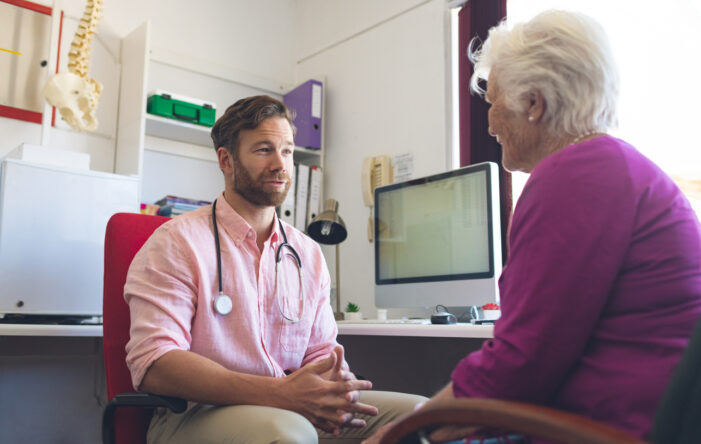
Right now, FaceAge is still mostly used in research and specialist clinics. But the idea is that one day, it could be part of everyday checkups, like having your blood pressure or heart rate taken. You’d just snap a photo, and the system would offer a read on how your body’s doing under the surface. That could help spot early signs of decline, prompt deeper testing, or guide more personalised advice. It could also help people make lifestyle changes before they even start feeling unwell.
Despite the positives, it raises privacy concerns.

With any tech that involves faces, there are big questions about where that data goes and how it’s used. If biological age estimates start getting factored into things like insurance, job screenings, or even dating apps, it could quickly turn into a form of bias.
There’s also the concern of consent. Most people don’t expect a simple photo to reveal so much about their health. If this kind of analysis becomes widespread, people will need to know exactly what’s being done with their image, and why.
Still, it could help spot health issues early.

Supporters say this kind of tech could be a game-changer in preventative care. If your biological age is much higher than your actual age, it might signal hidden stress, sleep issues, chronic inflammation, or early-stage illness. Getting a heads-up could lead to earlier diagnoses, better treatment plans, or lifestyle changes that make a real difference. It’s not going to replace doctors, but it could become a useful extra set of (digital) eyes.
However, the results could also be anxiety-inducing.

On the flip side, being told your face looks “ten years older” than your real age could mess with your head. There’s a risk of people getting fixated on these numbers in a way that becomes unhelpful or unhealthy. This is especially true if the AI isn’t totally accurate, or if the model is based on narrow data that doesn’t reflect all body types, ethnicities, or health backgrounds. Like any tool, it’s only as good as the system behind it.
It’s part of a bigger trend: faces as health data.

Between smartwatches, wearables, and now facial scans, your body is becoming a data source. More tech companies are exploring how faces might reveal everything from stress levels to immune health to early signs of mental illness. It’s exciting and a bit eerie. What used to be just a selfie might soon double as a mini health check, especially if AI keeps getting better at reading the subtle stuff we miss.
It’s powerful, but it needs boundaries.

FaceAge and tools like it could genuinely help doctors and patients spot trouble early and make more personalised decisions. However, it needs strict limits to stop it becoming invasive, exploitative, or just another way to judge people. If used right, this tech could lead to better health care and longer lives. If handled badly, it could turn faces into data points to be mined, judged, or misused. Where we go next depends entirely on who’s in charge of the mirror.