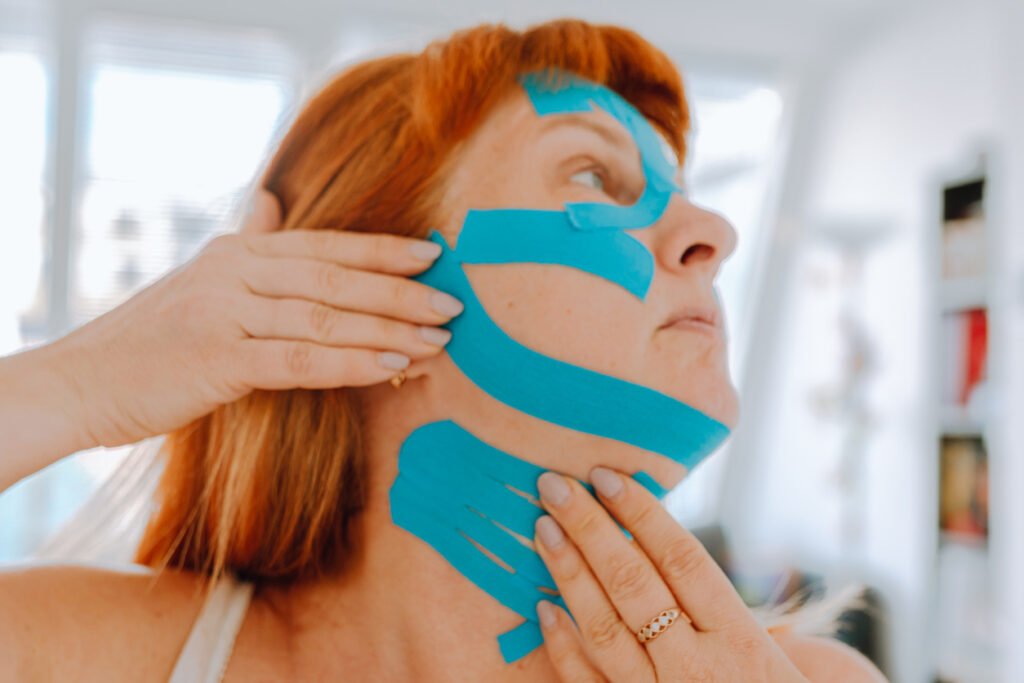
The latest TikTok beauty obsession has people sleeping with tape stuck to their faces, claiming it’s like getting Botox without needles, or that it gives the effect of an instant facelift. However, like many trends that originate on the social media app, dermatologists are raising serious concerns. Not only is it not particularly effective, it could cause more harm than good.
The trend promises instant anti-ageing results.
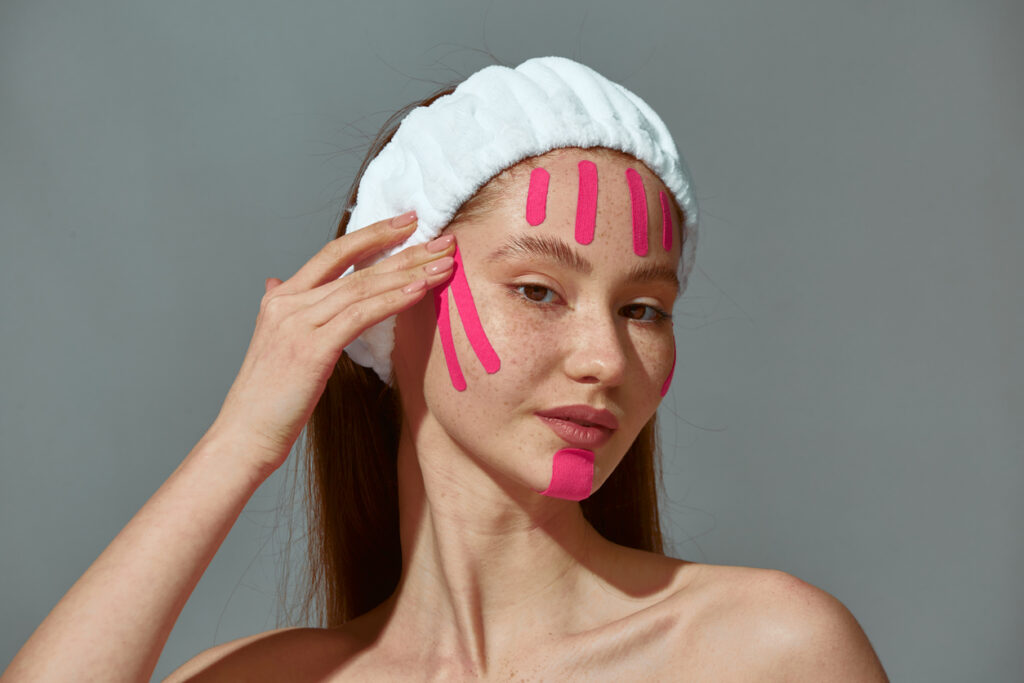
Face taping involves strategically placing medical tape on areas like your forehead, around your eyes, and mouth before bed to prevent facial movements that create wrinkles. TikTokers claim this “freezes” your muscles and stops you from frowning or making expressions during sleep, supposedly preventing lines from forming.
The appeal is obvious. After all, who wouldn’t want to wake up with smoother skin after doing nothing more than sticking tape on their face? The before and after videos on TikTok show dramatic improvements, making it look like a miracle anti-ageing hack that costs pennies.
It’s being marketed as “preventative Botox.”
Influencers are calling face taping “preventative Botox” because it theoretically restricts muscle movement the same way neurotoxin injections do. The idea is that if you can’t move your facial muscles, you can’t create the expression lines that eventually become permanent wrinkles.
The comparison is completely misleading, though. Botox actually paralyses muscles for months at a time through medical intervention, and face tape just sits on your skin for a few hours without affecting the underlying muscle structure at all.
People are using everything from medical tape to regular household tape.
The trend has spawned a whole industry of specialised face tapes and patches, but many TikTokers are just using whatever adhesive they can find. Some use medical tape, others use regular packing tape, and there are even purpose-made “Frownies” patches that have been around since 1889.
The problem is that it takes seriously strong adhesive to stay stuck to your face all night, especially if you move around in your sleep. The stronger the tape, the more likely it is to damage your skin when you rip it off in the morning.
The results are completely temporary.
Whilst face taping can temporarily smooth out wrinkles by pulling your skin taut, the effects disappear within hours of removing the tape. Your skin and muscles have natural elasticity, so they’ll bounce back to their normal position pretty quickly once the tape comes off.
Some people report that their wrinkles look softer for a few hours after taping, but this is just because the skin has been stretched and needs time to return to its normal state. It’s not actually preventing or reducing wrinkles long-term.
It might actually make wrinkles worse.
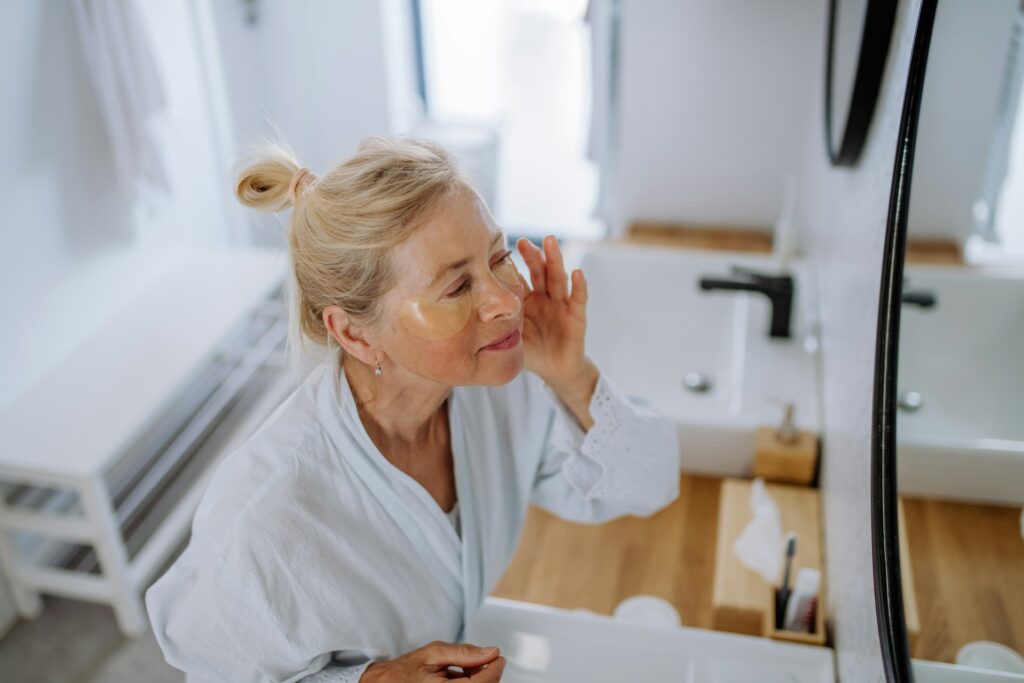
Here’s the scary part: face taping could potentially deepen your wrinkles rather than preventing them. When you tape your face, your muscles still try to move underneath the tape, which creates resistance that could give your facial muscles an unintentional workout during sleep.
Dermatologists warn that this resistance training for your facial muscles could make them stronger and cause them to contract more forcefully, potentially creating deeper lines than you had before you started taping.
The skin damage risks are real.
Repeatedly sticking strong adhesive to your face and ripping it off can cause irritation, allergic reactions, broken blood vessels, and even scarring. The ingredients in regular tape aren’t designed for skin contact, and even medical tape can cause problems with repeated use.
Some people have reported blistering, red marks that take days to fade, and pulled skin that looks worse than their original wrinkles. The temporary benefits definitely aren’t worth permanent skin damage.
It doesn’t address the real causes of ageing.
Face taping only targets expression lines and ignores the main causes of skin ageing like sun damage, loss of collagen, and decreased skin elasticity. Most wrinkles aren’t just caused by facial expressions but by the natural breakdown of skin structure over time.
You’d get much better anti-ageing results by using sunscreen daily, incorporating retinol into your routine, and staying hydrated. These address the actual causes of skin ageing rather than just trying to restrict movement for a few hours.
Dermatologists are unanimously against it.
Board-certified dermatologists across the board are warning people away from face taping, calling it ineffective and potentially harmful. They’re particularly concerned about people using non-medical tape and the long-term effects of repeatedly traumatising facial skin.
Medical professionals emphasise that there are much more effective treatments available for wrinkles, from topical retinoids to professional procedures like actual Botox, microneedling, and laser treatments that have proven track records.
The before and after photos are misleading.
Many of the dramatic TikTok transformations showing “proof” that face taping works are taken immediately after removing the tape, when the skin is still stretched, and before it has time to return to normal. The lighting and angles in these videos also make the results look more impressive than they really are.
Plus, you can’t see the red marks, irritation, and indent lines from the tape that often appear after removal. The creators conveniently wait for these side effects to fade before taking their “after” photos.
It’s not addressing sleep wrinkles properly.
Whilst it’s true that sleeping on your side or stomach can create temporary lines that eventually become permanent, face taping isn’t the solution. The tape can move during sleep and create its own pressure points and marks that are worse than the original sleep lines.
Better solutions for sleep wrinkles include using a silk or satin pillowcase, sleeping on your back when possible, and using a specialised pillow designed to reduce facial contact. These methods don’t risk damaging your skin.
The cost adds up quickly.
Even though individual pieces of tape are cheap, the cost of buying specialised face tapes or patches every night adds up quickly. Plus, you’re paying for a treatment that doesn’t actually work long-term, so you’re essentially throwing money away.
That money would be better spent on proven anti-ageing ingredients like retinol, vitamin C serums, or saving up for professional treatments that actually provide lasting results rather than temporary illusions.
There are much better alternatives available.
If you’re concerned about preventing wrinkles, there are loads of proven methods that actually work without risking skin damage. Daily sunscreen use, retinoid products, good hydration, and professional treatments like Botox or dermal fillers all have scientific backing.
Even simple lifestyle changes like not smoking, eating antioxidant-rich foods, and getting enough sleep will do more for your skin than any amount of face taping. These approaches address the root causes of ageing rather than just trying to mask the symptoms.
The trend preys on people’s insecurities about ageing.
Face taping appeals to people because it promises a quick, cheap fix for something that naturally happens to everyone. It preys on the fear of ageing and the desire for instant rresults,without considering whether the method actually works or is safe.
The beauty industry is full of trends that promise miraculous results with minimal effort, but real skincare requires patience, consistency, and often professional guidance. Don’t let social media convince you to try potentially harmful DIY treatments when safer, more effective options exist.