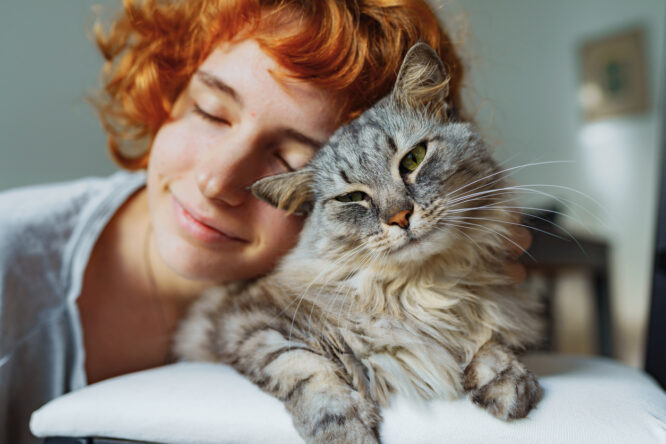
The pet you choose says more about your personality than most people want to admit, and the differences between cat and dog people go way deeper than just animal preferences. These aren’t just stereotypes. There are genuine psychological and lifestyle patterns that separate people who gravitate toward independent, mysterious creatures versus those who prefer loyal, enthusiastic companions.
1. Cat people are comfortable with emotional ambiguity.
Cat people don’t need constant validation or clear signals of affection to feel secure in relationships. They’re fine with pets (and people) who show love in subtle ways and don’t require dramatic displays of attachment to feel valued.
Dog people tend to prefer relationships where emotions are obvious and freely expressed. They like knowing exactly where they stand with people, and feel uncomfortable with mixed signals or emotional complexity.
2. Dog people need to feel needed.
Dog people get satisfaction from being someone’s hero, provider, and most important person. They enjoy the responsibility of caring for a creature that depends on them completely and would struggle without their constant attention and care.
Cat people are more comfortable with mutual independence and don’t derive their sense of worth from being indispensable. They prefer relationships where both parties choose to be together rather than need to be together.
3. Cat people have higher tolerance for solitude.
Cat people genuinely enjoy spending time alone and don’t experience loneliness as quickly or intensely as dog people. They can entertain themselves and find solo activities genuinely fulfilling rather than just tolerable.
Dog people tend to feel energised by socialising and may struggle with extended periods alone. They prefer activities that involve other people, and can feel depressed or restless when isolated for too long.
4. Dog people are more trusting of strangers.

Dog people generally assume new people are friendly and approach social situations with optimism about human nature. They’re more likely to give people the benefit of the doubt and expect positive interactions with unfamiliar people.
Cat people tend to be more cautious about new people and require time to warm up to strangers. They’re not necessarily antisocial, but they’re more selective about who they let into their inner circle.
5. Cat people prefer earning respect rather than giving it freely.
Cat people believe respect should be mutual and earned through consistent behaviour over time. They don’t automatically defer to authority figures and expect to be treated as equals in relationships rather than subordinates.
Dog people are more comfortable with hierarchical relationships and may naturally defer to authority figures or dominant personalities. They’re more likely to respect people based on position rather than requiring them to prove their worth.
6. Dog people are more physically affectionate.
Dog people tend to express and receive love through physical contact: hugging, touching, cuddling, and being physically close to the people they care about. Physical affection feels natural and necessary for emotional connection.
Cat people may prefer other forms of intimacy and can feel overwhelmed or uncomfortable with too much physical contact. They often show affection through shared activities, conversation, or simply choosing to spend time near someone.
7. Cat people are more comfortable with unpredictability.
Cat people don’t need rigid routines or predictable schedules to feel secure. They can adapt to changing circumstances and actually enjoy some variety and spontaneity in their daily lives.
Dog people often prefer consistent routines and may feel stressed when schedules change unexpectedly. They like knowing what to expect and may resist changes to established patterns, even when those changes could be beneficial.
8. Dog people are more openly competitive.
Dog people enjoy competition and may engage in friendly rivalry with other people. They like games, contests, and situations where they can prove their abilities or come out on top through effort and skill.
Cat people tend to avoid direct competition and may find competitive environments stressful or unpleasant. They prefer situations where everyone can succeed without anyone having to lose.
9. Cat people value intellectual independence.
Cat people like forming their own opinions and may resist group thinking or popular consensus. They’re more comfortable being the only person who disagrees with something and don’t feel pressure to conform to other people’s views.
Dog people may be more influenced by group opinions and feel uncomfortable being the lone dissenter. They prefer harmony and may adjust their views to maintain group cohesion rather than stand alone on unpopular positions.
10. Dog people are more forgiving of social mistakes.
Dog people tend to give people second chances and may overlook social blunders or minor betrayals more easily. They’re willing to rebuild trust after it’s been damaged and don’t hold grudges for extended periods.
Cat people may be less forgiving of boundary violations or social mistakes and need more time to rebuild trust once it’s been broken. They remember negative interactions longer and may be more cautious about giving second chances.
11. Cat people are more selective about friendships
Cat people prefer having a few close friends rather than large social circles. They invest deeply in relationships that feel meaningful and may not maintain casual friendships that don’t provide genuine connection.
Dog people often enjoy having many acquaintances and may maintain friendships based on shared activities or convenience rather than deep emotional connection. They’re comfortable with varying levels of intimacy across different relationships.
12. Dog people are more optimistic about human nature.
Dog people generally believe most people are good-hearted and well-intentioned, even when they make mistakes or cause problems. They’re more likely to assume positive motivations behind other people’s actions.
Cat people may be more realistic or cynical about human motivations, and are quicker to recognise when someone might have ulterior motives or selfish intentions. They’re less likely to be surprised by betrayal or disappointment.
13. Cat people are more comfortable with inequality in relationships.
Cat people accept that relationships naturally involve different levels of investment and don’t expect perfectly balanced give-and-take. They’re fine with periods where one person gives more than the other.
Dog people prefer relationships that feel fair and balanced, where both parties contribute equally. They may feel resentful if they see themselves as giving more than they’re receiving in the long run.
14. Dog people are more motivated by external validation.
Dog people feel energised by praise, recognition, and positive feedback from other people. They may work harder when they know their efforts will be noticed and appreciated by people they respect.
Cat people are more motivated by internal satisfaction and may actually feel uncomfortable with too much external praise or attention. They prefer recognition that feels genuine rather than performative.
15. Cat people have stronger boundaries about personal space.
Cat people need time and space to recharge and may feel drained by too much social interaction, even with people they love. They require solitude to process experiences and maintain emotional equilibrium.
Dog people may feel lonely or rejected when people need space and prefer almost constant companionship. They’re energised by being around other people and may interpret requests for alone time as personal rejection.
16. Dog people are more willing to compromise their preferences.
Dog people often adapt their plans, preferences, and desires to accommodate everyone else’s needs. They’re comfortable adjusting their own wants to make relationships work smoothly and avoid conflict.
Cat people may be less willing to compromise on things that matter to them and prefer relationships where their authentic preferences are accepted rather than constantly negotiated.
17. Cat people are more interested in quality than quantity.
Cat people prefer fewer, higher-quality experiences and possessions rather than having lots of options. They’d rather have one perfect thing than several adequate things.
Dog people may prefer having many choices and options available, even if individual items aren’t perfect. They like variety and may feel restricted when choices are limited.
18. Dog people are more comfortable with public displays of emotion.

Dog people don’t mind crying, laughing loudly, or expressing strong emotions in front of other people. They feel comfortable being emotionally vulnerable in public spaces and social situations.
Cat people prefer to process intense emotions privately and may feel uncomfortable with public emotional displays. They need privacy to work through difficult feelings before sharing them with anyone else.
19. Cat people are more suspicious of people who try too hard.
Cat people are put off by people who seem overly eager to please or who come on too strong in relationships. They prefer those who maintain some emotional distance and let relationships develop naturally.
Dog people may appreciate enthusiasm and effort from other people and feel comfortable with people who express interest clearly. They’re less likely to be suspicious of people’s motivations when they’re being friendly.
20. Dog people believe love should be unconditional.
Dog people think real love means accepting someone completely, including their flaws, and continuing to care about them regardless of their behaviour or choices.
Cat people believe healthy love includes boundaries and conditions—that it’s normal and appropriate for love to change based on how people treat each other as time goes on.