Sweden has taken a bold step that’s caught the world’s attention: banning mobile phones in schools.

Starting in autumn 2026, students across the country will be required to hand over their phones to school administrators at the start of the day and can only collect them at the end, as they head home. Unsurprisingly, many educators are calling it a potential turning point. It’s not just about reducing distraction; it’s about reclaiming focus, real connection, and proper learning time in classrooms that have become increasingly dominated by screens.
The idea isn’t entirely new, but Sweden’s move is being watched closely because of how deeply technology is embedded in modern education. Teachers have been battling shrinking attention spans, digital addiction, and constant social media interruptions for years. If this ban works, it could spark a global rethink of how schools handle technology and attention. Here’s why Sweden’s decision to remove phones from classrooms might end up changing education far beyond its own borders.
Attention spans have completely collapsed.

Kids can’t focus for more than a few minutes before reaching for their phone. Lessons get interrupted, learning gets fragmented, and teachers are competing with endless notifications, social media, and group chats that feel more urgent than anything happening in class.
That’s why removing phones creates space for actual concentration again. When the device isn’t there, the brain isn’t split between two worlds. Students start engaging with what’s in front of them instead of half-listening while scrolling, and that change alone changes how much actually gets absorbed.
Social skills are disappearing during breaks.

Lunch and break times used to be when kids talked, played, and figured out how to navigate friendships. Now everyone’s staring at screens, and the casual interactions that build social confidence just aren’t happening like they used to.
It helps when phones are gone because kids have to actually talk to each other. Boredom becomes a catalyst for connection rather than something to immediately fix with a device, and those small conversations during downtime are where real social learning happens, not in a classroom.
Cyberbullying is happening in real time at school.

Bullying used to stay outside school gates, but now it follows kids into the building through their phones. Group chats, screenshots, and cruel posts happen during lessons, at lunch, and the psychological damage is instant and constant with no escape.
That’s because having the phone means having access to the cruelty all day long. Banning them creates a buffer where school becomes a break from online drama. It doesn’t solve everything, but it gives kids a few hours when they’re not watching themselves get torn apart in real time.
Sleep deprivation is destroying learning capacity.

Kids are on their phones late into the night, and it’s wrecking their sleep. Tired students can’t learn, can’t concentrate, and can’t regulate their emotions. The phone addiction that starts at school continues at home, and the lack of rest compounds every other problem.
It helps when schools model healthier boundaries because it gives parents backup. If phones aren’t normalised during school hours, it’s easier to enforce limits at home too. Better sleep means better learning, and better learning means the whole point of school actually works again.
Cheating has become absurdly easy.

Phones make cheating effortless. Answers are a quick search away, AI can write essays in seconds, and students are learning to game the system rather than actually learning. The temptation is too strong when the tool for cheating is sitting right there in their pocket.
That’s why removing phones forces students back into their own thinking. It’s not about making things harder for the sake of it, it’s about making sure the learning is real. When there’s no shortcut available, the brain has to do the work, and that’s where actual growth happens.
Teachers are losing control of their classrooms.

Managing a classroom when everyone has a phone is nearly impossible. Teachers spend half their energy policing devices instead of teaching. It’s exhausting, demoralising, and it turns lessons into a constant battle over attention rather than actual education.
It helps when the rule is clear and universal because teachers aren’t the bad guy anymore. The policy does the heavy lifting, and lessons can actually flow without constant interruptions. Teaching becomes about teaching again, not about being a phone monitor, and that change benefits everyone in the room.
Physical activity during breaks has plummeted.

Kids used to run around, play football, or just move during breaks. Now they sit and scroll. The lack of physical activity affects mood, focus, and overall health, and it’s contributing to rising anxiety and depression rates among young people.
That’s because phones are designed to be more appealing than movement. Banning them means kids get bored enough to actually go outside and do something. Physical activity isn’t just good for health, it’s essential for mental wellbeing and helps kids concentrate better when they’re back in class.
Comparison culture is poisoning self-esteem.
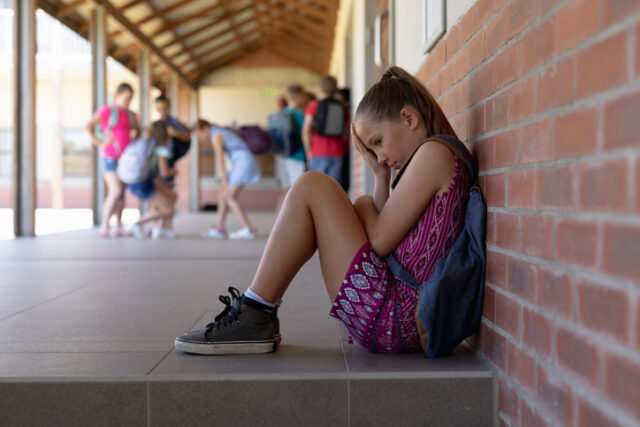
Social media during school hours means constant comparison. Everyone’s checking who’s got more likes, better photos, or seems happier. It’s a relentless loop of measuring yourself against others, and it’s happening while kids are supposed to be learning and building confidence.
It helps when there’s a break from that during the school day. Six or seven hours without the comparison trap gives kids space to just exist without performing or measuring up. Self-esteem gets a chance to build on real things, not filtered highlights and follower counts.
Addiction patterns are forming early.

Phone addiction isn’t just a teenager problem anymore, it’s starting younger and younger. The compulsive checking, the anxiety without the device, the inability to be present. These patterns form during school years, and having phones accessible all day reinforces them when brains are still developing.
That’s why early intervention through bans might actually break the cycle. If kids learn they can function without constant phone access during formative years, it builds healthier habits long term. It’s not about being anti-technology, it’s about preventing dependency before it becomes hardwired.
Parents can’t enforce rules schools won’t back up.

Parents who try to limit phone use feel like they’re fighting a losing battle when schools allow them all day. Kids argue that everyone else has theirs, and parents look unreasonable. Without institutional support, individual families struggle to maintain boundaries that feel increasingly outdated.
It helps when schools take a stance because it creates collective standards. Parents aren’t alone anymore, and kids can’t use the “but everyone else” argument when nobody has their phone at school. It changes the culture rather than leaving families to fight it alone, which rarely works.
Emergency contact excuses have become a crutch.

The argument that kids need phones for emergencies sounds reasonable, but schools have office phones and systems in place. The “what if” scenario justifies constant access for situations that almost never happen, while the daily damage to learning and wellbeing is guaranteed and ongoing.
That’s because the emergency excuse has become cover for convenience. Real emergencies are handled through proper channels, and kids managed fine before everyone had smartphones. The constant access isn’t about safety, it’s about comfort, and that comfort is coming at a huge cost to education.
Mental health is suffering in measurable ways.

Anxiety and depression rates among young people have skyrocketed alongside smartphone use. The constant connectivity, the pressure, the comparison, the cyberbullying. It’s all contributing to a mental health crisis that’s showing up in schools through increased absences, breakdowns, and students who can’t cope.
It helps when schools acknowledge the link and act on it. Banning phones isn’t a cure-all, but it removes one significant stressor during the school day. Mental health improves when there’s space to breathe without constant digital pressure, and that space has to start somewhere.
This sets a precedent other countries will follow.

Sweden’s move isn’t happening in isolation. France, the UK, and other countries are watching closely or implementing similar policies. What happens in Sweden will inform decisions elsewhere, and if it works, it could spark a global change in how schools handle technology and student wellbeing.
That’s because someone had to go first, and Sweden’s done it. The results will be studied, the outcomes measured, and the impact assessed. If banning phones genuinely improves learning, behaviour, and mental health, it won’t stay a Swedish experiment for long. It’ll become the new standard, and education might finally catch up with the reality of what technology’s been doing to young minds.