Every couple has those weeks when they’re snapping at each other over the washing up, but there’s a difference between a rough patch and a relationship that’s actually falling apart.

You’ve likely spent a lot of time telling yourself that things will get better or that you’re just being paranoid, but those gut feelings usually show up for a reason. It’s exhausting to keep pretending everything is fine when the atmosphere at home has become heavy, or you’ve stopped talking about anything that actually matters.
If you’re constantly making excuses for your partner’s behaviour or staying late at work just to avoid the tension, you’re already in deep water. Spotting these signs isn’t about being cynical; it’s about being honest enough to look at the cracks before they turn into a total collapse.
1. Communication feels strained or non-existent.
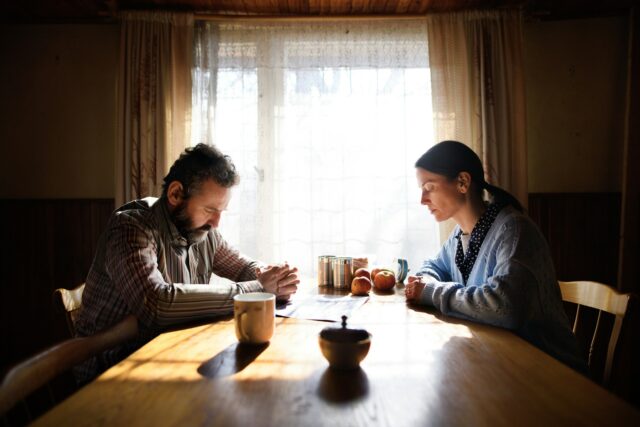
You used to be able to talk about anything, but now it feels like you’re navigating a minefield every time you open your mouth. You might find yourselves stuck in a cycle of arguing over nothing or, even worse, sitting in a heavy silence because you’ve both given up trying to explain yourselves. When you stop sharing the small details of your day or avoiding the big conversations, you’re essentially living parallel lives. If talking starts to feel like a chore rather than a connection, you’ve got a serious problem.
2. You’re constantly on edge.

There is nothing more draining than feeling like you have to watch every word you say to avoid a blow-up. If you’re self-censoring or trying to predict your partner’s mood before you even get through the door, you’re living in a state of high alert. You should be able to be your true self at home, not a watered-down version of yourself that’s designed to keep the peace. When the person who’s supposed to be your safe space becomes the source of your stress, the balance is completely off.
3. You feel unheard or unappreciated.

It’s incredibly isolating to be with someone who treats your opinions like an inconvenience. If you’re raising concerns, and they’re being met with a shrug, an eye-roll, or a total dismissal, it eats away at your self-worth. You start to feel like a background character in your own relationship rather than a partner. A relationship only works if both people feel like their voice actually carries weight, so being consistently ignored is a major red flag.
4. There’s a lack of intimacy and affection.

Intimacy isn’t just about what happens in the bedroom; it’s the small things, like a hug when you get in or sitting close on the sofa. If that physical connection has completely dried up, it’s usually a symptom of an emotional distance that’s grown too wide. You might feel more like housemates who happen to share a bed than a couple in love. When you stop wanting to be near each other, it’s a sign that the spark hasn’t just faded—it’s being put out by the underlying tension between you.
5. You’re keeping secrets or hiding things from each other.

The second you feel the need to hide your phone or “forget” to mention who you were out with, the trust is already gone. You might tell yourself it’s just to avoid an argument, but secrets are like rot in a relationship. If you can’t be honest about where you are or what you’re doing, you have to ask yourself why you’re in the relationship at all. Transparency is the only way to keep things stable, and once you start being sneaky, it’s a very slippery slope.
6. You’re constantly criticising or belittling each other.

There’s a massive difference between a bit of banter and being genuinely mean. If your partner is always picking at your flaws, making you the butt of the joke in front of other people, or putting you down, it’s a form of control that destroys your confidence. It’s hard to feel love for someone who seems to dislike who you are as a person. Constant criticism creates a toxic environment where you end up feeling like you can’t do anything right.
7. You’re feeling resentful or keeping score.

Relationships shouldn’t be a competition of who’s done more for the other person. If you’re mentally tracking every favour, every chore, and every bit of emotional support you’ve given, it’s because you feel like the scales are tipped against you. Resentment is a slow killer; it builds up until you can’t see the good things anymore because you’re so focused on the perceived unfairness. If you feel like you’re doing all the heavy lifting, that bitterness will eventually boil over.
8. You’re avoiding spending time together.

When you’d rather stay late at the office or go out with people you barely like just to avoid going home, the writing is on the wall. You might find yourself making excuses to be in different rooms or filling your weekends with “stuff” so you don’t have to face each other. If your partner’s company has become something you have to endure rather than enjoy, you’re already mentally checking out.
9. You fantasise about being with someone else or being single.

Everyone has a stray thought now and then, but if you’re regularly daydreaming about an exit strategy or wondering what life would be like with the person at the gym, it’s a sign of real dissatisfaction. You’re looking for an escape because your current reality isn’t meeting your needs. These fantasies are usually a way of trying to find the emotional fulfilment that’s missing in your actual relationship.
10. You’re constantly arguing about the same issues.

If you’re having the exact same row you had six months ago and nothing has changed, you’re just spinning your wheels. It shows a total breakdown in how you resolve conflict. When neither of you is willing to change or find a middle ground, the argument just becomes a permanent fixture in your lives. If you can’t move past an issue, it will eventually become the thing that breaks you.
11. You’re feeling emotionally or physically distant.

You can be sitting right next to someone and feel like they’re miles away. This kind of emotional drift is often harder to fix than a big argument because it’s so subtle. You stop checking in with each other, you stop caring about each other’s interests, and you eventually become strangers who happen to share a kitchen. Once that connection is gone, it takes a massive amount of effort from both sides to find it again.
12. You’re no longer making an effort for each other.

In the beginning, you probably went out of your way to make them feel special, but now it feels like you’ve both given up. You’ve stopped planning dates, you’ve stopped dressing up, and you’ve stopped trying to impress each other. Taking someone for granted is the fastest way to kill the attraction. If you’ve both settled into a lazy routine where you’re just co-existing, the relationship has lost its pulse.
13. You’re experiencing jealousy or possessiveness.

If you feel the need to check their locations, or they’re always questioning who you’re talking to, the relationship has become a prison. Healthy love is built on trust, not surveillance. Excessive jealousy isn’t a sign of how much they care; it’s a sign of their own insecurity and a desire to control you. It creates a suffocating atmosphere where you feel like you’re being watched rather than loved.
14. You can’t bring yourself to make plans for the future together.

If the idea of booking a holiday for next year or talking about where you’ll be in five years makes you feel panicked, you’re likely unsure if they’ll even be in the picture. When you’re happy, the future is something you build together. If you’re avoiding long-term commitments, it’s because you’re waiting for the other shoe to drop. You’re keeping one foot out of the door just in case.
15. Your friends and family are expressing concerns about the relationship.

The people who know you best can often see the changes in you before you can. If your mates are asking why you’re so stressed or your family is making comments about how the dynamic seems off, don’t just get defensive. They’re seeing the situation from the outside without the rose-tinted glasses. Sometimes a bit of outside perspective is exactly what you need to see the truth of what’s happening.
16. You’re feeling trapped or suffocated.

A relationship should add to your life, not make it feel smaller. If you feel like your world has shrunk or that you’re losing your independence, that’s a massive warning sign. You should feel free to grow and change as an individual while being part of a couple. If being with them feels like you’re being held back or controlled, you need to seriously look at why you’re staying.