As anyone who’s into jigsaws knows, there’s something weirdly satisfying about clicking a puzzle piece into place.

And while it might seem like a rainy day activity or something your nan’s into, jigsaw puzzles are sneakily good for your health. They’re not just fun, they’re actually working wonders on your brain, mood, and even stress levels. So if you’ve been looking for a guilt-free reason to clear the dining table and crack open a fresh puzzle, here it is.
They give your brain a proper workout.

Puzzling taps into both sides of your brain—logic for shape-sorting, and creativity for seeing the big picture. That back-and-forth keeps your mind active in a way that’s low-stress but still stimulating. Unlike doomscrolling or binge-watching, doing a puzzle actually strengthens your cognitive function. It’s like taking your brain to the gym, but with less sweat and more satisfaction.
They help improve your memory.
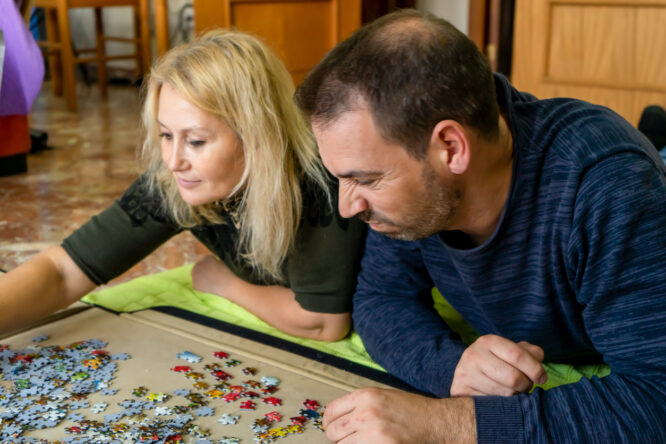
Remembering where that tricky little corner piece goes, or what shade of blue you’re looking for—it all requires short-term memory. Eventually, that type of mental recall sharpens your memory muscle. Even better, it builds up the connections between brain cells, which can help slow cognitive decline as you get older. It’s not magic; it’s just good old-fashioned brain training, one piece at a time.
They’re surprisingly calming.

There’s something about the repetitive, focused nature of puzzles that soothes your nervous system. You get into a flow, your breathing slows down, and your stress levels drop without you even noticing. It’s mindfulness without the pressure to be mindful. Just sorting, matching, and slowly seeing progress. It’s almost meditative, in the best kind of low-key way.
They improve your problem-solving skills.

Puzzles train you to look at things from different angles, try again when something doesn’t fit, and stay patient through the messy middle. All of that builds up your mental flexibility. You’re literally practising how to stay calm and keep trying until something clicks, which is a handy mindset to take into real-life problems, too.
They boost your mood (and your dopamine levels).
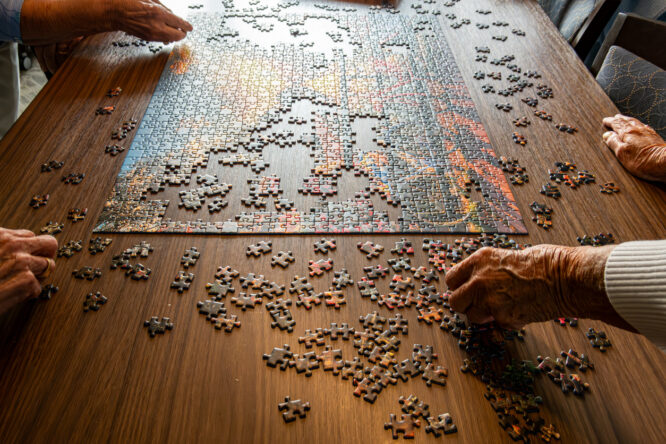
That little rush of satisfaction when you place a piece correctly? That’s dopamine kicking in. It’s your brain’s way of saying, “Nice one, do it again.” Each small win builds momentum, giving you a steady stream of feel-good chemicals. It’s like a reward system built into cardboard form, and it’s surprisingly effective at lifting your mood.
They can improve your attention span.

In a world full of distractions, puzzles demand patience and focus. You can’t really half-puzzle while scrolling Instagram. You have to give it your full attention. Focused concentration like that builds as time goes on, helping you re-train your brain to sit still and engage deeply. Great for anyone who’s been feeling a bit scatterbrained lately.
They encourage screen-free downtime.
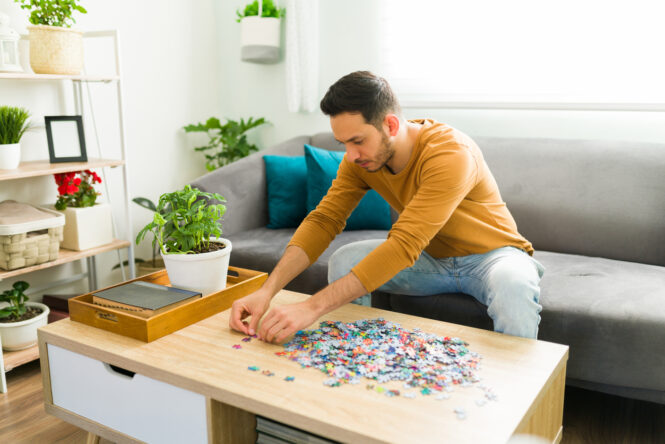
We’re all guilty of too much screen time, but puzzles offer a refreshing alternative. They give your eyes (and your brain) a break from the glow of phones, laptops, and TVs. It’s a way to relax without needing to scroll or stream—just you, the pieces, and maybe a cup of tea. Blissfully analogue, and surprisingly rewarding.
They improve visual-spatial reasoning.
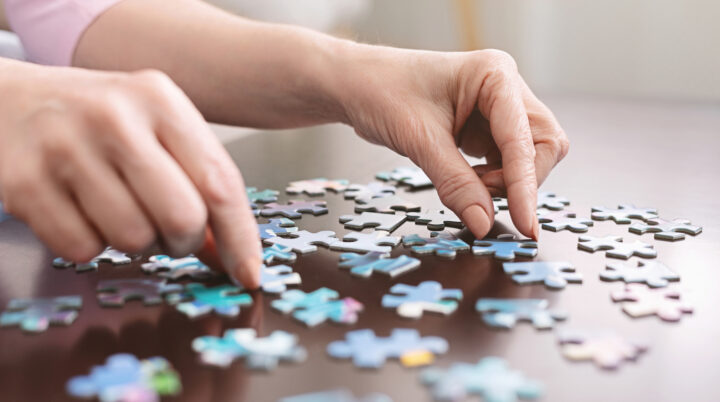
Figuring out where each piece fits is a lesson in visual logic. You’re constantly assessing shape, space, and pattern—skills that actually transfer to things like driving, reading maps, or packing a suitcase. The more you puzzle, the sharper this kind of reasoning gets. It’s low-stakes practice for high-stakes life skills, and it comes with that satisfying click every time you’re right.
They’re great for bonding (if you like people).
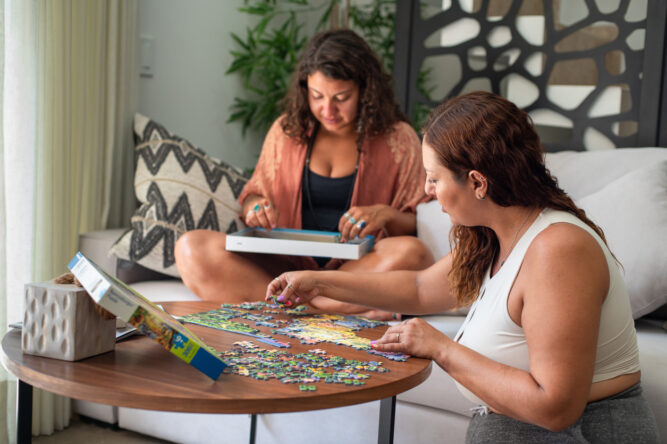
Whether it’s a family project or a quiet evening with your partner, puzzles offer a way to connect without needing constant conversation. It’s a shared focus that takes the pressure off socialising. There’s something lovely about working together in peaceful silence, or celebrating when someone finally finds the missing edge. It’s quiet, cosy teamwork at its finest.
They build patience (the sneaky kind).

Puzzles can be maddening, especially when you’re missing that one piece. But the process naturally trains you to slow down, breathe, and keep going. You’re not just building a picture, you’re building resilience. And while you might not notice it in the moment, that patient energy does start to spill into the rest of your life.
They give you a sense of accomplishment.
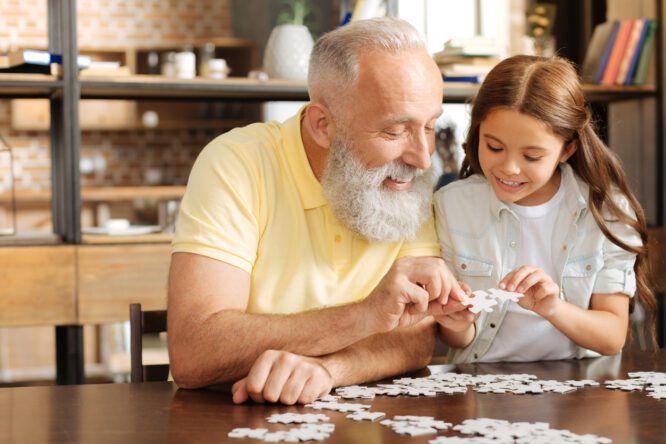
Finishing a puzzle, especially a big one, is wildly satisfying. There’s something deeply rewarding about seeing the whole thing come together, piece by piece, after hours of focus. It’s proof that you stuck with something and saw it through, which can be a real confidence boost. Plus, it gives you bragging rights (and maybe even a puzzle photo for your group chat).
They offer a break from the chaos.
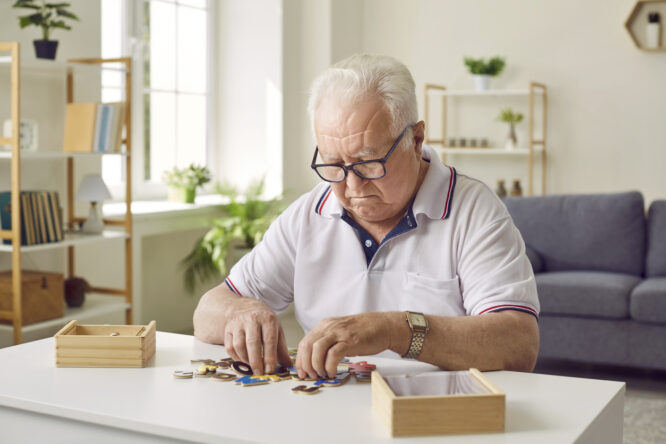
Life gets noisy. Work, chores, notifications, endless to-do lists—it never stops. But sitting down with a puzzle creates a quiet pocket in your day where nothing else matters. It’s you and a hundred little cardboard pieces, all waiting to make sense. It doesn’t fix everything, but it gives your brain space to breathe. And sometimes, that’s exactly what you need.