Not everyone who had a tough childhood grows up with obvious scars.

In fact, many of the signs live deep within your personality, shaping the way you think, connect, protect yourself, and even try to stay safe in everyday situations. These traits don’t mean something’s wrong with you. Most of the time, they’re survival tools you picked up early and carried into adulthood. That being said, knowing where they come from can help you stop blaming yourself and start giving those parts of you the patience they’ve always deserved.
1. You overthink absolutely everything.

If you grew up in an environment where things could go wrong quickly—arguments, punishments, mood swings—you probably learned to overanalyse situations to stay safe. You scan for risks, replay conversations, and try to anticipate what might happen before it does. That level of mental vigilance can make you seem thoughtful or highly self-aware, but it’s often rooted in a fear of getting it wrong. Overthinking, in this regard, is a form of self-protection.
2. You’re uncomfortable when things are going well.

People with painful childhoods often struggle to relax in moments of peace. Good times feel unfamiliar, or even suspicious. You might find yourself waiting for something bad to happen because that’s what life used to teach you. That discomfort doesn’t mean you’re broken. It’s just your nervous system still wired for chaos. Learning how to feel safe in calm, steady moments takes time, but it’s possible.
3. You second-guess your instincts constantly.

When you were taught not to trust your own feelings or were punished for speaking up, you probably learned to doubt yourself. Even now, you might hesitate to make decisions or question whether your reactions are “valid.” Your lack of self-trust is frustrating because deep down, you often do know what’s right for you. However, your early wiring taught you that your voice didn’t count, and that message is hard to shake without a bit of unlearning.
4. You’re overly independent.

Independence looks like strength on the outside, but for a lot of people, it’s a defence mechanism. If you learned early on that relying on other people led to disappointment, rejection, or guilt, you likely stopped asking for help altogether. Now, you might struggle to lean on people, even when you’re overwhelmed. Not because you don’t want connection, but because trusting people never felt safe or sustainable growing up.
5. You feel responsible for other people’s moods.

If you were raised around unpredictability, you probably developed a hyper-awareness of how other people were feeling. You learned to pick up on changes in tone, facial expressions, or tension, so you could adjust quickly and avoid drama. That skill might’ve kept you safe as a child, but as an adult, it often leads to emotional exhaustion. You take on things that aren’t yours, constantly monitor how other people are feeling, and blame yourself for problems that were never yours to fix.
6. You downplay your own needs.

Growing up in an environment where your needs were ignored, mocked, or met with guilt can lead you to stop expressing them altogether. You might find it hard to ask for what you want, even something simple, because it feels like a burden. As time goes on, this can make you feel invisible in your own life. You’ve learned how to take up as little space as possible, not because you want to, but because it felt safer than risking rejection.
7. You apologise too much.
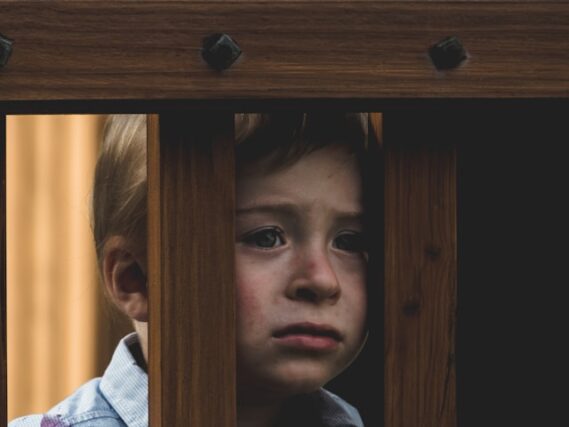
When you’ve been blamed unfairly, punished for honest mistakes, or made to feel like an inconvenience, “sorry” becomes a reflex. You start apologising for things that aren’t your fault, just to keep the peace. It’s not politeness, it’s a survival habit. It’s how you learned to avoid conflict, smooth over discomfort, and protect yourself. Still, it does a number on your self-worth after a while.
8. You’re drawn to emotionally unavailable people.

What’s familiar often feels comfortable, even when it’s painful. If you grew up around emotionally distant caregivers, part of you may unconsciously seek that same dynamic in adulthood, not because it feels good, but because it feels known. You might find yourself chasing people who can’t fully show up, while avoiding the ones who offer stability. It’s not self-sabotage; it’s your inner child still trying to “earn” the love they didn’t get back then.
9. You’re terrified of being a burden.

This runs deep. If your emotional needs were treated like an inconvenience, or if you were praised for being “the strong one,” you may now associate vulnerability with guilt or shame. Even when someone invites you to open up, part of you might hold back, worrying you’re asking too much. The truth is, healthy relationships can handle your feelings, but it takes time to believe that.
10. You struggle with boundaries.

Boundaries are about more than just saying no—they’re about believing you have the right to. If you were raised to put everyone else’s comfort over your own, setting limits can feel selfish or even dangerous. This often leads to over-accommodation, people-pleasing, or staying silent when you’re uncomfortable. Learning to protect your space isn’t mean; it’s a skill many people with painful pasts have to relearn slowly and consciously.
11. You’re hyper-aware of rejection.

Little things like a delayed reply, a change in tone, or someone being distracted can feel like rejection, even when they’re not. When you’ve experienced emotional abandonment early on, your brain becomes wired to expect it again and again. That sensitivity doesn’t make you weak. It’s your mind scanning for danger based on old wounds. However, it can make relationships tough if you don’t recognise that those fears are coming from the past, not always the present.
12. You laugh things off too quickly.

Humour is one of the most common ways people protect themselves. If you learned early on that vulnerability wasn’t safe, you might’ve replaced it with jokes, deflection, or self-deprecating humour. While it can make you seem laid-back, it also hides pain. Sometimes, the people who seem the funniest are carrying the heaviest emotional loads underneath, and they’re still hoping someone might notice.
13. You find it hard to believe people like you.

If you didn’t feel accepted or valued growing up, compliments can feel confusing. You might assume people are being polite, exaggerating, or don’t really mean it. Praise doesn’t land, it bounces off. This can make you question even the healthiest relationships. You wait for the moment it all falls apart because deep down, part of you still believes love has to be earned through effort—not given freely.
14. You feel older than your age.

People who had to grow up fast often carry a quiet weariness. You might’ve been the one looking after other people, staying out of the way, or being the “mature” one as a kid. And now, you feel permanently responsible for everything and everyone. Emotional ageing can make it hard to let go, relax, or play. Even when life gets easier, part of you stays on alert, like you’ve forgotten how to just exist without constantly managing things.
15. You find comfort in control.

Unpredictable childhoods often create adults who feel safest when everything is tightly managed. You might obsess over details, struggle to delegate, or panic when plans change unexpectedly. It’s not pickiness; it’s feeling helpless when things are uncertain. That need for control is often the echo of a younger version of you, trying to stay safe in a world that didn’t always feel stable.