Catching someone in a lie usually involves spotting tiny physical slips rather than waiting for a massive hole in their story.

These glitches happen because the brain is working overtime to keep a fake narrative going while the body is trying to act natural. When your partner is lying, their nervous system often goes into a bit of a tailspin, causing involuntary tics they can’t actually control. You’ve probably had that nagging feeling that something is off, but couldn’t quite put your finger on why. Usually, you’re picking up on these subtle physical tells where the words and the body language just aren’t matching up. These are the clearest indicators they’re hiding something, and once you know what to look for, it’s much harder for them to pull the wool over your eyes.
1. Their face reacts before the words do.

You ask something simple, and you see it first: a quick flicker of worry, a tiny freeze, a forced smile arriving late. It’s that split second where their expression looks like it’s answering a different question than the one you asked. It stands out most when you know their normal face, and this one feels like panic. If it happens every time you bring up one person, one place, or one missing detail, your gut starts joining the dots for you.
2. Their voice changes around one subject.

They might go higher, flatter, faster, or oddly careful, like they’re trying not to trip over their own words. There’s throat clearing, extra ums, or sudden over-explaining can show up here too. The key is consistency. If their voice only changes when you ask where they were, who they were with, or why something doesn’t add up, it’s worth clocking.
3. Their mouth gets weirdly busy.

Lip licking, swallowing a lot, chewing the inside of the cheek, pressing lips together, or touching their mouth can all be a stress tell. It can look small, but it often happens right when the question gets direct. Timing is everything. If they talk normally until you hit a certain topic and then the mouth stuff starts, it can feel like their body is trying to manage panic while they keep the story neat.
4. They suddenly need to do tasks.

You ask something straight, and they grab a mug, tidy nothing, open a drawer, check the fridge, adjust the telly. It’s like they need motion to avoid just standing there and answering. It can also buy them a few seconds to think, plus it breaks eye contact without making it obvious. If they only do it when you press for clarity, it doesn’t feel accidental.
5. Their eyes dart or they avoid your gaze.

This isn’t normal looking away. It’s quick scanning, to the side, down, at the door, at the phone, like they’re trying to escape the moment. Some people do the opposite and stare too hard, which can feel just as off. Either way, the eye contact stops feeling natural and starts feeling like a tactic.
6. They smile at the wrong time.

A forced smile is quick and tidy, and it doesn’t really touch the eyes. They might smile while answering a serious question, or grin like they’re trying to keep things light when you’re clearly not amused. The mismatch is what makes it unsettling. If they’re saying trust me while smiling like they’re selling something, it can make even a small lie feel bigger.
7. Their body angles away from you.

They might turn their shoulders, point their feet at the door, lean back, or put something between you. They’re still talking, but they’re also physically backing out of the moment. It’s most noticeable when it happens suddenly, right as you get close to the point. Even if they don’t mean to, it can read like they’re trying to stay out of reach.
8. They keep rubbing their neck or face.

Rubbing the back of the neck, scratching the jaw, touching the forehead, tugging an ear, running hands through hair again and again. It’s self-soothing, and it often ramps up when someone feels exposed. If it happens mainly during honesty chats, not during normal stress, it can feel linked. Repeating the same gesture around the same topic can make it hard to ignore.
9. Their breathing changes.

They hold their breath, breathe shallow, sigh at odd moments, or take a big inhale like they’re about to perform. The body starts acting like it’s under threat. Breath changes the whole energy in the room. If they breathe like they’re in trouble while insisting everything’s fine, it creates that uneasy mismatch you can’t unsee.
10. They flinch at notifications.

A buzz or ping makes them jolt, snap their eyes to the phone, or grab it too fast. It can be tiny, but it reads like that sound mattered a bit too much. It’s worse when they recover too quickly, laughing it off, changing the subject, suddenly acting extra normal. If phone stuff makes them twitchy all the time, it starts to feel like protection mode.
11. Their hands don’t know where to go.

Clenched hands, fingers tapping, fiddling with rings, picking nails, gripping a mug like it’s a stress ball. It’s like their hands are doing the talking when they’re trying not to. One fidget means nothing, but a whole cluster can. If their hands get frantic specifically when you ask for details, it’s a sign they’re not comfortable with what they’re saying.
12. They laugh to dodge the moment.

Some people laugh when nervous, but this is more like a shield. You ask a serious question, and they give a quick laugh, then a line that makes you feel silly for asking. It can flip the mood fast and shut you down without them having to say stop. If laughter shows up most when you’re close to the truth, it can feel like a move.
13. They go unusually still.

Not everyone fidgets. Some people freeze, hold a stiff posture, keep their face blank, and make careful movements, like they’re trying not to leak anything extra. If the stillness only appears during honesty chats, it’s hard not to connect it. It can feel like they’ve stepped back inside themselves while the words keep coming.
14. They look away for the key bit, then look back to check you.

They deliver the important line while looking away, then snap their eyes back to see if you bought it. The eye contact becomes less about closeness and more about feedback. You might also see a quick subject change right after, as if they want to move on before you ask a follow-up. The little check-in glance can feel strangely calculated.
15. You see relief the second they think you’ve accepted it.
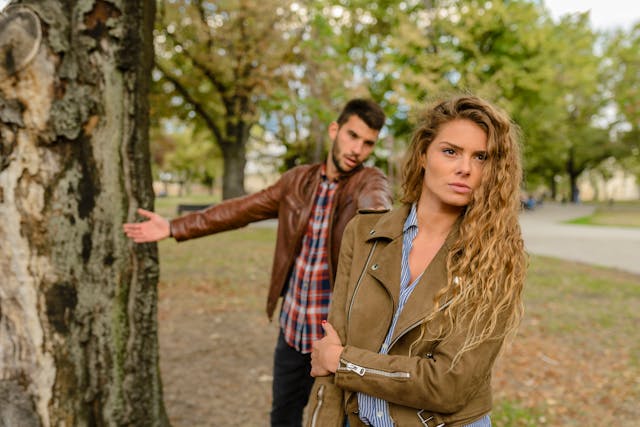
They tense up during the question, then the moment you stop pushing, they visibly unclench. Their shoulders drop, breath releases, their face softens, and they suddenly act normal again. That relief can feel louder than the story itself. If they only relax when you stop asking questions, it can leave you thinking they weren’t just stressed about conflict, they were stressed about being caught.