Cat pregnancy, or “queening,” usually lasts around nine weeks, and a lot can change during that time.
If your cat’s expecting, it helps to know what’s normal (and what’s not) at each stage, so you’re not caught off guard. If you’re curious about what’s going on in their little bodies, here’s a week-by-week guide to what’s going on with your cat and what you can expect along the way.
Week 1: Conception and fertilisation
You won’t notice anything just yet, especially if your cat mated outdoors or without supervision. After successful mating, sperm meets egg and fertilisation takes place. The embryos will begin their journey to the uterus, where they’ll eventually implant. There are no physical signs of pregnancy this early. If you weren’t aware your cat was in heat, you might not even know anything happened. For now, it’s all happening quietly on the inside.
Week 2: Implantation begins

The fertilised embryos are now embedding into the uterine lining, where they’ll start to develop into kittens. Hormonal changes begin, but they’re not obvious from the outside just yet. Your cat might start behaving a little differently, perhaps more affectionate or more tired than usual, but these signs are subtle. Most owners won’t notice anything unusual at this point.
Week 3: Subtle early signs

This is when you might notice your cat’s nipples becoming slightly more pink or prominent. This is often called “pinking up.” It’s one of the first visible signs that she might be pregnant. Some cats may also experience mild morning sickness around this time, leading to reduced appetite or a bit of vomiting. It usually passes quickly, but if it doesn’t, it’s worth getting her checked out.
Week 4: Time for a vet check
By now, a vet should be able to confirm pregnancy with a physical examination or ultrasound. The kittens are still tiny, but growing steadily, and the pregnancy is becoming more obvious. Your cat may begin eating a bit more and resting more often. This is a good week to start feeding her a high-quality kitten food because it’s packed with the extra nutrients she’ll need as things progress.
Week 5: The belly starts to swell

This is when you’ll likely notice her tummy getting rounder. It’s a gentle, even swelling; nothing drastic, but it’s usually enough that you can tell she’s expecting just by looking at her. You may also notice her appetite ramping up. Her body is working overtime now, so make sure she’s got access to plenty of food and fresh water throughout the day.
Week 6: Movement and mood changes
At this stage, you might be able to feel or see tiny movements if you gently place your hand on her belly. The kittens are more developed now and are starting to shift about. Some cats become extra cuddly during this time, while others go the opposite way and get a bit grumpy or more private. Respect her mood, give her space if she wants it, and keep her environment calm and quiet.
Week 7: Nesting begins

Your cat may start looking for quiet corners or secluded spots around the house, and this is the beginning of nesting behaviour. She’s instinctively preparing a safe space for the birth. You can help by setting up a comfortable, low-sided box lined with blankets or towels in a peaceful part of your home. Don’t be surprised if she still ignores it for now. Cats can be fussy about their chosen spot.
Week 8: Final growth spurt
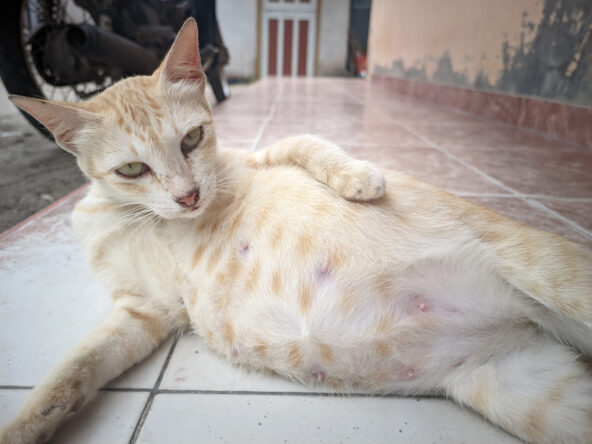
The kittens are nearly fully formed and putting on weight quickly, which means your cat’s belly is getting noticeably bigger. She may start walking a bit slower and resting even more than before. You might see her grooming herself more frequently or even panting occasionally, and that’s because her body is preparing for labour. Keep her litter tray and food bowls easily accessible, and minimise any stress in her surroundings.
Week 9: Labour signs and delivery
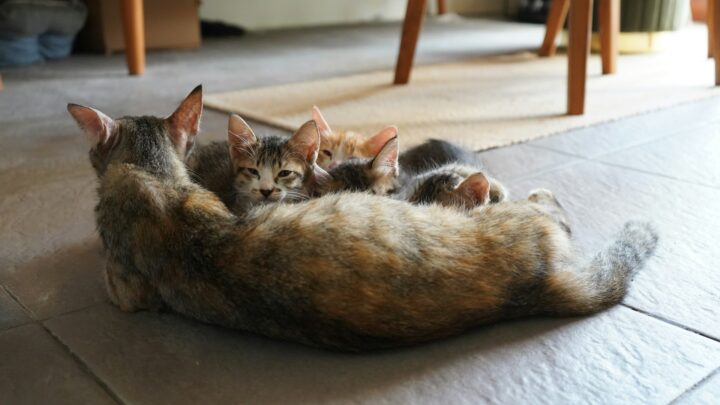
It’s almost time. Your cat might lose her appetite, become restless, or start vocalising more than usual. You might also see her going in and out of her nesting area repeatedly, and this means labour is near.
Most cats give birth without needing help, but it’s important to keep an eye on her during this time. If she seems in distress, has contractions for more than an hour without delivering, or goes longer than 24 hours after nesting behaviour without giving birth, call your vet immediately.