Some religious ideas have been reshaped by science over the years, while others have stuck around long after the evidence said otherwise.

The point here isn’t to attack anyone’s personal beliefs, which everyone has a right to and deserves to hold without mockery. However, it’s important to look at the places where science and religion have clashed, and why certain outdated views still linger in people’s minds, even when the facts are clear. Here are 16 religious claims that science has already disproven, but plenty of people still treat as truth.
1. The Earth is only a few thousand years old.
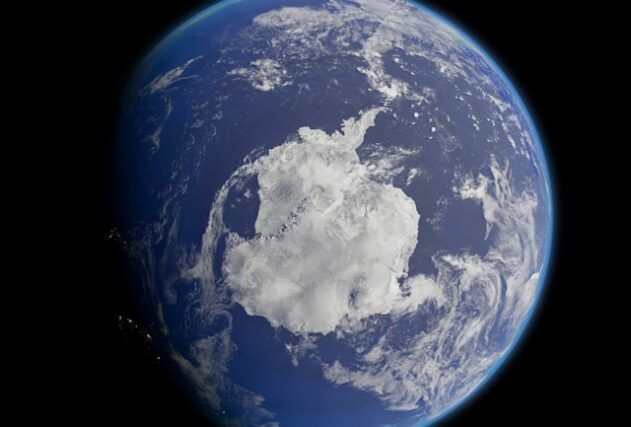
Young Earth creationism claims the planet is around 6,000 to 10,000 years old, based on biblical timelines. However, radiometric dating, ice cores, and geology have all confirmed that Earth is roughly 4.5 billion years old. That’s not a vague guess, either. It’s literally backed by layers of evidence across multiple fields. Despite this, some groups still hold tight to the young Earth idea, often as a core part of their worldview. For them, accepting the science would mean rethinking huge chunks of belief, so they just don’t.
2. Humans and dinosaurs lived at the same time.

This belief mostly stems from trying to fit dinosaurs into a biblical timeline. Some claim Noah took them on the ark, or that fossils are a test of faith. However, everything from carbon dating to fossil layers shows that dinosaurs died out around 65 million years ago, long before humans showed up. There’s no scientific overlap between humans and dinosaurs, despite what some museum dioramas or creationist textbooks might suggest. It’s not even close.
3. The Sun revolves around the Earth.

Once a dominant religious teaching, geocentrism was replaced centuries ago by the heliocentric model, thanks to scientists like Copernicus and Galileo. We now know the Earth orbits the Sun, not the other way around. Still, there are small groups today that insist the Bible’s descriptions of the Earth being immovable are literal and correct, dismissing centuries of astronomy as false.
4. Evolution didn’t happen.

Some people still reject evolution entirely, despite the mountain of evidence from fossils, genetics, and observed changes in species. Evolution by natural selection is one of the most thoroughly supported ideas in science. The pushback often comes from a desire to preserve the idea of humans as a unique, specially created species, rather than the result of a long, natural process. The thing is, the evidence keeps stacking up, whether people accept it or not.
5. The flood covered the whole Earth.

The story of a global flood wiping out all life except what was on a single ark is powerful, but geology, archaeology, and ice core data don’t support it. There’s no sign of a global flood in Earth’s physical history. There were massive regional floods in ancient times that may have inspired the myth, but the idea of the entire planet being submerged at once just doesn’t hold up under scientific scrutiny.
6. The Earth is flat.
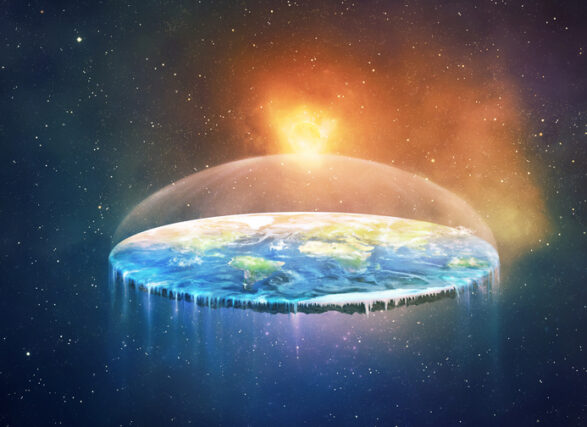
This one feels like it should be gone by now, but it still exists in some extreme religious and conspiracy circles. Flat Earth claims have been thoroughly debunked by centuries of observation, space travel, and even simple physics. Still, for a small number of believers, the idea of a flat Earth aligns with certain literal interpretations of religious texts. The science is there, but the belief, oddly, hasn’t fully disappeared.
7. Diseases are caused by demons or sin.
In many religious traditions, illness was seen as a punishment from a higher power, or the result of demonic possession. However, science has shown us that diseases are caused by bacteria, viruses, genetics, and environmental factors, not moral failings or spiritual interference. Even now, some people believe prayer or repentance alone can cure serious illnesses, turning away from proven medical treatments. That belief can be dangerous, and in some cases, fatal.
8. The heart controls your thoughts.

Ancient religious texts often talk about the heart as the centre of thought, emotion, and will. But science has made it clear that the brain is responsible for all cognitive function. The heart pumps blood. It doesn’t make decisions or hold memories. We still use the language of “speaking from the heart” or “listening to your heart,” but the actual belief that it controls thoughts is long outdated, at least in scientific terms.
9. Humans came from a single couple.

The idea of all humans descending from just Adam and Eve is common in many religious teachings. But genetics shows that human ancestry is far more complex. Our species came from a large, diverse population, not just two individuals. It’s not just about numbers. It’s about how genes are passed down and how populations grow. There’s no way humanity could’ve sprung from one couple without major genetic consequences, and the evidence just doesn’t support it.
10. The universe is fixed and unchanging.
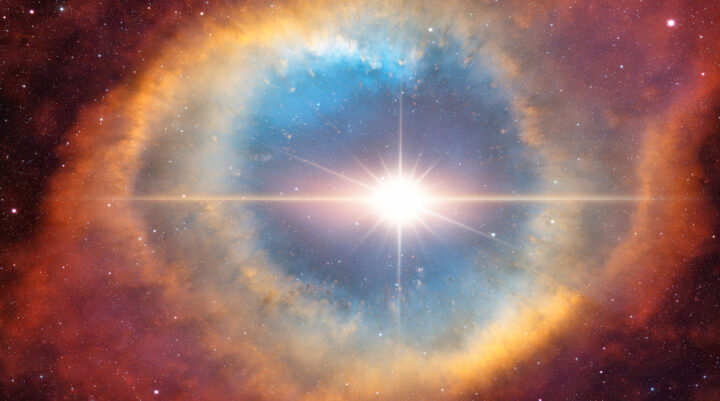
For a long time, religious texts described the universe as static, unchanging since creation. However, science tells a different story. The universe is expanding, stars are born and die, galaxies move and collide. It’s anything but still. This discovery rewrote our understanding of existence, but some beliefs still cling to the idea that everything was created all at once, and hasn’t changed since. The night sky, though, holds the key to the truth.
11. Prayer alone can change physical outcomes.

While prayer can be powerful emotionally or spiritually, studies have consistently shown it doesn’t produce measurable physical effects when used alone, especially in medical outcomes. It’s not a replacement for treatment or action. That doesn’t mean prayer has no value. It can offer comfort and focus, but expecting it to physically alter the world on its own ignores how health, recovery, and natural processes actually work.
12. Humans were created fully formed.

Many religions describe humans being created instantly and completely, formed by divine hands in their final state. However, evolution shows a slow, gradual development from earlier species over millions of years. Our upright posture, opposable thumbs, and large brains didn’t just appear. They evolved, bit by bit. The fossil record shows this clearly, even if some belief systems choose to overlook it.
13. The stars exist just to serve humanity.

Some interpretations suggest the sun, moon, and stars were placed in the sky solely for humans: to give light, track time, and signal events. Of course, we now know stars are massive nuclear furnaces, many with planets of their own, and most have nothing to do with us at all. The universe is far bigger and more complex than we once imagined. We’re a tiny part of it, not the reason for all of it.
14. Animals don’t have souls or emotions.

Some religious views treat humans as uniquely conscious or feeling beings, while animals are seen as lesser or soulless. However, behavioural science and neuroscience say differently. Many animals form bonds, feel stress, play, grieve, and even show empathy. The line between humans and animals isn’t as thick as we once thought. While beliefs about souls are personal, it’s hard to deny animals have rich inner lives of their own.
15. Hell is physically located underground.

Older religious teachings sometimes placed hell beneath the Earth, literally below us. The reality is that deep beneath the crust, there’s magma, tectonic activity, and layers of rock. There’s zero evidence of a fiery realm filled with tortured souls. Most modern interpretations are more symbolic, but the literal version still sticks in some people’s minds. Science has explored what’s underground, and it’s not what scripture once suggested.
16. Lightning is a punishment from the gods.

In ancient religions, lightning was often seen as a sign of divine anger, a bolt thrown from the heavens. However, we now understand it’s a natural electrical discharge caused by the interaction of charged particles in the atmosphere. We can measure it, predict it, and even harness it in controlled ways. It’s impressive, but it’s not aimed at anyone for moral reasons. It’s just physics playing out in the sky.