AI isn’t coming for jobs anymore. In fact, it’s already here and eating them alive.
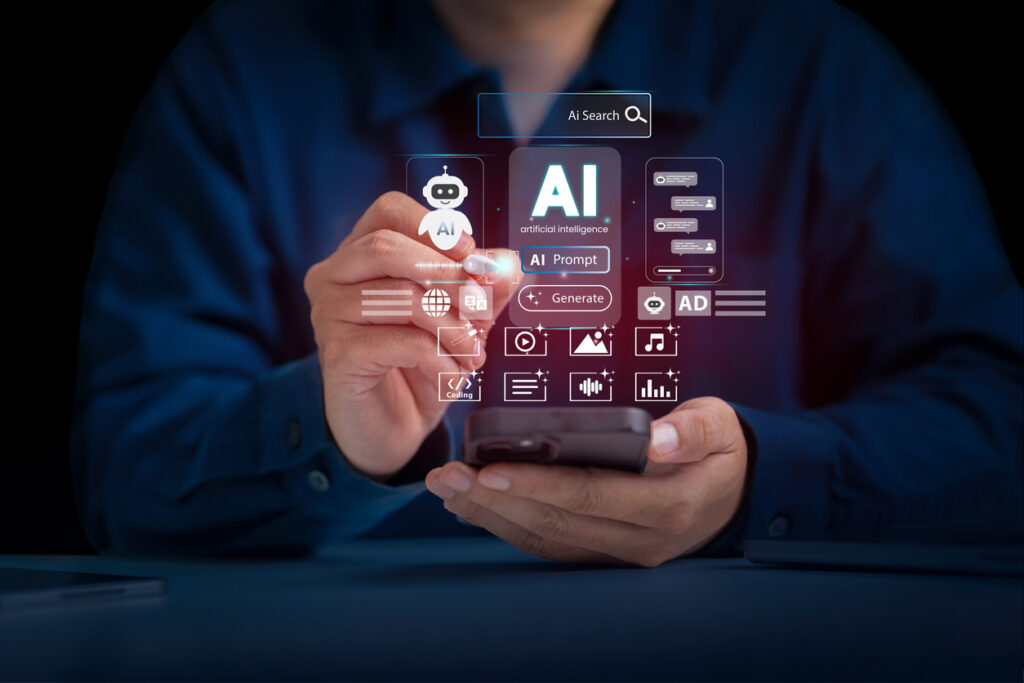
At the World Economic Forum in 2020, experts predicted that 85 million positions would vanish by 2025 and entire industries would face complete transformation. While things haven’t been quite as dire as previously expected, we’re definitely on a downhill slide in many fields thanks to advancing technology. Here are some of the jobs that probably won’t exist in another decade, at least not in their current incarnations.
1. Customer service representatives are already being replaced en masse.

AI chatbots and virtual assistants now handle 80% of routine customer interactions, with companies reporting massive cost savings. IBM’s AskHR system processes 11.5 million interactions annually with minimal human oversight.
Call centres are shrinking rapidly as AI tools work around the clock without breaks, sick days, or salary increases. Companies that once employed hundreds of agents now operate with skeleton crews of specialists handling only the most complex complaints.
2. Data entry clerks face complete obsolescence.

Software can process vast datasets in seconds, while humans struggle through spreadsheets for hours. AI systems make fewer mistakes and never get tired or distracted by office politics, and company bosses like the sound of that.
Why would any business pay humans to input information when AI does it faster, more accurately, and costs less than a monthly coffee budget? These roles are disappearing at breakneck speed across every industry.
3. Bank tellers and cashiers are becoming museum pieces.

Digital banking and self-checkout systems have already eliminated thousands of positions, with employment projections showing a 15% decline for bank tellers and 11% for cashiers by 2033 in the US. That’s over 400,000 jobs vanishing, and things are unlikely to be any better in the UK.
Physical transactions are increasingly rare as people embrace contactless payments and online banking. The few remaining human cashiers mostly supervise self-service machines rather than actually processing payments themselves.
4. Manufacturing workers face the robot revolution.
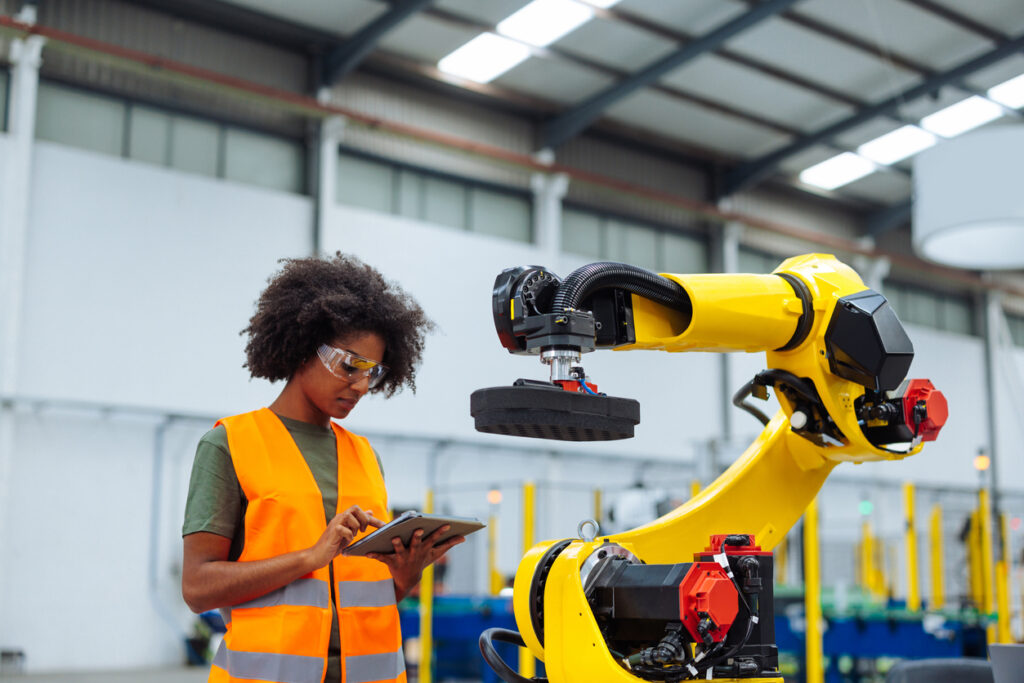
MIT research shows AI will replace 2 million manufacturing workers by 2025, with robots becoming more precise and reliable than human hands. Assembly lines increasingly run with minimal human supervision. Sure, things go wrong, but not often enough to keep a whole team of human workers on the books.
Factories are redesigning operations around robotic systems that never need breaks, never call in sick, and don’t require health insurance. The writing’s been on the wall for decades, but now it’s happening at unprecedented speed.
5. Junior lawyers and paralegals are possibly on the line to get automated out.

AI scans legal databases faster than entire research teams, identifying relevant cases and cross-referencing statutes in minutes rather than days. Law firms are replacing research departments with software subscriptions, and that’s kind of scary.
Document review, contract analysis, and basic legal research, once reliable entry points into law careers, can now be handled by AI tools with superior accuracy. Firms are questioning why they need armies of junior associates doing work that computers can complete overnight.
6. Financial analysts might see their expertise devalued.

AI analytics tools process market data and spot trends faster than human analysts, with Bloomberg research showing 53% of market research analyst tasks could be automated. Wall Street loves efficiency, and humans aren’t efficient enough. Sorry, finance bros.
Algorithmic trading already accounts for 70% of equity market volume, while AI models analyse thousands of financial reports in the time it takes humans to read one. The days of manually crunching numbers are ending fast.
7. Medical transcriptionists could become redundant overnight.

AI-powered speech recognition transcribes doctor-patient conversations with near-perfect accuracy, eliminating the need for human transcription services. Healthcare systems are rapidly adopting these tools to cut costs. Data security is a big concern, but it’s unlikely to slow down the adaptation of this technology in the sector.
Voice-to-text technology has improved dramatically, understanding medical terminology and context better than many human transcribers. Hospitals are saving thousands while getting faster, more accurate results.
8. Travel agents are starting to lose their purpose entirely.

AI platforms can plan complex itineraries, compare prices across hundreds of sites, and make bookings instantly. They never forget client preferences and work 24/7 without commission pressure. Those are some pretty big draws for customers.
Travellers increasingly bypass human agents for AI-powered booking systems that offer personalised recommendations based on preferences, budget, and past behaviour. The convenience and cost savings make human agents seem unnecessary for most trips.
9. Insurance underwriters are on the line to get algorithmic replacements.

AI algorithms evaluate risk based on massive datasets, making faster and more accurate decisions than human underwriters. They can process thousands of applications in the time humans handle dozens. That doesn’t mean they’ll do so accurately, but many companies aren’t so concerned with fairness when it comes to approving claims.
Insurance companies are discovering that machine learning models outperform experienced underwriters at predicting risk and detecting fraud. Human expertise is becoming less valuable than algorithmic precision.
10. Translators face AI that never stops improving.

Modern translation AI handles multiple languages with increasing accuracy, processing documents instantly rather than taking days or weeks. It works around the clock and costs a fraction of human translators. It’s also shockingly accurate, which is a definite plus.
Microsoft’s research identified translators as having the highest AI applicability score, meaning their work overlaps most closely with current AI capabilities. Real-time translation tools are making human linguists look painfully slow and expensive.
11. Radiologists and medical imaging technicians get outperformed.

AI can analyse X-rays, MRIs, and CT scans faster and more accurately than human technicians, assisting doctors in making diagnoses. Machine learning models spot patterns that human eyes miss.
Medical imaging departments are discovering they need fewer technicians as AI handles routine scans automatically. The technology processes thousands of images in the time it takes humans to review dozens, with superior accuracy rates.
12. Market research analysts lose their relevance.

AI tools can survey thousands of consumers, analyse social media sentiment, and predict market trends without human intervention. They process data from sources humans can’t even access efficiently.
Research companies are replacing entire teams with AI systems that monitor consumer behaviour 24/7 and generate insights instantly. Traditional market research methods look archaic compared to AI-powered analytics that never sleep.
13. Bookkeepers and basic accountants are going to get digitised out.

Accounting software now handles invoicing, expense tracking, and basic financial reporting automatically. AI can reconcile accounts, flag discrepancies, and generate tax documents without human input.
Small businesses are discovering they don’t need human bookkeepers when cloud-based AI systems manage their finances more accurately and cost a fraction of professional fees. Basic accounting work is becoming completely automated.
14. Retail workers face the self-service takeover.

Self-checkout systems, automated inventory management, and AI-powered customer assistance are reducing the need for human retail staff. Amazon’s cashier-less stores prove the concept works at scale. The same goes for shops that don’t have any actual tills open and just have a single employee roaming the shop floor for when the automated checkouts inevitably mess up.
Traditional retail jobs are disappearing as stores embrace technology that eliminates checkout queues and reduces staffing costs. The few remaining workers mainly assist with complex customer issues or handle exceptions.
15. Truck drivers may eventually confront autonomous vehicle reality.

Self-driving technology is advancing rapidly, with companies like Waymo and Tesla making autonomous trucking commercially viable. Long-haul routes are perfect for AI systems that don’t need rest breaks. If it sounds dangerous and potentially fatal to you, you’re not alone.
Nevertheless, transportation companies are investing heavily in autonomous fleets that operate continuously without driver wages, insurance costs, or regulatory limitations. The economics make human drivers increasingly uncompetitive.
16. Content moderators get replaced by pattern recognition.

AI systems can scan millions of posts, images, and videos for inappropriate content faster than human moderators. They work continuously without psychological burnout from exposure to disturbing material.
Social media platforms are switching to AI-based content moderation that identifies violations instantly and consistently applies community standards. Human moderators are becoming supervisory roles rather than front-line reviewers.
17. Journalists and content writers face algorithmic competition, which is tough.

AI can generate news articles, product descriptions, and marketing copy at unprecedented speed. Tools like GPT can produce engaging marketing copy or even long-form reporting in minutes that would take humans hours or days. Media companies are experimenting with AI-generated content for routine reporting such as financial earnings, sports scores, and weather updates.
Basic writing tasks are increasingly automated, while humans focus on investigative and creative work. It’s not particularly foolproof, though. Lest we forget the controversy just a few months ago when The Chicago Sun-Times published a list of upcoming summer reads that included 15 books, 10 of which didn’t even exist and that AI totally made up. Oops?
18. Software testers may get automated by intelligent systems.

AI can test software applications more thoroughly than humans, running thousands of scenarios simultaneously and identifying bugs that manual testing might miss. Automated testing is faster, more comprehensive, and cheaper.
Development teams are adopting AI testing tools that work continuously, checking code quality and functionality without human intervention. Manual testing roles are shrinking as intelligent systems handle routine quality assurance.
19. Real estate appraisers could lose ground to algorithms.

AI systems can evaluate property values using vast databases of comparable sales, market trends, and neighbourhood data. They process information faster than human appraisers and eliminate subjective bias.
Banks and lenders are increasingly relying on automated valuation models that provide instant property assessments. Traditional appraisal work is becoming limited to complex or unique properties that require human expertise.
20. Tax preparers will likely become obsolete through automation.

Tax software can now handle complex returns automatically, importing data from multiple sources and applying current regulations without human intervention. AI systems update tax codes instantly and ensure compliance. You can already see this in HMRC’s new Making Tax Digital rule coming in for those who complete self-assessment returns annually.
Similar to basic accountants, professional tax preparation services are struggling as individuals and businesses use AI-powered software that costs less and delivers results faster than human preparers. The industry is consolidating as demand for human expertise diminishes.