It’s easy to blame your birth year when you start feeling sluggish and worn out, but your age is often the least important part of the equation.

You might only be in your 20s or 30s, yet you’re waking up with the kind of stiffness and mental fog you’d expect from someone twice your age. It isn’t usually some mysterious illness or just bad luck; it’s the result of a dozen tiny, everyday habits that are effectively draining your battery before you’ve even had a chance to start the day. You’ve probably got so used to feeling half-dead that you’ve forgotten what it’s like to actually have a bit of a spark.
Most of us are walking around in a state of self-inflicted exhaustion because we’ve prioritised convenience or work over basic maintenance. Whether it’s the way you’re glued to a screen until 2 am or the fact that you’ve replaced actual water with caffeine, these choices are adding years to your biological clock. You’re forcing your body to work overtime just to keep you functional, and eventually, that constant strain starts to show in your posture, your skin, and your mood. Unfortunately, these all-too-common habits are often the biggest culprits for making you feel like you’re ready for retirement decades before your time.
1. You start every day already behind.

If your mornings feel like a panicked sprint from the second your eyes open, it ages you fast. Your brain doesn’t get a chance to wake up properly, your body stays tense, and you end up feeling like you’ve already had a full day before 9am. Even if nothing terrible happens, the constant rush makes life feel heavier than it needs to.
This often happens when you’re squeezing too much into your mornings, or you’re sleeping right up until the last possible minute. It can help to give yourself even ten extra minutes, not for productivity, but so you can start calmly and feel like a person again. Small changes add up quicker than you’d think.
2. You live on low-grade stress like it’s normal.

Some people don’t even realise they’re stressed because it’s become their default setting. Their shoulders are always up, their jaw is always tight, and they’re constantly bracing for the next thing. When your body lives like that every day, you start feeling worn out in a way that doesn’t go away with one early night.
Even if your life is busy, it’s worth paying attention to the stress you’re carrying for no reason. Half of it is mental noise, overthinking, doom-scrolling, or feeling like everything has to be solved right now. If you can lower the constant pressure by even a small amount, you’ll feel younger in your body almost immediately.
3. You sit for hours without moving properly.

Sitting isn’t evil, but staying in one position for too long makes your body feel ancient. Your hips tighten up, your back gets stiff, your circulation slows down, and you start walking around like you’ve aged ten years overnight. The worst part is it happens even if you go to the gym because a one-hour workout doesn’t cancel out ten hours of stillness.
You don’t need to become a fitness person to fix it. Stand up more, stretch your legs, walk around while you’re on a call, or do a quick lap of your home every hour. The goal isn’t to be impressive. It’s to stop your body from feeling like it’s been folded in half all day.
4. You’ve normalised being tired all the time.
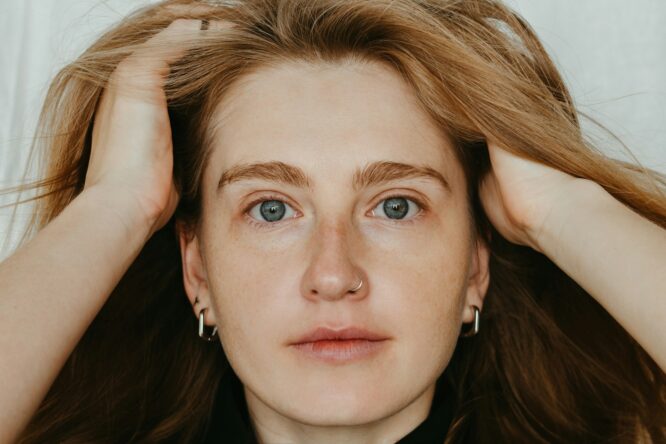
There’s a difference between being a bit sleepy and feeling permanently drained. When you’re always tired, everything feels harder, you move slower, you’re less patient, and even simple tasks start to feel like effort. It’s one of the quickest ways to feel older than you are because you’re basically living with your energy stuck on low.
A lot of people blame age when it’s actually lifestyle. Poor sleep, late nights on your phone, too much caffeine, and stress can all keep you in that exhausted state. If you’re constantly running on fumes, it might not be your age catching up with you, it might be your habits catching up with you.
5. You doom-scroll like it’s a hobby.

Doom-scrolling doesn’t just waste time, it drains you. Your brain is taking in bad news, arguments, misery, fear, and nonsense all in one sitting, and it never gets a chance to switch off. You might not feel it in the moment, but afterwards you feel heavier, more tense, and strangely flat.
It also messes with your sleep and attention span, which makes you feel foggy and scattered during the day. People underestimate how much younger they feel when they stop flooding their head with constant noise. Even cutting it down a bit can make you feel more awake and more present in your own life.
6. You eat in a way that constantly leaves you sluggish.
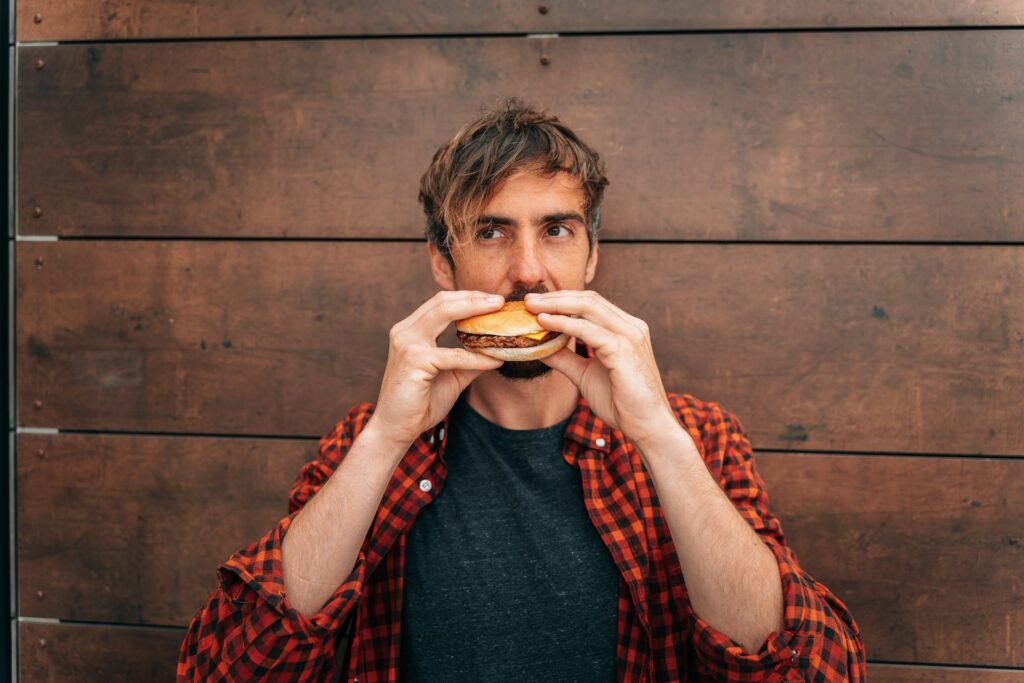
It’s not about being strict or perfect, but food can make you feel either lighter or heavier. If you’re always eating stuff that leaves you bloated, sleepy, and unfocused, you’ll start feeling older because your body is working harder than it should. It’s like walking around with a weighted backpack all day.
Most people don’t need a diet, they just need meals that don’t knock them out. More water, more protein, more proper meals instead of constant snacks, and fewer sugar crashes can make a ridiculous difference. You’re not trying to be healthy for the sake of it. You’re trying to feel like yourself again.
7. You barely drink water unless you remember at 9pm.

Dehydration makes you feel slow and dried out in every possible way. Your energy drops, your skin looks dull, your head hurts, and your body feels stiff. People don’t realise how much they mistake dehydration for just feeling old or run down.
You don’t need to carry a massive bottle everywhere, but you do need to drink more than two sips of water a day. If you regularly feel tired, achy, or foggy, start there. It’s one of the easiest changes, and it can make you feel better within a day.
8. You treat movement like something you only do when you have to.

If you only move when you’re forced to, like commuting or carrying shopping bags, your body starts feeling stiff and sluggish. Your joints lose their easy movement, your posture gets worse, and you feel like you’re running on creaky hinges. That older feeling isn’t always age, it’s often just lack of movement.
This doesn’t mean you need to start running marathons. Walking counts. Stretching counts. Even a bit of dancing around your kitchen counts. The point is to keep your body feeling alive instead of stuck in low-power mode.
9. You sleep badly but pretend it’s fine.

Bad sleep ages you faster than almost anything. You look older, you feel older, and you act older because your brain isn’t functioning properly. You’re more sensitive, more reactive, and less able to deal with normal day-to-day stress without snapping or shutting down.
Sleep isn’t just about the hours, it’s about the quality too. If you wake up tired most days, something’s off, even if you’re technically getting enough sleep. A darker room, less phone time late at night, or a more consistent bedtime can help more than people expect.
10. You’re always carrying tension in your body.

Some people hold stress in their body like it’s part of their personality. Tight shoulders, clenched jaw, shallow breathing, stiff neck, all of it. After a while, it makes your body feel older because you’re constantly braced like you’re about to be hit by something.
The annoying part is you don’t always notice until you stop and check in. A few slow breaths, stretching your shoulders, unclenching your face, and relaxing your hands sounds simple, but it genuinely helps. You’re telling your body it’s safe to stop being in fight mode for once.
11. You don’t rest properly, even when you get time.

There’s a type of rest that isn’t actually rest. You finish work, sit down, and then your brain stays on. You scroll, you stress, you plan, you worry, and you never really recover. So even when you’ve technically had a break, you still feel exhausted because your mind never powered down.
Proper rest sometimes means doing something that actually calms you. A walk, a bath, reading, watching something comforting, or even sitting in silence for ten minutes can do more than an hour of distracted scrolling. Rest isn’t laziness. It’s recovery, and without it, you’ll feel worn out constantly.
12. You don’t see daylight enough.

If you leave the house in the dark and come home in the dark, your whole body starts feeling off. Your mood drops, your energy gets weird, and you feel like you’re stuck in survival mode. Lack of daylight makes you feel older because it messes with your sleep, your hormones, and your overall sense of wellbeing.
Even a short walk outside during the day can help. Sit near a window, go outside for a coffee, or take a break somewhere you can actually see the sky. It sounds small, but your body needs it more than you think, especially in the UK when daylight is limited for months.
13. You never do anything playful anymore.

One of the biggest signs someone feels old is when their life becomes nothing but chores, work, and responsibilities. No laughter, no messing around, no fun plans, no silly moments. When everything becomes serious and practical, it sucks the youth out of you, even if you’re technically still young.
Being playful doesn’t mean being immature. It means having moments where you feel light again. Seeing mates, doing something random, trying something new, laughing at something stupid, all of that matters. It reminds your brain that life isn’t just about coping.
14. You talk to yourself like you’re already past it.

The way you speak about yourself matters more than people admit. If you keep saying things like I’m too old for this, or I can’t do that anymore, your brain starts believing it. Then you move through life like you’re already declining, even if you’re nowhere near it.
It’s not about forcing positivity, it’s about not writing yourself off. You can feel tired without deciding you’re finished. You can have an off month without declaring you’re getting old. Give yourself space to change because the story you tell yourself has a bigger impact than you think.
15. You push through everything and never reset.
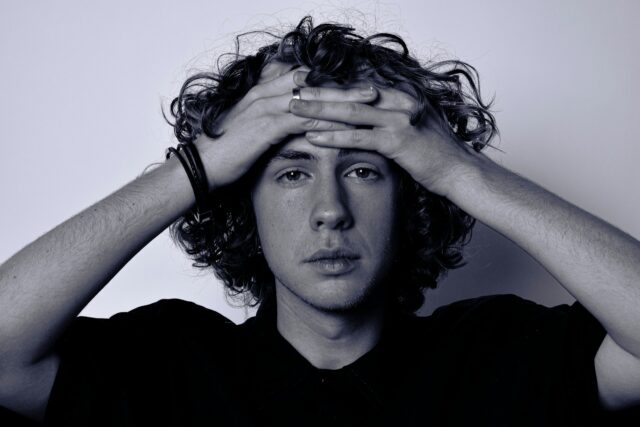
Some people are addicted to pushing through. They power on, keep going, ignore the signs, and act like rest is something they’ll earn later. But your body doesn’t work like that. If you never reset, you start feeling older because you’re constantly drained, and you never get a chance to properly recover.
Resetting doesn’t have to be dramatic. It can be a slow weekend, an early night, a day off social plans, or even just giving yourself one calm hour in the evening. The goal is to stop living like you’re always running late for your own life.