
Your cosy bed harbours some genuinely disgusting secrets. What seems clean and comfortable is actually a thriving ecosystem of microscopic creatures, bodily fluids, and accumulated filth that would horrify you if you could see it. If you’re guilty of leaving your sheets and duvet unwashed for longer than you’d like to admit, knowing these things might change your behaviour.
1. You’re sleeping with millions of dust mites every night.
Your mattress and pillows are home to anywhere between 100,000 to 10 million dust mites, tiny creatures that feed on the dead skin cells you shed whilst sleeping. They’re literally eating you whilst you sleep, producing waste that accumulates in your bedding.
These microscopic arachnids thrive in warm, humid environments, which is exactly what your body creates under the covers. Their faeces and decomposing bodies become airborne when you move around, which you then breathe in all night long.
2. Your pillow weighs significantly more than when you bought it.
After two years of use, up to one-third of your pillow’s weight consists of dead skin cells, dust mites, and their droppings. The fluffy comfort you rest your head on is essentially a compressed collection of organic waste. Old pillows become so saturated with biological matter that washing them becomes nearly impossible. The accumulated grime is embedded deep within the fibres, creating a permanent colony of microscopic life that can’t be easily removed.
3. You sweat out a litre of fluid every night.
Even when you don’t feel sweaty, your body releases approximately one litre of moisture through breathing and perspiration during eight hours of sleep. This moisture soaks into your sheets, mattress, and pillows every single night.
That moisture doesn’t just evaporate. Instead, it gets absorbed by your bedding along with the salts, oils, and other compounds your body eliminates. Over time, this creates a concentrated cocktail of bodily fluids that permeates everything you sleep on.
4. Your sheets collect more bacteria than your toilet seat.
Unwashed bedding harbours higher concentrations of bacteria than many bathroom surfaces because it provides the perfect breeding environment: warmth, moisture, and constant food supply from your skin cells and bodily secretions.
Research shows that sheets washed weekly still contain significant bacterial loads, whilst sheets left unwashed for a month develop bacterial colonies comparable to heavily contaminated surfaces. You’re essentially sleeping in a petri dish of your own making.
5. Dead skin cells pile up faster than you can imagine.
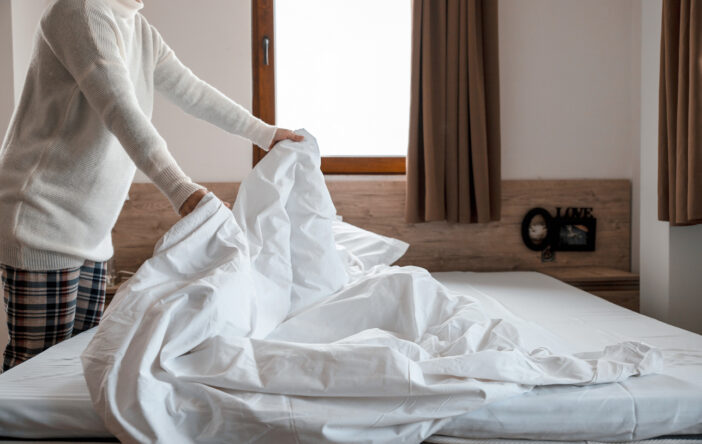
Humans shed approximately 30,000 to 40,000 dead skin cells every minute, with much of this happening during sleep when you’re moving against fabric for hours. Your bedding catches and holds onto these microscopic flakes.
Over a week, enough dead skin accumulates in your bed to feed dust mite populations for months. These cells get ground into fabric fibres through nightly movement, creating layers of organic matter that build up invisibly over time.
6. Your mattress is slowly rotting from the inside.
The combination of sweat, dead skin, and other bodily fluids gradually breaks down mattress materials from within. What looks clean on the surface is actually decomposing slowly as organic matter feeds bacterial growth throughout the mattress core.
That internal decomposition creates odours and potentially harmful compounds that you’re exposed to for eight hours every night. The process is irreversible once it begins, which is why even expensive mattresses eventually need replacing.
7. Fungal spores are growing in your humid bedding.
The warm, moist environment you create whilst sleeping provides ideal conditions for fungal growth. Microscopic spores settle into your bedding and multiply rapidly when conditions are right, which happens nightly. These fungi aren’t just unsanitary, but they can also trigger allergic reactions, respiratory problems, and skin irritation. You’re essentially cultivating a fungal garden that you then sleep in for hours, breathing in spores throughout the night.
8. Hair follicles and body oils create a sticky film.
Natural oils from your scalp and skin, combined with shed hair and follicle debris, create a thin but persistent film on your pillowcases and sheets. This invisible coating attracts and holds other contaminants. The oily residue becomes rancid over time, developing an odour that you might not notice because you’re accustomed to it. The film also makes bedding feel different—less crisp and more clingy than when new.
9. Invisible food particles feed microscopic colonies.
Eating in bed leaves microscopic food particles embedded in your sheets and mattress, even when you can’t see any crumbs. These particles provide additional food sources for bacteria, mites, and other organisms living in your bedding. Even drinking water in bed contributes moisture and trace minerals that accumulate over time. These seemingly innocent activities create micro-environments that support much larger populations of unwanted microscopic life.
10. Pet dander multiplies the contamination.
If pets sleep in your bed, you’re dealing with their shed skin cells, saliva, and microscopic parasites in addition to your own biological waste. Pet dander becomes embedded deep in fabric fibres and is nearly impossible to remove completely.
Animals also track in outdoor contaminants on their fur and paws, introducing bacteria, pollen, and other particles that accumulate in bedding. The combination of human and animal waste creates an even richer environment for unwanted organisms.
11. Saliva and respiratory droplets soak into everything.
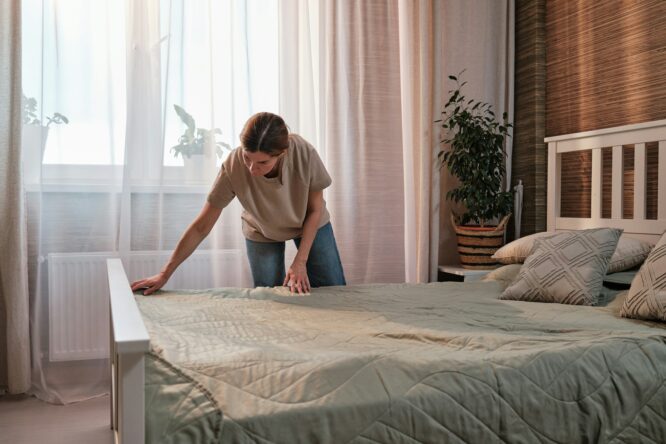
Breathing, talking in your sleep, snoring, and drooling deposit saliva and respiratory droplets throughout your bedding. These fluids carry bacteria from your mouth and respiratory system directly into the fabric you sleep on.
Morning breath isn’t just about what’s in your mouth—it’s also about the bacterial colonies that have been multiplying in your pillowcase all night. The moisture from your breath creates ideal breeding conditions right where you rest your face.
12. Washing weekly still isn’t enough for complete cleanliness.
Even weekly washing doesn’t eliminate all accumulated contaminants because some organisms and residues resist normal washing cycles. Hot water and strong detergent help, but deep-seated contamination requires more aggressive treatment.
Standard washing removes surface dirt but can’t penetrate the compressed biological matter that builds up in mattresses and pillow cores. Some contamination becomes permanent, which is why bedding and mattresses need periodic replacement despite regular cleaning.
13. Your “clean” bedding starts accumulating filth immediately.
The moment you sleep in freshly washed bedding, the contamination process begins again. Within hours, you’ve deposited enough biological matter to start new colonies of mites, bacteria, and fungi that will multiply throughout the week.
This doesn’t mean washing is pointless, of course. It resets the contamination to manageable levels. However, it does mean that bedding is never truly clean for more than a few hours after washing, making regular cleaning schedules a must for basic hygiene.