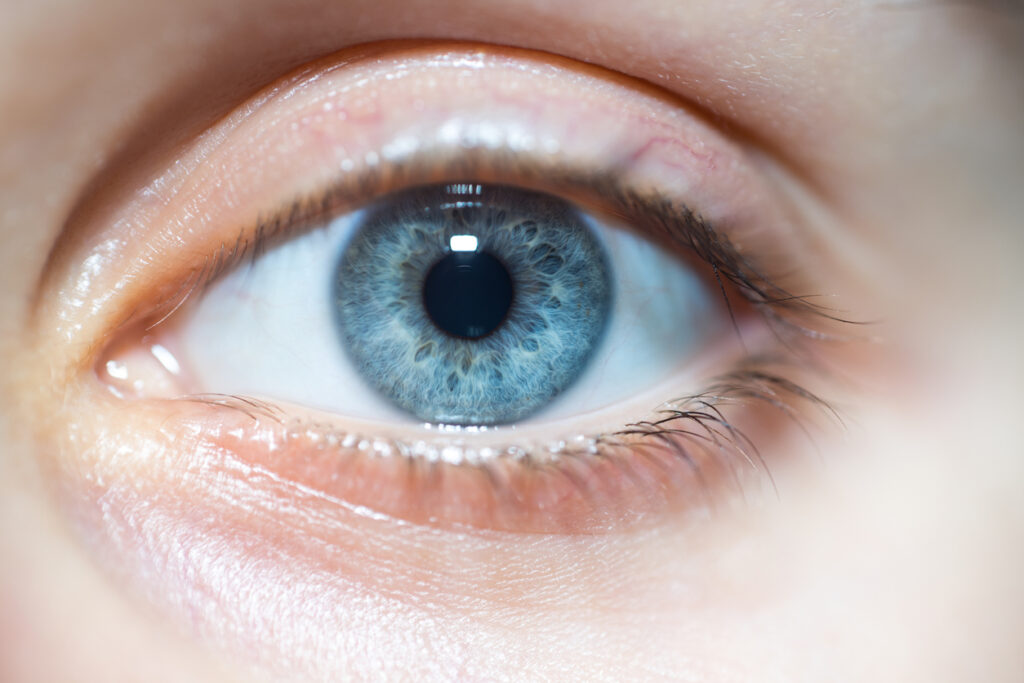
Blue eyes have always caught attention, often seen as striking or mysterious, but the colour isn’t actually pigment at all. Scientists have now explained how light and structure, not genetics alone, create that vivid blue hue, and why it’s far more about physics than colour.
Blue eyes don’t contain blue pigment.
Unlike brown eyes, which have visible melanin, blue eyes are pigment-free. The iris appears blue because of how light scatters when it hits the surface of the eye. Researchers call this the Tyndall effect, the same optical phenomenon that makes the sky look blue. Light waves bounce off the iris layers, scattering shorter blue wavelengths while absorbing the rest.
The colour depends on microscopic structure.
Every iris has layers of fibres that vary in density. In blue eyes, these layers are thinner, allowing more light to scatter and reflect outward. When those layers are thicker or contain more melanin, light can’t reflect in the same way, creating green, hazel, or brown tones instead. Essentially, structure decides colour, not pigment.
Genetics still play a role, just not how people think.
Blue eyes don’t come from a single “blue eye gene.” Scientists have identified several gene variations that affect melanin levels in the iris, working together to determine the final result. It’s a combination of genetic chance and optical physics. Even people from families with brown eyes can carry enough of these variations for a child to inherit a lighter shade.
The same principle explains blue feathers and fur.
The mechanism behind blue eyes isn’t unique to humans. Birds like blue jays and mammals such as blue-eyed lemurs also owe their colour to light scattering rather than pigment. That shared optical trick is called structural colouration. It happens whenever microscopic structures reflect certain wavelengths of light instead of containing actual colour molecules.
Everyone originally had brown eyes.

Genetic research suggests that blue eyes appeared only a few thousand years ago after a mutation reduced melanin production in the iris. Before that, all humans had brown eyes. That mutation likely spread through populations in Europe, where lighter eyes may have offered an evolutionary advantage in low-light environments by letting more light enter the eye.
Lighting changes how blue eyes look.
Because their colour comes from reflection, blue eyes change shade depending on surroundings. Bright sunlight makes them look vivid, while low light can make them appear grey or even green. The optical flexibility is part of what makes blue eyes seem so dynamic. Their brightness isn’t static pigment, it’s the product of light constantly interacting with the iris surface.
Blue eyes are more sensitive to light.
With less melanin to filter sunlight, blue-eyed people are more prone to glare and UV damage. That’s why sunglasses aren’t just a fashion statement; they’re a genuine protective measure. Researchers note that lighter eyes may process bright light less efficiently, meaning blue-eyed individuals often squint or tear up faster in sunny conditions.
The shade can change slightly over time.
Some people notice their eye colour changes subtly with age or lighting. This isn’t because pigment is forming or fading, but because the iris fibres may tighten or change as light interacts differently. Hormonal changes and certain medications can also influence perceived tone, though the underlying physics like light scattering through structure stays the same.
Babies are often born with blue eyes.
Newborns frequently start life with blue or grey eyes because their melanin hasn’t fully developed yet. As they grow, melanin production increases, often darkening the colour. By around a year old, the final eye colour usually settles. If melanin remains low, the scattering effect continues, keeping the eyes blue through adulthood.
Blue eyes can look different from person to person.

Not all blue eyes are the same. Some appear icy or pale, while others are more turquoise or grey-toned. The difference comes from slight variations in iris fibre density and light reflection. This is why photographs of blue eyes can vary dramatically depending on angle, camera flash, and background colours. The light does most of the work, not the pigment.
There’s a connection between blue eyes and northern ancestry.
While people across the world can have blue eyes, they’re most common in northern European populations. Scientists believe geography, genetics, and migration shaped how the trait spread. Less sunlight in those regions meant lighter pigmentation carried little disadvantage, so it persisted and became more common over generations.
Blue eyes offer clues to human migration.
By studying genetic variations linked to blue eyes, researchers can trace ancient population movements across Europe and western Asia. The same mutation appears repeatedly in DNA samples thousands of years apart. This makes eye colour a small but useful tool in understanding how early humans travelled, settled, and mixed with other groups.
Technology is helping scientists see more detail.
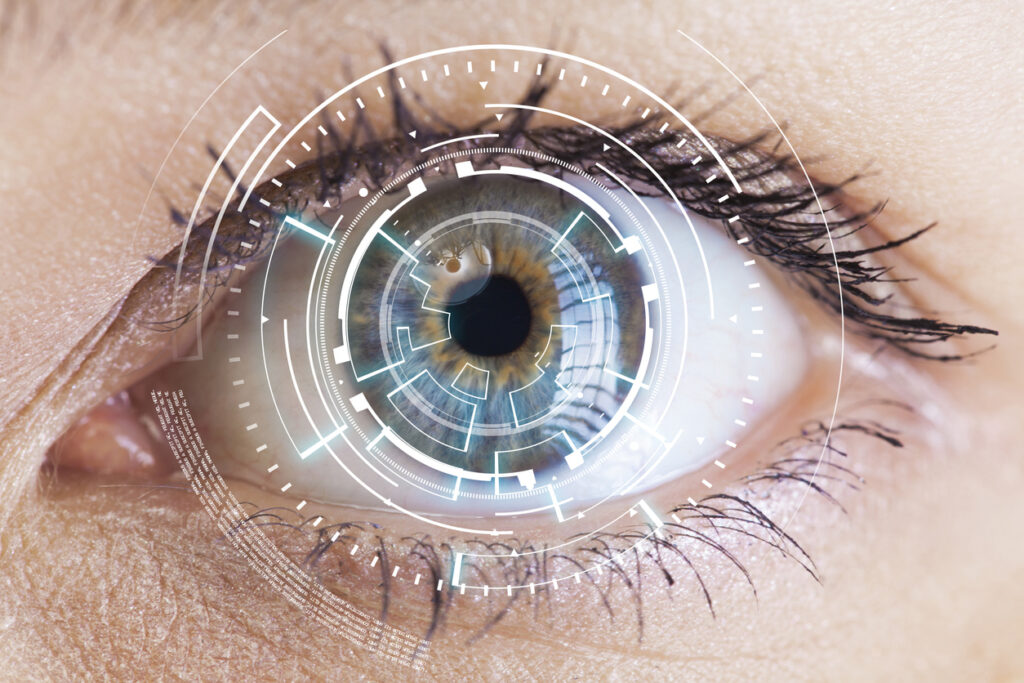
Modern imaging allows researchers to map the iris at microscopic levels, revealing how light interacts with every layer. The data shows that even tiny changes in texture alter how colour appears. That’s why two blue-eyed people rarely have identical shades their irises scatter light slightly differently, producing unique signatures much like fingerprints.
Blue eyes highlight the illusion of colour itself.
The science behind blue eyes reminds us that colour is perception, not substance. What we see as blue is simply the way light bounces, bends, and reaches the eye. It’s a fascinating illusion built from physics, not pigment, showing that what we call “colour” often comes from the way our world reflects and filters light rather than from the colours themselves.