We’re living in a time when ghosting your entire family, distancing yourself from old friends, or going completely no-contact with someone close isn’t just happening, it’s happening a lot.

And yet, hardly anyone’s openly talking about it. Whether it’s due to personal boundaries, emotional exhaustion, or years of tension that couldn’t be patched over, estrangement is becoming more and more common. Here are some signs we may be in the middle of an estrangement epidemic, and why so few people are willing to say it out loud.
Family gatherings feel smaller every year.

What used to be chaotic, overcrowded Christmases are now quieter affairs, with noticeable absences no one mentions. People have stopped asking “Where’s so-and-so?” because the answer is known, but uncomfortable. It’s not just about moving away or busy schedules. In a lot of cases, someone made a conscious decision not to show up anymore. Instead of discussing the why, the surrounding silence becomes part of the routine.
People say, “I just needed peace” instead of explaining.

More people are stepping back from relationships and simply saying they “needed peace” or “needed space,” which is often code for deeper emotional exhaustion or years of conflict that they’re tired of justifying. It’s not that they don’t care anymore. It’s that they’ve decided caring doesn’t require constant contact. Rather than relive the reasons, they choose quiet exits and hope it’ll be enough explanation.
Therapy talk is replacing actual conversations.

Words like “boundaries,” “toxic,” and “self-preservation” are everywhere now, and while they can be incredibly helpful, they’ve also become a way to end conversations without having them. “I’m protecting my energy” now stands in for “I can’t talk to them anymore.” People are redefining closeness through a wellness lens, which can be healing—but it can also leave a trail of unanswered questions and broken connections, especially when there’s no conversation to go with the decision.
More friendships are ending without a dramatic fight.
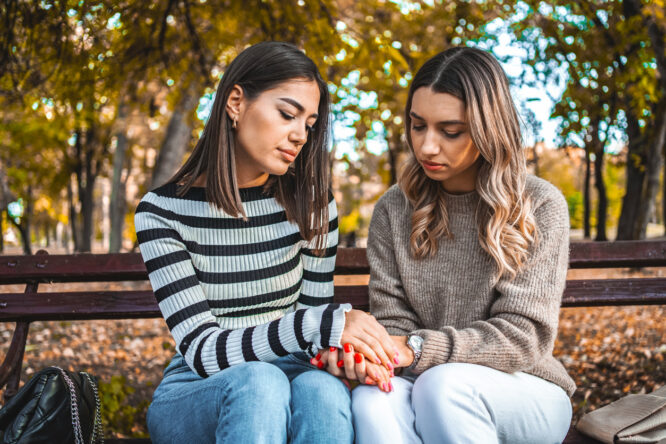
We’re seeing less of the big friendship fallouts and more of the slow, quiet fade-outs. You don’t argue, you just stop replying. Or maybe they stop. And that’s it. No confrontation, no resolution. While it seems easier, it leaves both sides in emotional limbo. These are still estrangements, just dressed up as distance or “growing apart.” And they’re happening all the time, with barely a ripple on the surface.
Social media makes it easier to walk away silently.

Blocking, muting, or unfollowing used to feel dramatic. Now it’s just another form of boundary-setting. If someone annoys or hurts you, even once, the temptation is to remove them from your feed and your life in one click. It gives people control, which is valuable. But it also allows us to avoid hard conversations and cut ties without explaining why. That silent removal often feels like estrangement, even when we don’t call it that.
People now casually refer to being “low contact.”

It’s no longer rare to hear someone say they’re low contact with a sibling or parent. What once might’ve felt taboo or extreme is now becoming a standard boundary tool in modern relationships. It might sound emotionally neutral, but it’s often the result of long-term pain, frustration, or repeated disappointments. When enough people start doing it, you realise this isn’t just personal, it’s cultural.
Invitations are being subtly curated.

People are cutting down guest lists, and it’s not just because of money or space. It’s often an intentional decision to exclude someone who used to be included. “It’s just easier this way” is becoming a common phrase. That sort of selective inviting shows how estrangement creeps into everyday life. It’s not always explosive; it’s just a slow, deliberate choice to stop bringing certain people back into the fold.
People celebrate milestones without key family members.

Weddings, graduations, birthdays—you notice more and more people sharing their big moments without siblings, parents, or long-time friends in the photos. Sometimes it’s due to distance. Often, it’s something deeper. We don’t talk about these absences much, but they matter. They reflect changing priorities and unresolved hurt, even when everything looks cheerful on the surface.
“Chosen family” isn’t just a cute phrase anymore.

More people now talk about chosen family as their real anchor—friends who show up, partners who understand, neighbours who become confidants. It’s become more of a necessity than a preference these days. That change often happens after someone realises their biological family can’t or won’t provide what they need emotionally. And while chosen family is powerful, its rise reflects how often the original bonds have fractured beyond repair.
Estrangement is passed down through generations.

You start to hear things like “We haven’t spoken in years” or “I don’t know much about that side of the family” more casually, like it’s just part of life. But it hints at a deeper pattern that often gets normalised too easily. When estrangement becomes common in one generation, it’s more likely to repeat. What’s more, the reasons—unresolved trauma, pride, emotional distance—are rarely fully unpacked, just accepted and carried forward.
There’s less shame about going no-contact.

Ten years ago, cutting off a parent or sibling felt like a huge, secretive step. Now, it’s something people talk about more openly, sometimes even proudly, as an act of reclaiming their peace. That change matters because it means there’s a difference in what people are willing to tolerate, and a growing understanding that being related doesn’t mean unlimited access to your life. However, it also means estrangement is no longer rare. It’s a recognisable path.
People are more afraid of reconnection than distance.

In some cases, the idea of rebuilding a broken relationship feels more stressful than letting it go. People worry it’ll undo their progress, re-trigger old dynamics, or just feel forced and fake. That reluctance says a lot. When distance feels safer than closeness, it shows just how common emotional fractures have become, and how far we’ve collectively moved from the idea that reconciliation is always the goal.
Major life changes no longer lead to reconnection.

Someone has a baby, gets married, or loses a loved one, and still doesn’t reach out to the person they’re estranged from. In the past, these moments would’ve been seen as chances to rebuild. Now, they’re often quiet proof that the door’s stayed shut. That absence during big life events shows how permanent estrangement can become. When you’re no longer hoping they’ll come around, or even want them to, it’s clear the distance isn’t temporary anymore.
So many people relate, but still don’t talk about it.

The clearest sign we’re in an estrangement epidemic? The number of people who nod solemnly when someone else shares their story. The ones who say “Me too,” but still don’t feel comfortable saying it first. This silence is what keeps the epidemic hidden. But behind closed doors, in therapists’ offices, and quiet conversations among friends, the truth comes out. Estrangement isn’t rare. It’s happening all around us, and maybe it’s time we stopped pretending otherwise.