Protecting their kids is every parent’s priority, but some people use “child safety” as cover for controlling behaviour that goes way beyond reasonable precautions.

Sure, you want to shield your children from harm, but there’s a limit to how far those efforts should go. These tactics often sound sensible on the surface, making it hard to spot when legitimate concern crosses the line into manipulation and control.
1. Using fear to justify extreme monitoring

Some parents create an atmosphere of constant danger to justify excessive surveillance of their kids’ activities. They present the world as so threatening that normal childhood freedoms become dangerous risks that only they can protect against.
This creates anxious kids and teens who believe they can’t trust their own judgement or navigate normal situations. The real goal isn’t safety, of course. I’s maintaining control by making kids dependent on parental oversight for everything.
2. Isolating kids from friends and activities

Controlling parents often find reasons why every friend is a “bad influence” or why normal activities are somehow dangerous. They gradually cut children off from social connections under the guise of protection.
This isolation makes kids more dependent on the controlling parent and removes outside perspectives that might challenge the parent’s behaviour. Kids lose the chance to develop normal social skills and relationships.
3. Demanding constant location updates
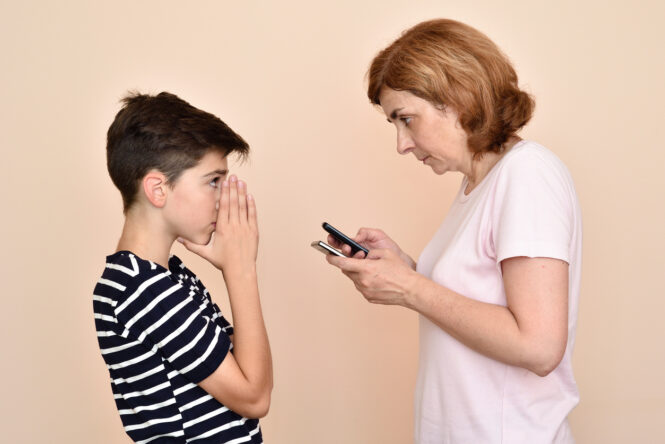
Requiring kids and teens to check in every 15 minutes or constantly tracking their location through apps goes beyond reasonable safety measures. This level of monitoring treats normal activities like potential emergencies.
Children never learn to be independent or trust their own decision-making when they’re constantly supervised. The message is that they can’t be trusted to handle basic situations without parental intervention.
4. Vetoing decisions based on manufactured concerns

Controlling parents find safety issues with anything their child wants to do that doesn’t align with their preferences. School trips become “too risky,” sleepovers have “unsafe elements,” and hobbies are “potentially dangerous.”
This isn’t about genuine risk assessment; it’s about maintaining control over the child’s choices. The parent gets to decide what the child experiences while seeming concerned rather than controlling.
5. Creating dependence through learned helplessness

Some parents refuse to teach kids basic life skills, claiming these tasks are “too dangerous” or “too complicated” for them to handle. They present themselves as the only person capable of managing these responsibilities.
It keeps children dependent far beyond what’s developmentally appropriate. They never gain confidence in their abilities because they’re constantly told they’re incapable of handling normal tasks safely.
6. Using guilt to enforce compliance

Controlling parents make children feel responsible for the parent’s emotional state by expressing excessive worry or distress about normal activities. Kids learn that their independence causes their parent pain.
This guilt manipulation makes young people self-police their own behaviour to avoid upsetting their parent. They give up freedoms voluntarily rather than deal with the emotional consequences of asserting independence.
7. Dismissing the child’s judgement as inherently flawed

These parents consistently override their child’s assessment of situations, people, or risks with their own version of events. The child’s perceptions are always wrong or naive compared to the parent’s superior understanding.
It undermines the child’s confidence in their own ability to evaluate situations and make decisions. They learn to doubt their instincts and defer to parental judgement, even in areas where they should be developing independence.
8. Creating rules that change based on convenience

Safety rules become inconsistent depending on what the controlling parent wants at any given moment. The same activity might be “perfectly safe” one day and “extremely dangerous” the next, based on the parent’s mood or agenda.
Kids and teens can’t develop reliable risk assessment skills when the rules keep changing. They become confused about what’s actually dangerous versus what’s just inconvenient for their parent.
9. Monitoring private communications and relationships

Reading all texts, emails, and social media messages goes beyond checking for cyberbullying or inappropriate content. Some parents use safety concerns to justify complete invasion of their child’s privacy and social relationships.
It prevents kids from developing healthy boundaries and private relationships. They can’t learn to navigate social situations independently when every interaction is monitored and potentially judged.
10. Making the child responsible for managing parental anxiety

Controlling parents place the burden of managing their own anxiety about potential dangers onto their kids. The child must constantly reassure, update, and modify their behaviour to keep their parent calm.
It reverses the parent-child relationship, making the child responsible for the adult’s emotional regulation. Young people learn that their normal development causes problems that they’re responsible for solving.
11. Sabotaging relationships with the other parent

Using safety concerns to limit or eliminate contact with the other parent, extended family, or other caregivers who might offer different perspectives. Every other adult becomes a potential threat to the child’s wellbeing.
This isolation prevents the child from having multiple supportive relationships and different viewpoints about what’s normal. It also eliminates potential sources of help if the controlling behaviour escalates.
12. Refusing to allow age-appropriate independence

Not letting kids walk to school, stay home on their own for a bit, or handle normal responsibilities that their peers manage easily. These restrictions are justified as necessary safety measures rather than overprotection.
Children fall behind developmentally when they’re not allowed to practice independence in safe, age-appropriate ways. They become more vulnerable to actual dangers because they haven’t learned basic self-reliance skills.
13. Using medical or educational professionals to validate control

Shopping for doctors, teachers, or counsellors who will agree that the child is “fragile,” “high-risk,” or in need of extra protection. Professional opinions become weapons to justify continued control.
This manipulates systems designed to help kids into supporting the controlling parent’s agenda. The child gets labelled as needing special protection when they actually need normal developmental opportunities.
14. Presenting normal independence as betrayal

Framing the child’s natural desire for privacy, friendship, and autonomy as rejection of the family or lack of appreciation for parental sacrifice. The child’s development becomes an act of ingratitude or disloyalty.
This makes kids feel guilty for normal developmental needs and creates confusion about whether independence is healthy or harmful. They learn to suppress natural growth to maintain the parent’s approval and emotional stability.