Living in the UK tends to get talked about in extremes.

People either lean hard into the complaints or jump straight to postcard stuff like castles and countryside. The reality, of course, sits somewhere in the middle, and a lot of the genuinely good parts barely get mentioned because they’re so baked into everyday life that you stop noticing them, especially when there’s so much going wrong.
The underrated bits tend to be practical rather than anything major. These are things that make life easier or less stressful once you’ve experienced living without them. You don’t notice them on a weekend visit, but you definitely notice when they’re gone. These are the parts of UK life that don’t get bragged about much, but end up mattering far more than people admit.
1. Extremely good public transport in and between cities that’s actually reliable

Yes, trains aren’t always perfect, and delays happen. That being said, the scale and integration of public transport in the UK still outperform most comparable countries. You can get from city to city, town to town, and even tiny villages without needing a car. National Rail, buses, trams, and the Underground knit most of the country together in ways that make daily life less dependent on driving.
What makes this underrated is how much it changes your relationship with distance and planning. You can live further out without feeling cut off, access opportunities for work and leisure more easily, and depend on transport even on weekends and bank holidays. This isn’t just convenience; it’s economic and social access that many other places struggle to match.
2. A genuine safety net through the NHS, which is flawed, but life-saving

Complaints about the NHS are everywhere, and parts of it are undeniably under strain. However, what outsiders forget is how profoundly it changes risk calculations in everyday life. You don’t have to worry about whether a hospital visit will wipe out your savings. Birth care, mental health support, emergency treatment, specialist referrals, and regular checkups are all available without direct bills.
This impacts choices more than people acknowledge. It alters how young people consider moving out, how families plan long-term, and even how employers think about benefits. The safety you have in simply being treated when you’re hurt or sick is a living reality that many countries can’t touch without private insurance.
3. Really strong anti-discrimination enforcement in everyday life and work

Laws on paper don’t always mean lived experience, but in the UK, the Equality Act and related legislation offer stronger protections in workplaces, public spaces, and housing than many people realise. There’s a legal framework that supports people facing unfair treatment for disability, gender, race, sexual orientation, religion, and more—and, crucially, organisations and advocacy groups help people navigate that system.
It’s far from perfect, but it’s underrated because it shapes the way we interact with one another in subtle ways. People understand their rights in ways that reduce microaggressions settling into daily routine. Employers are generally more aware of their obligations. Public bodies have clearer standards. When you live with these norms in place, every day feels measurably more secure and equitable than in places without that legal backbone.
4. A culture that actually values downtime and balance more than hustle culture

Unlike work environments heavily tilted toward constant productivity and grind, the UK still (mostly) keeps boundaries around weekends, holidays, and leave in meaningful ways. Most jobs come with legal minimums for holiday entitlement that actually let you step away without guilt, and there’s a cultural understanding that rest isn’t optional.
This matters because it reshapes the pace of life rather than just time off. People leave work on time. There’s less expectation of 24/7 availability (especially compared to the US model). Family time and personal life aren’t treated as second prizes. That’s not just quality-of-life fluff. It’s burnout prevention baked into everyday norms.
5. A huge range of genuinely cheap and rich cultural access

The UK has world-class museums, galleries, historic sites, parks, and cultural institutions, many of which are free or very low cost. The British Museum, National Gallery, Tate Modern, Science Museum, and so many local heritage sites offer deep cultural experiences without steep ticket prices for residents.
In other words, experiencing art, history, and culture isn’t a luxury for the wealthy. It’s part of everyday life. People can spontaneously explore big exhibitions, bring kids to educational spaces without anxiety over cost, and access the arts in ways that are surprisingly equalised. That level of cultural density at low cost is rare.
6. A uniquely resilient small-town economy and scene
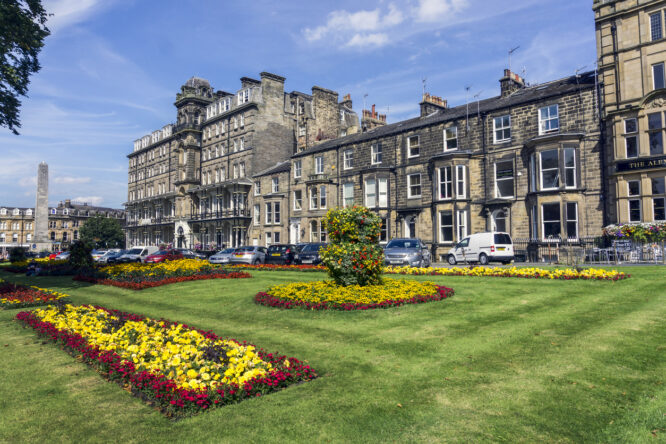
Everyone talks about London and, to an extent, the major cities. But the UK’s small towns have real character, thanks to independent shops, local theatres, music venues, farmers markets, and community spaces that anchor daily life. In many places, the “local scene” isn’t just nostalgic charm. It’s real economic and social activity that keeps communities lively.
What’s underrated is not that small towns exist, but how functional and vibrant they often are. Access to independent makers, weekly events, grassroots arts, and informal networks make these places feel less “provincial” and more like genuine alternatives to big-city living. That breadth is part of what makes the UK feel porous rather than centralised.
7. Far more comprehensive recycling and environmental programmes than many countries realise

Recycling in the UK is messy and inconsistent across councils, but the overall infrastructure is stronger than most places with similar population density. There’s broad access to glass, paper, metal, textile, and food waste recycling streams, and local authorities run frequent sustainability drives and incentives.
Combine that with widespread public messaging, growing community composting and repair events, and a public consciousness around waste that actually affects behaviour. It doesn’t feel like a slog; it feels normal. That change in baseline behaviour is underrated because it’s not flashy, but it adds up to real environmental impact.
8. A multi-layered public sphere that makes civic life more visible

Local councils, devolved governments, and community boards in the UK create a kind of civic ecosystem that feels more tangible to residents than in many places where governance is distant. Whether it’s neighbourhood planning, local transport forums, or community grant schemes, people actually see decisions happening at a scale they can engage with.
This matters because it changes your relationship to governance. People don’t just vote once every several years; they see public processes at work in buses, parks, libraries, and planning decisions. That visible civic engagement makes spaces feel less controlled by remote elites and more shaped by everyday residents.
9. Very strong workers’ rights relative to many other advanced economies

The UK’s employment law offers rights that many people outside the country don’t experience, such as statutory paid leave, protections against unfair dismissal, guaranteed breaks, maternity/paternity leave benefits, and limits on zero-hour abuse in many sectors. Those rules aren’t just technical, either. They shape workplace culture.
Workers can push back on exploitative conditions with legal backing, and employers generally have clearer obligations. The result is a baseline of expectation that work will respect personal life, rather than subsume it entirely. That protected space alters daily living in ways that aren’t immediately obvious until you compare with other norms.
10. A thriving second-hand and repair economy that cuts costs.

Beyond charity shops and vintage boutiques, there’s a real social infrastructure around second-hand goods, repairing instead of replacing, and community exchange. Repair cafes, clothes swaps, furniture upcycling, and bike fix-it groups are widespread and thriving.
This resourcefulness is more than just sustainability in action. It’s also practical economics. People routinely get high-quality stuff for far less than new, and they learn to maintain things rather than toss them. That changes consumption patterns at a grassroots level more than people realise.
11. Public access to green spaces in an urban context that’s unusually generous.

From London’s royal parks to city forests, coastal paths, canals, village greens, and scattered commons, the UK prioritises green space access in ways that many dense countries don’t. You rarely have to go far to find a place to walk, run, picnic, or just breathe outside.
It’s aesthetically beautiful, but that’s not the sole purpose. There’s growing evidence that easy access to nature improves mental health, social cohesion, and overall well-being. In practice, it makes urban living feel far less claustrophobic than it often does elsewhere, especially in other high-density countries.
12. A uniquely rich and accessible small-venue music scene

From pubs with live bands to modest theatres and grassroots festivals, the UK supports a music ecosystem that’s both deep and surprisingly accessible. Big names often play the same kinds of venues where emerging artists get discovered, creating a flow that feels organic rather than staged.
It’s a cultural bragging port, sure, but it’s also a working economy where local talent gets stage time, communities gather around live art, and music isn’t siloed into luxury venues. That accessibility keeps local scenes vibrant and constantly renewing themselves.
13. A social welfare baseline that lets young adults experiment without total collapse

Across Europe and the UK, the idea of a safety net for young people isn’t unique, but it’s underrated how it shapes choices. Students, early career people, and those changing paths can take risks, pursue creative careers, or switch industries without the existential terror that comes with no safety net.
That doesn’t mean adversity disappears. It means decisions don’t always shrink to “survive at all costs.” People can pursue opportunity, learn, travel, or take chance projects because there’s a system that prevents absolute financial freefall. The humility is understated, but profound.
14. A deep coffee and casual food culture that feels international but rooted in local rhythms.

The UK’s café scene isn’t just about overpriced lattes. In most cities and towns you’ll find real community spaces, diverse food cultures, and hybrid venues where work, rest, socialising, and casual eating all intersect without pretension.
This is important because it alters daily life subtly. People meet in public, work flexibly, collaborate informally, and nurture local hangouts that feel social rather than transactional. It’s part of the texture of life that people miss before they live here.
15. A cultural tolerance for walking, chatting, and unhurried social space

British culture, broadly speaking, gives space for casual social modes that feel less rushed than fast-paced urban environments elsewhere. People walk, sit in parks, linger on benches, and exist in public without constant urgency.
This isn’t an easy metric to quantify, but it’s one of those things people adjust to over time: the comfort of not being constantly hustled, the acceptance of slow rhythms, the way conversations can happen in spaces that don’t feel transactional. It’s subtle, but it touches how life feels minute by minute.