It used to be that a toy’s biggest trick was making a few random noises or moving when you pressed a button.

Now? Some of them can hold full conversations, remember what your kid said yesterday, and respond with what sounds like genuine emotion. These AI-powered toys are starting to feel less like toys and more like pint-sized digital friends, and while that might sound cool on the surface, it also raises a few weird questions. Like, are we actually ready for our kids to bond with something that learns from them?
1. It’s not just a toy; it’s a little learning machine.

Old-school toys didn’t change much, no matter how many times your kid played with them. But some of the newer ones can actually learn your child’s habits. The more your kid chats with it, the more it figures out how to respond in a way that feels personal, whether it’s copying their tone, remembering their favourite game, or adapting the way it teaches something.
That sounds clever, and in some ways, it is. However, it also means the toy’s soaking up more than you might expect: language patterns, emotions, even topics your kid brings up regularly. When something sitting on the carpet knows your child better than most relatives do, it’s fair to feel a bit weird about that.
2. These things listen. A lot.
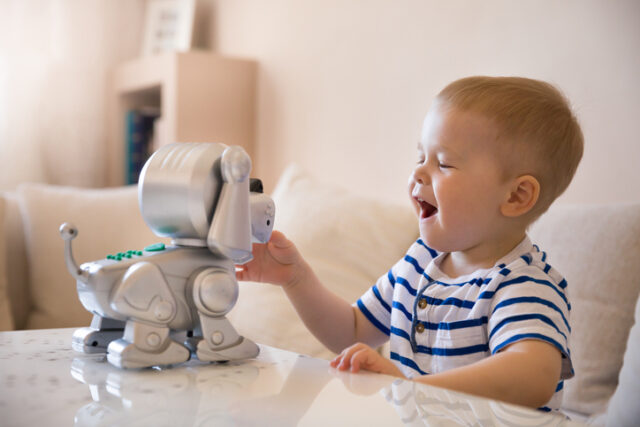
To work properly, AI toys need microphones. That’s how they pick up what your kid says and respond in real time. But just because they’re not flashing lights or making noise doesn’t mean they’re off. In some cases, they’re still listening, even when you thought playtime was over.
It’s one thing if the toy is repeating back animal facts or riddles. It’s another if it starts to feel like it’s eavesdropping on family life. Most parents wouldn’t hand over hours of recorded home life to a company, but in a roundabout way, that’s what could be happening if we don’t fully understand how these things work.
3. Your kid might get attached for real.

Kids have always imagined their toys as real. That’s not new. But now, instead of pretending a stuffed animal can talk, kids have toys that actually do. Some ask about their day, cheer them on, or say “I’m proud of you” in a voice that feels just human enough to be believable.
That kind of connection can be sweet, but also a bit intense. It’s not hard to imagine a child turning to the toy for comfort, reassurance, or attention in a way that starts to feel a little too real. If the toy never disagrees, never says anything upsetting, and always seems to ‘get’ them, that bond can blur the line between tech and real relationships without anyone noticing.
4. Some toys teach, while others just mimic.
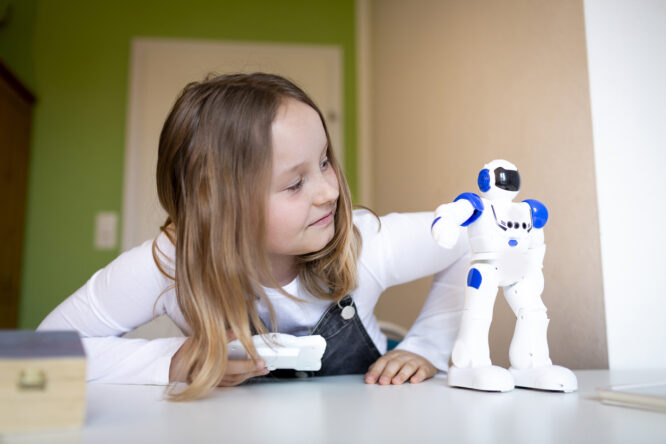
A lot of AI toys are sold as educational. They’ll promise to help with reading, numbers, social skills, or emotional intelligence. And to be fair, some of them actually do a decent job, especially when your kid is already into learning and engages well with voice-based interaction.
But there’s a flip side. Some of these toys only seem smart. They repeat things in clever ways, but they’re not actually correcting mistakes or helping your child think deeper. If the toy can’t understand your kid properly because of speech issues, neurodivergence, or anything else, it can leave them feeling frustrated or ignored. So while it might look like learning is happening, that’s not always the case.
5. They don’t always look high-tech, but they are.

Parents tend to relax when a toy doesn’t have a screen. Something about a soft plush animal or simple set of blocks feels wholesome and safe. But a lot of today’s AI toys are hiding serious tech under the surface, even when they look totally low-key on the outside.
That can make it tricky to know what’s actually going on during playtime. Your child might be having deep back-and-forth chats with a toy that looks like it came from the 80s, but behind the scenes, it’s collecting data and adapting on the fly. The packaging might say “screen-free,” but that doesn’t mean it’s simple.
6. The way kids talk to these toys isn’t always great.

Kids aren’t always polite when they’re testing boundaries, and that includes how they treat AI. Some toys are designed to be super patient, repeating things endlessly, always staying cheerful. That can lead kids to treat them like they’re disposable or boss them around without thinking twice.
If your child starts yelling at the toy or treating it like a servant, it’s worth paying attention. The toy won’t push back, which can accidentally teach kids that rude or demanding behaviour has no consequences. That might carry over into how they talk to real people if no one’s steering the ship.
7. The emotional stuff goes deeper than it used to.

Some of these toys don’t just talk; they try to connect. They’ll say things like “That must have made you sad” or “I understand how you feel.” For kids who don’t have someone to talk to all the time, that might actually help them open up and express themselves more.
However, there’s a fine line between support and confusion. If your child starts depending on a toy for emotional comfort, it’s worth asking whether it’s filling a real gap, or just providing an easy substitute. AI doesn’t actually care, even if it sounds like it does, and that difference can get lost on young minds.
8. There aren’t enough rules to keep up with all this.
The pace of change in AI toys is faster than most of the laws designed to protect kids. Some countries have decent data rules, but a lot of the protections don’t cover how these toys use information, how long they keep it, or what happens if it gets shared with other companies.
That puts a lot of pressure on parents to make sense of complicated privacy policies or vague terms buried in the fine print. Unless you’re up for doing deep research before every birthday or Christmas, you’re likely making decisions with less info than you’d probably like.
9. Your kid might not realise it’s not real.
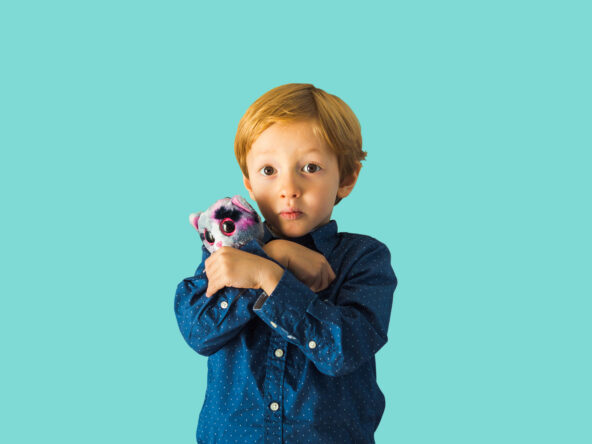
Even when kids know it’s “just a toy,” their brains don’t always work that way in the moment. If something talks like a friend, remembers what you told it, and reacts with emotion, it’s very easy for young kids to start treating it like an actual person. Especially if it’s kind and funny and always says the right thing.
This makes it harder for children to question what they’re hearing. If the toy gives dodgy advice, shares something inaccurate, or just makes a mistake, a kid might not notice. They trust the voice because it feels personal, even though it’s actually just running on a clever bit of software.
10. Playtime is starting to look more like a script.

When a toy constantly guides the conversation, asking questions, suggesting games, and telling stories, it can feel more like your kid is responding than playing. And while that can be engaging, it doesn’t always leave much room for imagination to take over. The toy’s doing the heavy lifting.
That kind of play still has value, but it’s different from the free, unstructured kind that helps kids invent wild worlds out of cardboard and Lego. With AI toys, the play often leans more toward performance than creativity, which could make boredom rarer, but also limit what your child learns to do with downtime.
11. Parents are left figuring it out on the fly.

Most of us didn’t grow up with anything like this, so we’re navigating it in real-time. You might find yourself googling how to reset the toy, whether it stores data, or how to change its settings when it starts saying something odd. It’s a lot of tech responsibility wrapped in a cuddly-looking package.
And when something feels off, it’s not always clear what to do. Is it a glitch? Is the toy evolving the way it’s meant to? Should you be worried, or is it harmless fun? With so little clarity and so few real rules, parents are basically winging it, and hoping the toy doesn’t outsmart them in the process.