If your cat is scratching the sofa, the wall, or that one weird patch of carpet, but ignoring the fancy scratching post you bought, you’re not alone.

A lot of cat owners think a scratching post is just something to tick off the shopping list, but there’s actually more to it. Scratching is part instinct, part communication, and part stress relief for cats, so getting the post wrong can mean they’ll just ignore it completely. Here are 10 common mistakes cat owners make when it comes to scratching posts, and what actually works better.
1. It’s way too short.

Cats love to stretch when they scratch—it’s part of the appeal. If the post is too short or wobbly, they’ll skip it and look for something sturdier (like your door frame). A good post should let them fully stretch their body, with a solid base that won’t tip. Many store-bought posts are just too tiny, especially for adult cats. If your cat isn’t using theirs, try upgrading to a tall, heavy-duty option. It makes a huge difference, especially for larger breeds or energetic cats.
2. It’s in the wrong place.
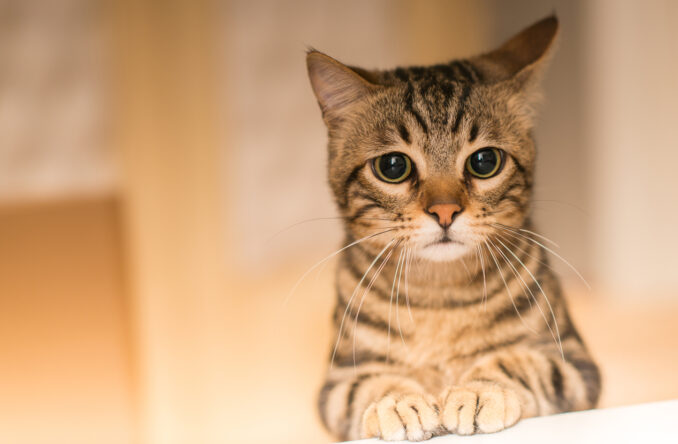
Scratching is a territorial behaviour, so cats often want to scratch right where they spend the most time. If you’ve tucked the post in a quiet corner no one uses, they’ll probably ignore it completely. Instead, place the scratching post in high-traffic areas or near furniture they already try to scratch. It doesn’t have to stay there forever, but in the beginning, it helps redirect the behaviour more naturally.
3. It only has one type of texture.
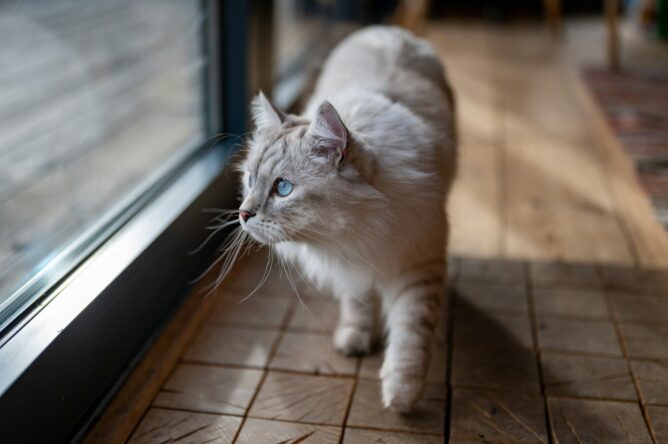
Some cats like sisal rope. Others prefer cardboard, wood, or carpet. If the post is made from one material your cat doesn’t like, they won’t use it, simple as that. Offering a variety of textures gives them options and helps you figure out what they’re drawn to. Cardboard scratchers, wall-mounted boards, and horizontal pads can all help. Not every cat wants to scratch vertically, either, so mixing up the surfaces and angles is key to success.
4. You got it after the scratching habit was already formed.

If your cat’s been using the arm of the sofa for years, a new post might not magically fix it. They’ve already built up a habit, and maybe even a scent, around their favourite spot. In that case, the scratching post isn’t just an add-on, it’s part of the retraining. You’ll need to block access to the old spot (at least temporarily) and reward them every time they use the new one. It’s a slow change, not an overnight fix.
5. There’s no scent on it, so it feels unfamiliar.

Cats don’t just scratch to sharpen claws. They have scent glands in their paws, and scratching leaves behind their smell. If the post smells like a factory or cleaning product, it won’t feel like “theirs.” Try rubbing the post with something that smells like home, like their bedding or a worn sock. This can help make the post feel safer and more interesting, especially in the early days of introducing it.
6. It doesn’t feel stable or safe.

A scratching post that wobbles or tips over is a massive turn-off. Cats don’t want to risk hurting themselves, and they’ll quickly write it off if it feels dodgy. Even one bad experience can make them avoid it for good. Go for something with a wide base or anchor it securely. If it’s wall-mounted, make sure it’s properly fixed. Cats love to dig in when they scratch—and they need to trust the surface won’t budge.
7. You only have one, and your cat wants variety.
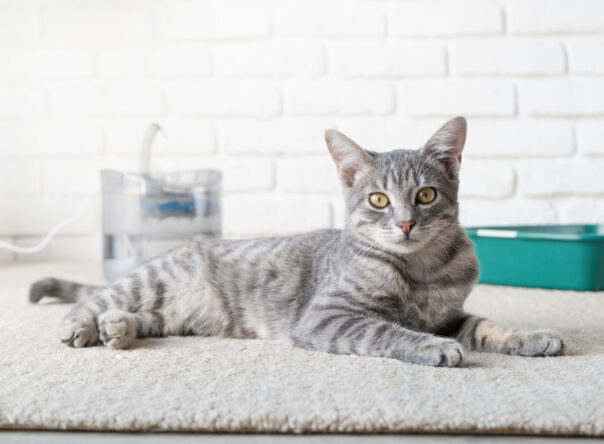
If you live in a multi-cat home or have a larger space, one post probably isn’t enough. Cats like having territory, and a single scratching area might not cover all the zones they feel they “own.” Adding a few posts in different locations can make scratching more natural and less of a battle. It also helps cut down on competition or stress, especially in homes with multiple furry personalities.
8. You haven’t rewarded or encouraged them to use it.
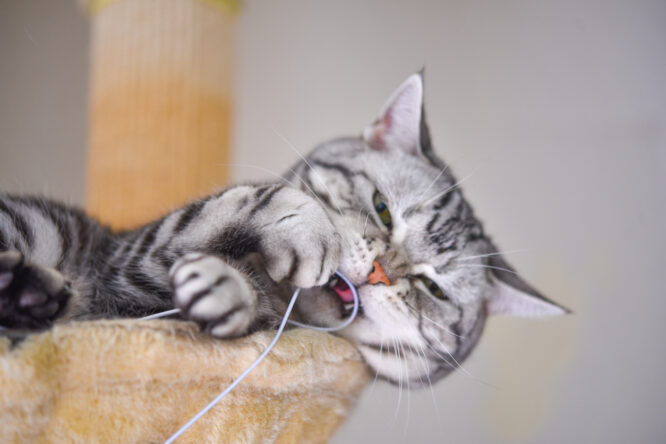
Sometimes cats just need a little nudge. If they’ve never used a scratching post before, they might not know what it’s for, or they might just ignore it. That’s where encouragement comes in. Try using catnip, dangling toys, or simply praising them when they use it. A few treats go a long way, too. Once they start using it and get positive feedback, it becomes part of their routine.
9. It’s too “nice” to be appealing.
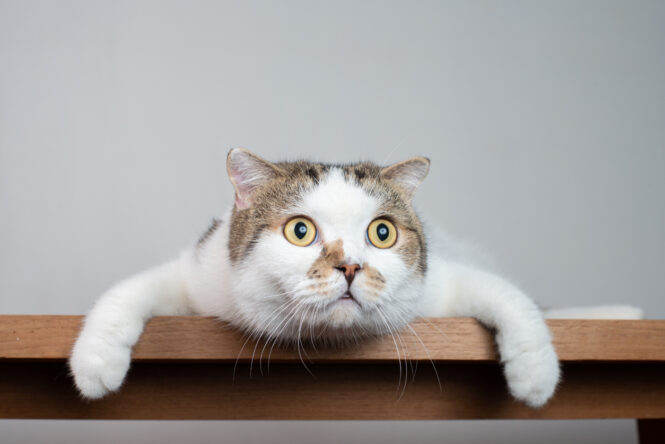
Some scratching posts are designed to look pretty in a home, but they’re not actually built for scratching. If it’s covered in smooth fabric or decorative panels, your cat might not even recognise it as scratchable. At the end of the day, cats don’t care about aesthetics; they care about function. A scruffy, well-loved cardboard pad is often more appealing to them than a polished sisal tower with gold trim.
10. You expected it to fix everything overnight.

Scratching is instinctive, and posts are part of a bigger picture. If your cat is scratching because they’re bored, anxious, or under-stimulated, a post alone won’t be enough. It’s one piece of the puzzle, not the full solution. Think of it as part of a routine: scratching post, playtime, vertical space, and a calm environment. Over time, your cat will naturally redirect their scratching, but it won’t happen instantly, and that’s okay.