While most of us are happy enough just being able to touch our toes or whistle a tune, there are a few people walking around with some truly bizarre biological party tricks.

These aren’t skills you can pick up with a bit of practice; you’re either born with the right wiring or you’re not. It’s a bit of a lottery, and if you’ve got one of these traits, you’re likely part of a tiny percentage of the population that can claim a genuine physical edge, or at least a very weird talent to show off at the pub. From seeing colours the rest of us can’t even imagine to having bones that are practically unbreakable, these talents show that human evolution hasn’t finished playing around with us yet.
1. Echolocate like a bat
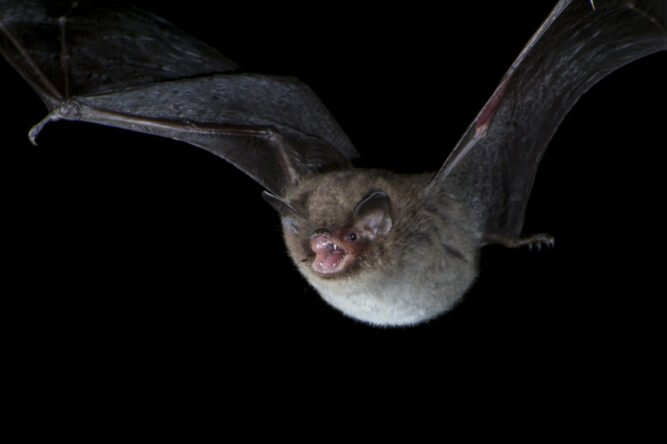
A small number of people, most of them blind, have trained themselves to navigate by clicking their tongue and listening to how the sound bounces back from their surroundings. It works on the same principle as bat sonar, and skilled practitioners can identify the size, shape, and distance of objects around them with striking accuracy. Researchers have confirmed through brain scans that the visual cortex activates during the process, meaning the brain is essentially treating sound as sight.
2. Withstand extreme cold without ill effects

Wim Hof has become the most famous example of a person who can regulate their core body temperature in conditions that would be dangerous or fatal for almost anyone else, but he has also trained others to do the same using breathing techniques and cold exposure. What was once considered a physical impossibility has since been studied scientifically, with evidence suggesting the autonomic nervous system can be influenced to a degree most people thought was completely outside conscious control.
3. Speak dozens of languages fluently

True hyperpolyglots, people who speak six or more languages to a high standard, are extraordinarily rare, and those who reach fifteen or twenty fluent languages represent a tiny fraction of the global population. It’s not just memory involved but something about how their brains process and store linguistic structures differently. Several researchers have studied the brains of elite polyglots and found structural differences that don’t appear in typical language learners.
4. Hear colours and see sounds

People with synaesthesia experience a blending of the senses where one type of stimulation automatically triggers another. Some see specific colours when they hear music, others taste words or feel shapes when they hear certain sounds. The more unusual forms of synesthesia are experienced by very few people worldwide, and those who have multiple overlapping forms represent an even smaller group. Neil Harbisson, who was born completely colour blind, had an antenna implanted in his skull that converts colour frequencies to sound, making him arguably the first officially recognised cyborg.
5. Memorise the order of a shuffled deck of cards in seconds

Competitive memory athletes at the top of the sport can memorise a randomly shuffled deck of 52 cards in under 15 seconds. The current world record sits at just over 12 seconds. The technique involved uses spatial memory and vivid mental imagery rather than rote repetition, but the speed at which elite practitioners operate is simply beyond what most people can replicate regardless of training.
6. Survive on almost no sleep

Most humans need between seven and nine hours of sleep to function properly, but a small number of people carry a genetic mutation that allows them to feel fully rested on four to six hours without any apparent cognitive or physical deficit. Researchers at the University of California identified the gene responsible and have studied families who carry it across generations. It’s genuinely rare and entirely different from the much more common and harmful habit of simply not sleeping enough.
7. Calculate complex mathematics instantly

A handful of people around the world can perform extraordinary mental arithmetic at speeds that seem to bypass normal calculation entirely. Some can tell you the day of the week for any date in history within seconds, multiply six-digit numbers in their heads or find prime factors of large numbers faster than most people could type them into a calculator. The mechanisms behind it are not fully understood and vary significantly between individuals.
8. Control their heart rate voluntarily

Most bodily functions regulated by the autonomic nervous system are considered entirely outside conscious control, but a very small number of trained individuals have demonstrated the ability to deliberately slow or accelerate their heart rate at will. Some advanced meditators and certain yogic practitioners have been documented doing this under clinical observation, and the physiological explanations for how they manage it are still being studied.
9. Free dive to extraordinary depths

Elite free divers can descend to depths of over 200 metres on a single breath, holding it for up to twenty minutes in some cases. At those depths the pressure is crushing, the body undergoes a physiological shift called the mammalian dive reflex, and the margin for error is essentially zero. The training involved takes years, the physiological adaptations involved are significant, and the number of people operating at the very top of the sport at any given time is tiny.
10. Draw entire cities from memory

Stephen Wiltshire is the most well-known example of a person who can observe a city from a helicopter and then reproduce it in extraordinary detail entirely from memory, down to the correct number of windows on individual buildings. His ability is connected to his autism, and while savant abilities of this kind are not unique to him, the combination of scale, accuracy, and speed at which he works puts him in a category shared by almost nobody else on earth.
11. Dislocate and relocate joints at will

Some contortionists and hypermobile individuals can deliberately dislocate certain joints, move them into positions well outside the normal range of motion and return them without assistance or pain. It’s partly genetic, connected to the structure and laxity of connective tissue, and partly developed through years of specific training. The number of people who can do this across multiple joints simultaneously and with full control is genuinely very small.
12. Taste the chemical composition of food with unusual precision

Master sommeliers and a small number of trained food scientists can detect individual compounds in food and drink with a sensitivity that goes significantly beyond normal human taste perception. The most elite sommeliers can identify a wine’s grape variety, region and approximate vintage from taste alone. The training involved is brutal and the failure rate for the master sommelier examination, one of the hardest in the world, runs at around 90 percent in most years.
13. Withstand extreme pain without reaction

A very small number of people have a rare genetic condition called congenital insensitivity to pain, where they genuinely cannot feel pain at all. It sounds like a superpower but is actually a serious medical condition, since pain exists to warn the body of damage. People with the condition regularly injure themselves without realising, and managing the associated health risks requires constant vigilance. Those who live to adulthood without serious complications are a small group within an already tiny population.
14. Perform at the very edge of human physical capability

The athletes competing at the absolute limit of what a human body can do, the top marathon runners finishing under two hours, the weightlifters moving four times their body weight, the gymnasts performing routines that require years of daily training to even attempt, represent a group so small it can be counted in the dozens globally at any given time. What separates them isn’t just training or dedication but a convergence of genetics, physiology, psychology, and circumstance that almost never lines up quite right in the same person.