Most people want to get along with their neighbours, but when you live in close proximity of other people, a bit of friction is almost guaranteed at some point.

From barking dogs to boundary issues, the smallest things can escalate fast if they’re left unspoken. While it pays to be on good terms with the people you share a neighbourhood (and maybe even a few walls) with, it’s sometimes easier said than done. Here are some of the most common disputes people face, and how to handle them without making it worse.
1. Noise that’s driving you mad

Whether it’s loud music, power tools on a Sunday morning, or kids running wild at 6 a.m., noise is one of the most common reasons neighbours fall out. What one person sees as everyday living, another might see as completely inconsiderate.
Before jumping into a complaint, try a casual, polite conversation. Most people genuinely aren’t aware they’re being disruptive. Keep the tone friendly, not accusatory. If the noise continues, then you can look into council noise complaint procedures, but it’s often better to start with a chat over the fence than a formal complaint.
2. Overhanging trees or hedges

Your neighbour’s tree leaning into your garden or dropping leaves all over your patio can quickly become annoying. However, it’s one of those things that’s often more about how it’s handled than the actual issue itself. You’re allowed to trim anything that crosses onto your side, but the best approach is still a respectful heads-up. Let them know what you’re planning and ask if they’d like the offcuts back. It keeps things transparent and avoids unnecessary tension.
3. Boundary line confusion

Not everyone’s clear on exactly where their property ends and their neighbour’s begins. That fence, path, or strip of land might not be where you think it is—and that confusion can lead to some seriously awkward stand offs. If you’re unsure, check the property deeds or ask your local council for help. It’s much better to have the facts before confronting someone. If things are still murky, a neutral mediator or surveyor might be worth calling in before the row gets too personal.
4. Unwelcome surveillance cameras
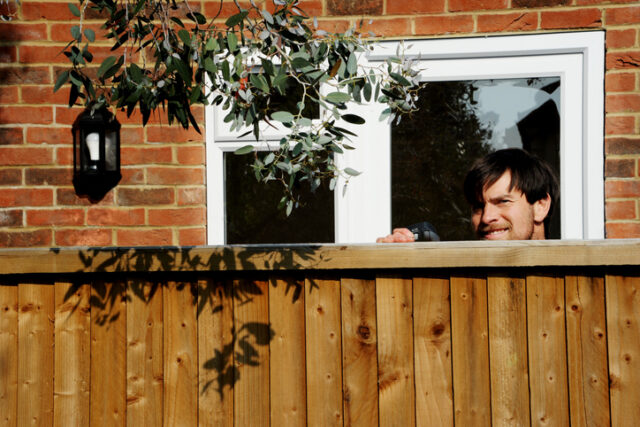
More people are installing doorbell cameras or CCTV, but if those cameras point at your home, garden, or windows, it can feel like a serious breach of privacy. Understandably, this raises eyebrows fast. Start by having a calm conversation to explain your concerns. If the cameras are genuinely invasive, UK data protection laws may be on your side. But again, trying to keep it civil first is usually the easiest way to resolve things before it gets formal or confrontational.
5. Smells coming from next door

Whether it’s constant BBQ smoke, a compost heap that’s seen better days, or the unmistakable whiff of something illegal being smoked regularly, strong smells can make home life unpleasant fast. Approach it delicately. Let them know how it’s affecting you, without making it sound like an accusation. If it doesn’t improve, and it’s having a real impact, especially in cases like smoke entering your property, you can contact environmental health for further support.
6. Overflowing bins or fly-tipping

Rubbish left out too long, bins spilling over, or worse, fly-tipping near your property, can make even the nicest neighbourhood feel neglected. And if it’s happening often, it starts to impact everyone’s day-to-day. If it’s your neighbour’s bin habits causing issues, a quick word might be all it takes. Frame it as a shared concern about keeping the area tidy. If it’s fly-tipping in shared spaces, report it to your local council. The key is to avoid turning it into a personal attack.
7. Shared driveways or parking dramas

Parking is a huge flashpoint. Whether it’s someone constantly blocking a shared access point or leaving their car just a little too far into your space, it quickly starts to feel like a lack of respect. Rather than writing passive-aggressive notes, try having a conversation about how it’s affecting you. If it’s a shared access way, your deeds may lay out responsibilities clearly. But even without that, setting clear expectations together goes a long way.
8. Pets running wild

Unleashed dogs, cats using your garden as a litter tray, or animals making constant noise can all get frustrating, even if you’re an animal lover yourself. When pets are the issue, things can get emotional fast. Stick to the facts: what’s happening, when, and how it’s affecting you. Avoid blaming the animal and keep it focused on the owner’s responsibility. Most pet owners want to keep the peace, but sometimes they genuinely don’t realise how far the impact reaches.
9. Party problems and late-night guests

A one-off party might be forgivable, but regular noise, guests arriving late, or garden get-togethers that run into the early hours can wear neighbours down fast. If it’s happening often, it’s worth addressing sooner rather than later.
Rather than confronting them mid-party, bring it up the next day. Stay polite, stick to how it’s affecting your sleep or peace, and ask if they could keep things down a bit during weeknights. A respectful ask usually gets a better response than threats or complaints.
10. Light pollution or garden spotlights

Bright security lights, garden floodlights, or decorative lighting that spills into your windows at night can destroy your comfort at home. And while the person next door may not even realise, it can seriously disrupt your evenings or sleep.
Politely explain what the light is doing on your side and see if there’s a compromise, such as adjusting the angle or using motion sensors. Most people are reasonable when they know it’s an issue. Plus, it avoids things getting petty or escalating over a lightbulb.
11. Garden maintenance disagreements

Weeds creeping over, grass knee-high, or a general lack of upkeep can make shared spaces look unloved. However, it’s also tricky to approach without sounding judgemental or bossy, especially if gardening isn’t their thing. Frame it as a mutual interest in keeping the area nice rather than a personal criticism. You could even suggest tackling something together. If it’s part of a leasehold or shared space, speak to your property manager or housing association to raise it more formally.
12. Kids playing loudly or unsupervised

Kids will be kids, but if they’re consistently noisy, destructive, or left to run riot unsupervised, it can start to impact everyone around them. It’s particularly tough when you don’t want to come across as anti-child. The best approach is to speak directly to the parent and keep it light. Mention the noise or concerns, and see if they can keep an eye on things. Most parents appreciate the heads-up, especially if you’re kind about it rather than confrontational.
13. Disputes over garden boundaries or fencing

Fences cause more arguments than you’d expect. Whether it’s about who owns which side, who’s responsible for repairs, or how tall they should be, these small structures often lead to big disagreements. Before assuming, check your deeds or land registry to see what’s legally yours. Then approach the conversation with a solution in mind. After all, offering to split costs or make repairs together tends to go over better than turning it into a stand-off.
14. Construction or DIY noise at odd hours

Everyone’s entitled to get a bit of work done on their home, but if the drilling starts at 7 a.m. on a Sunday, or goes late into the evening, it’s fair to be annoyed. Timing makes all the difference between acceptable and disruptive. A neighbourly chat can work wonders here. Most people aren’t aware their DIY is pushing boundaries until someone mentions it. If the noise continues outside of acceptable hours, your council’s environmental team may be able to step in if needed.
15. Passive-aggressive notes or silent treatment

Sometimes the biggest issue isn’t the original problem, it’s the way people deal with it. Leaving anonymous notes, ignoring each other, or turning cold can make even minor issues spiral into full-blown feuds. A bit of old-fashioned face-to-face honesty goes a long way. A calm conversation usually gets a better outcome than notes that come off as snide or cowardly. It’s not always easy, but keeping things human stops the tension from building up in the background.