It starts with one voice: loud, clear, and absolutely not using headphones. Then comes another one, echoing tinnily through a phone speaker.
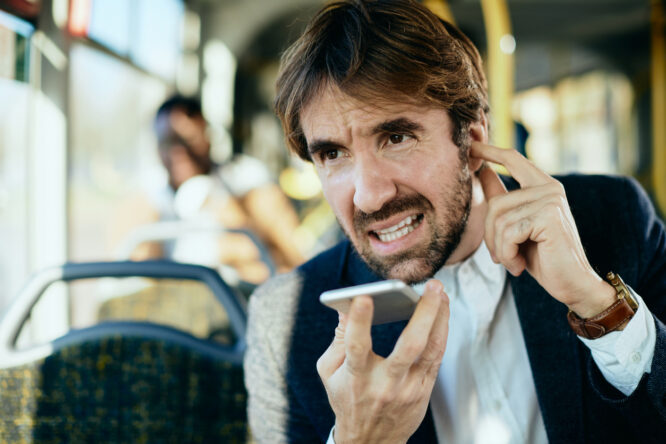
You weren’t part of this conversation, and you certainly didn’t want to be, but now you’re hearing every word. It’s happening more and more, especially on trains, buses, and in waiting rooms. Welcome to the age of speakerphone syndrome: the baffling trend where people talk on loudspeaker in public like no one else exists. For everyone else just trying to get through the day, it’s become an increasingly frustrating background noise.
1. It’s annoying, yes, but also weirdly intimate.

You learn a lot about someone when you’re forced to hear their phone call. From family drama to dodgy business deals to oversharing about medical conditions, speakerphone users don’t hold back. The thing is, the rest of us didn’t ask to be part of it. It creates this strange social tension where you know too much but can’t look away, or tune out.
Even if you try to ignore it, your brain can’t help picking up on voices, especially in confined spaces. And when someone puts their entire call on blast, it blurs the line between public and private in the most uncomfortable way. It’s like secondhand oversharing, and no one’s vibing with it.
2. Headphones exist—people just aren’t using them.
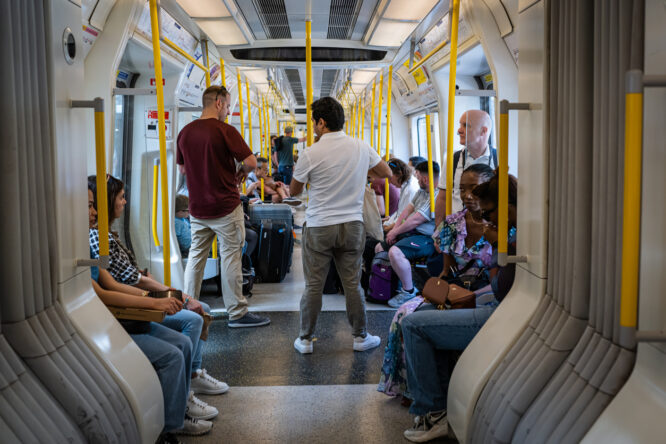
This isn’t the early 2000s. Wireless earbuds are everywhere. You can grab a cheap pair at any shop. People have plenty of options, but they’re choosing not to use them. Maybe it feels easier, or maybe it’s just habit. Either way, it leaves everyone around them stuck listening in.
It’s one thing if your headphones broke or your hands are full. But most of the time, it’s just a choice not to care. And that’s what really winds people up, not the call itself, but the complete lack of awareness that it’s disrupting everyone else’s day.
3. Trains and buses are becoming the worst hotspots.

There’s something about public transport that brings out peak speakerphone behaviour. Maybe it’s the long journeys, maybe it’s the assumption that noise is already part of the environment. However, once someone starts talking full volume on their phone, the whole carriage ends up dragged into it.
Unlike a café or street, there’s no easy way to escape. You’re in a metal tube or plastic shell, hurtling down the track with nowhere to go, and someone two seats over is shouting about what they’re having for dinner like it’s national news. It’s both inconsiderate and claustrophobic.
4. It makes public space feel less like shared space.
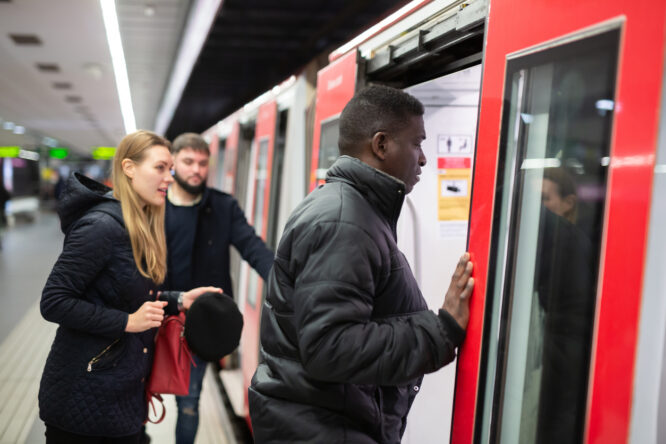
Most of us already deal with tight commutes, packed schedules, and overstimulation from all angles. Public spaces work best when people show a bit of give-and-take. Speakerphone users throw that balance off. They take up audio space in a way that makes everyone else shrink back or brace themselves.
It’s not just the volume, it’s the vibe. It says, “My need to talk is more important than your need for peace.” And over time, that kind of behaviour makes buses, trains, and waiting areas feel less like neutral ground and more like someone else’s living room. One where you can’t leave.
5. Not all noise is equal, but this one’s optional.
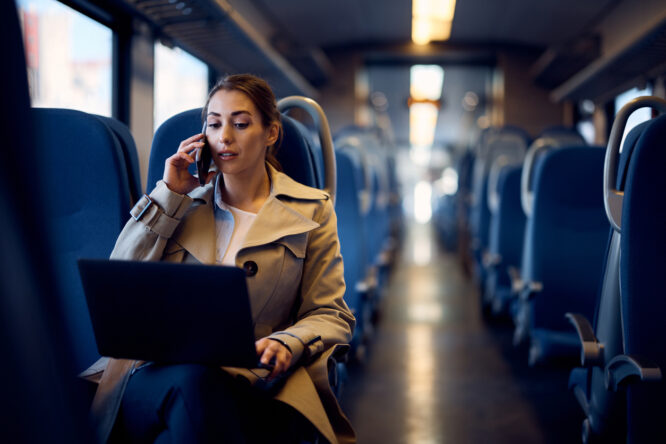
Public spaces are never going to be completely silent. That’s fine. Babies cry, people sneeze, life happens. But speakerphone calls don’t fall into the “can’t be helped” category. They’re entirely optional. They could be quieter, private, or postponed. And that’s why they hit a nerve.
When someone’s call becomes your background noise, it’s hard not to feel like your space is being taken over. And while most people won’t say anything, either out of awkwardness or not wanting to start something, the frustration builds. It turns into shared eye-rolls, passive sighs, and a low-level sense that basic courtesy is disappearing.
6. It reflects a real change in what people think is acceptable.
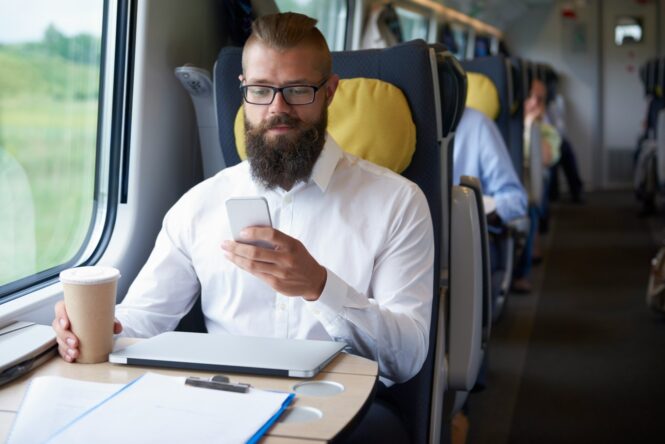
There used to be a bit of self-consciousness around taking a call in public. People would step outside or lower their voice. Now, that filter’s fading fast. Maybe it’s social media, maybe it’s the rise of voice notes, or maybe we’re just used to constant noise, but the result is more people treating every space like it’s theirs alone.
That shift isn’t always intentional. Some people genuinely don’t realise how loud they’re being, but plenty do, and they just don’t care. That’s what makes speakerphone syndrome feel less like a quirk and more like a symptom of something bigger: the slow erosion of social awareness in shared spaces.
7. It’s making other people act out of character.

The longer you’re stuck listening to someone’s speakerphone call, the more tempted you are to do something petty like cough loudly, shoot death stares, or even record the call in revenge (not recommended). It pulls people into a low-stakes social stand-off they never asked to be part of.
What’s frustrating is that the responsibility always seems to land on the people being disturbed to “stay calm” or “be polite,” while the person causing the disruption carries on like it’s normal. That imbalance is what makes the whole thing feel so maddening, especially when it happens every single day.
8. Some people genuinely don’t hear themselves.
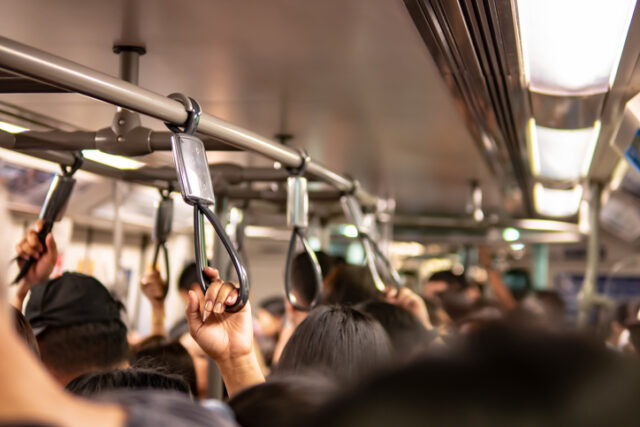
There’s also a group of speakerphone users who aren’t being rude on purpose. They just have no idea how loud they are. Maybe they’ve got noise-cancelling headphones on and can’t hear the volume. Maybe they’ve normalised hearing everything on loudspeaker at home and carried that habit into the world.
Either way, the outcome’s the same. If you’ve ever watched someone obliviously walking through a train carriage mid-conversation like they’re pacing their living room, you’ll know exactly what this looks like. They’re not trying to bother you, but they are. They probably won’t even realise unless someone gently points it out.
9. People are starting to push back, but it’s awkward (and sometimes even dangerous).
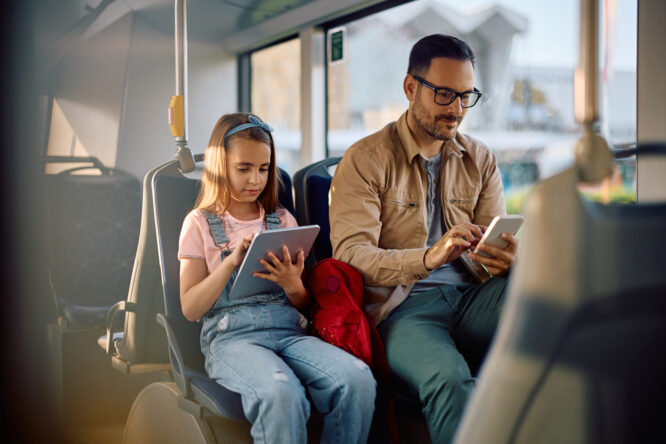
Calling someone out for a speakerphone call is tricky. Most people don’t want a confrontation, especially in a small space surrounded by strangers. But as it becomes more common, more people are quietly starting to push back with staff announcements, posters, or just fed-up passengers saying, “Do you mind using headphones?”
The awkwardness is real, but so is the relief when someone speaks up. It’s not about shaming anyone. It’s about reminding people that their call isn’t private just because they’re used to hearing it. And the more we gently reinforce that, the less normalised it becomes.
10. It’s not a crisis, but it’s not nothing either.

Speakerphone syndrome isn’t going to ruin society, but it’s one of those small things that builds frustration in people’s day-to-day lives, especially when it happens constantly. What’s worse is that the more it’s normalised, the more it chips away at the idea that shared space should be, well, shared.
A bit of self-awareness is all it takes. Pop in your headphones, take the call later, or step outside if it’s long. You’ll still get to say what you need to say, just without turning everyone else’s commute into your personal podcast. Honestly, that’s not too much to ask.