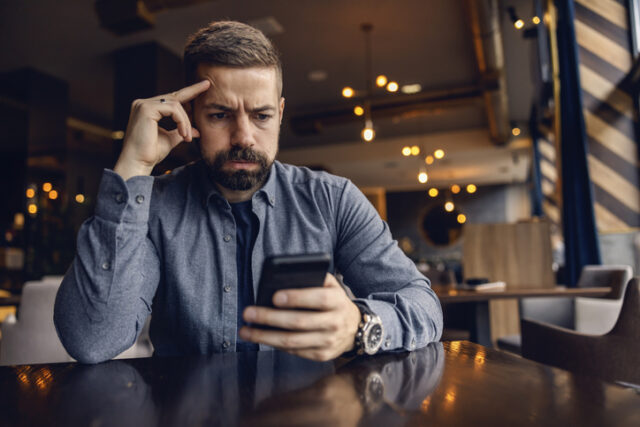
For young people today, sharing your location with your friends through Snapchat, Life360, or iPhone’s Find My has become completely normal.

It’s framed as a way to stay safe, feel close, and know what everyone’s up to. However, as harmless as it might seem on the surface, it’s created a whole new set of pressures, emotional grey areas, and unspoken rules since Gen Z is tracking each other’s moves every second of the day. Here’s why location sharing in these friendships can feel both comforting and slightly suffocating.
It can feel like constant surveillance.

What starts off as a fun way to “stay connected” quickly turns into a form of digital monitoring. You’re no longer just messaging your friends. Instead, you’re low-key expected to account for where you are at all times. This leads to people jumping to conclusions, getting annoyed if you’re somewhere “unexpected,” or questioning why you didn’t invite them out. It blurs boundaries in a way that can feel invasive, even if no one says it outright.
It makes passive exclusion easier to spot.
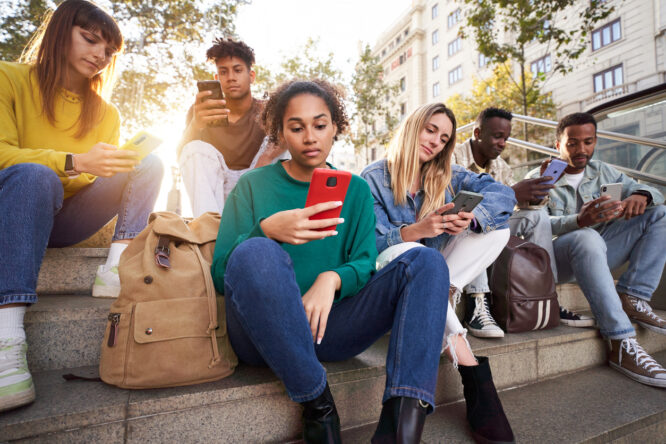
Back in the day, you might not have known if your friends were hanging out without you. Now, a quick glance at Snap Map shows exactly where they are, and exactly who’s missing from the group. This creates an environment where people feel hurt, left out, or paranoid over things that might not have been personal. It feeds FOMO in real-time, with visual proof that you’ve been excluded, whether intentional or not.
It can be used to guilt-trip or pressure people.

If your friends can see you’re out but haven’t replied to their texts, they might take it personally. “You had time to go to the shop but not message me back?” becomes a subtle way of calling someone out. That kind of emotional pressure adds another layer to communication. It makes socialising feel like surveillance, where you’re expected to explain yourself, even if you were just taking a break.
4. It creates unspoken social hierarchies.

Not everyone gets access to your location, and Gen Z knows that. Sharing it becomes a sign of closeness, while removing someone or not offering it at all can be taken as a rejection. This adds a strange level of status anxiety to friendships. People overanalyse who’s on whose map, who got removed, and who’s “out of the loop”—sometimes more than they pay attention to what’s actually being said or done.
It leads to silent resentment.

Even if no one says anything, people often notice when someone’s lying about their plans, especially when their location says otherwise. This can create trust issues without any direct confrontation. Instead of open conversations, people bottle up irritation over being misled or excluded. It builds tension that subtly affects friendships, even if no one wants to be the one who brings it up.
It stomps all over personal freedom.
When everyone knows where you are 24/7, it’s harder to make spontaneous decisions without someone questioning it. Want to skip a social thing? Your location might rat you out. Gen Z is still learning to create boundaries, but constant location tracking makes that harder. It puts pressure on them to justify their movements, even when they just need a bit of space.
It encourages low-level obsession.

Checking the map becomes a habit. You scroll past Snap Maps like you’d check Instagram, not even because you need to know, but because it’s there. And suddenly, you know way more than you wanted to. This creates a weird emotional clutter. Knowing someone’s exact location too often doesn’t actually bring comfort. It just feeds overthinking, assumptions, and sometimes envy.
It gives people a false sense of closeness.

Seeing where your friends are isn’t the same as having meaningful conversations. Of course, location sharing can create the illusion that you’re staying connected, even when real communication is fading. It’s easy to stop checking in properly when you already “know” what someone’s doing. However, that can destroy the depth in friendships, replacing emotional connection with digital presence.
It’s hard to opt out without drama.

Turning off location sharing isn’t just a tech choice, it’s a social statement. Friends often take it personally, like you’re hiding something or pulling away. This makes boundaries tough, if not impossible. Even if someone just wants privacy, they risk being labelled secretive or distant. The pressure to stay visible often overrides the need for independence.
It’s become another way to compare lives.

Seeing your friend always out, travelling, or with different people can start to mess with your self-esteem, especially if you’re stuck at home or feeling left behind. It creates a comparison loop that’s based on geography instead of filtered selfies. And just like Instagram envy, it’s easy to forget you’re seeing curated slices, not full context.
11. It can be used to control other people.

In more intense friendships or relationships, location sharing can go from casual to controlling. People might get possessive, monitor your every move, or use your location to start fights. This isn’t always obvious at first, but it’s a red flag worth paying attention to. Constant access to someone’s whereabouts shouldn’t be used as emotional leverage, and Gen Z needs space to learn that.
It creates performance pressure.
When your movements are visible, so is your “activity level.” If you’re not going out, seeing people, or being “interesting,” it can make you feel like you’re doing something wrong. It turns downtime into something you feel guilty for. Even resting feels like underperforming when you know your friends are out and about, and might be watching.
It feeds anxiety.

Knowing where everyone is all the time can make some people feel safe, but for others, it makes the world feel louder, busier, and harder to unplug from. The notifications never stop. It’s a subtle form of overstimulation. You’re not just managing your own feelings; you’re absorbing where everyone else is and what they might be doing, too. That emotional load adds up.
It takes away the mystery of friendships.

Part of friendship used to be wondering what someone was up to and catching up later. Location sharing removes that because everything’s immediate, visible, and tracked in real-time. While tech can bring people closer, it also strips away some of the space that healthy friendships need. Sometimes, not knowing is actually what gives people room to breathe, and keeps relationships grounded.