The year 500 B.C. might not sound like the best time to punch into a time machine, but for time travellers with a taste for ancient history, it’s kind of a goldmine. This was an era full of shifting empires, wild ideas, and cultural moments that still shape our world today. From early democracy to experimental surgery (yes, really), here’s what makes this strange and distant year so tempting for curious minds with a time-travel itch.
To witness the early days of Athenian democracy
Around 500 B.C., Athens was just starting to play with the idea of a government by the people. It wasn’t perfect (most people weren’t actually included), but it was a huge step away from the idea that kings and gods got all the say. A time traveller might want to see how it all began, before it got mythologised in textbooks.
They’d get to see citizens arguing in the assembly, hear fierce debates in the agora, and maybe even meet Cleisthenes, the man often credited with laying the groundwork for democracy. It’d be like watching the blueprint for modern politics getting scribbled out in real time.
To stand at the height of the Persian Empire
In 500 B.C., the Persian Empire was absolutely massive, stretching from the Indus Valley to the edge of Greece. It was a multicultural, administratively savvy empire that ran postal systems, built highways, and treated conquered people better than most expected.
A traveller might want to walk the Royal Road or sneak a peek into the bustling court of Darius I. They’d get a front-row seat to one of the most organised empires of the ancient world, and maybe even spot the early tension with Greece that would eventually boil into war.
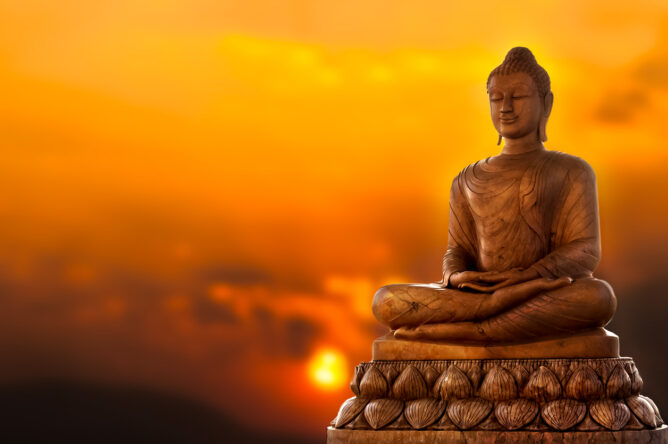
To hear the Buddha speak
Siddhartha Gautama, known as the Buddha, was believed to be teaching in northern India during this period. His ideas about suffering, detachment, and inner peace were already spreading, and still echo in modern spiritual conversations today. Imagine sitting under a fig tree, surrounded by followers, and hearing the Four Noble Truths explained firsthand. A time traveller here wouldn’t just be seeing history—they’d be watching the seeds of an entire world religion take root.
To see the real lives behind ancient Egyptian monuments
The big pyramids were already ancient by 500 B.C., but Egypt was still a powerhouse of knowledge, medicine, and culture. Instead of tomb-building, this was the age of powerful priests, curious physicians, and papyrus-covered libraries. A traveller might be less interested in pharaohs and more in the everyday rhythm of Egyptian life. They’d watch ink-stained scribes at work, observe early surgical procedures, and possibly walk through temples still buzzing with ritual life.
To explore the Olmec civilisation in Mesoamerica
Over in what’s now Mexico, the Olmecs were busy shaping early Mesoamerican culture. These were the people who left behind giant stone heads, mysterious symbols, and hints of a society that gave rise to the Maya and Aztec civilisations. Someone with a taste for mystery would have a field day here. They’d be trying to decode early glyphs, uncover how the massive heads were moved, and soak up the spiritual life of a civilisation still cloaked in questions.
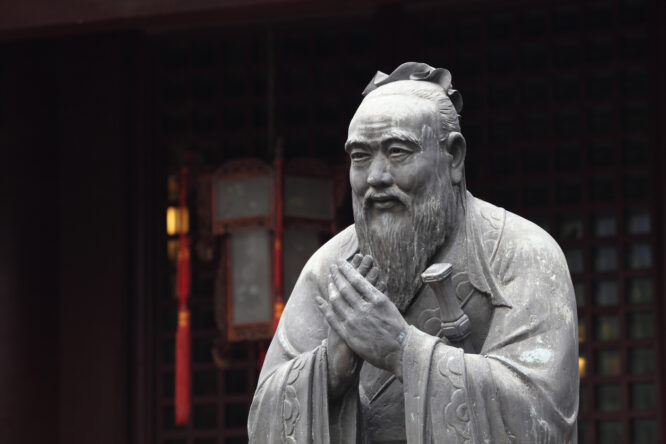
To witness Confucius shaping Chinese philosophy
Confucius lived during this period and was actively teaching about ethics, family, respect, and leadership. His ideas would eventually guide entire dynasties and still show up in social values across East Asia today. Travellers who landed in the state of Lu could potentially sit in on a lesson or see how this influential teacher lived. It’s not every day you get to watch someone redefine moral thinking for the next 2,500 years.
To walk through the early Roman Republic
Rome hadn’t become an empire yet—in 500 B.C., it was a scrappy republic just starting to find its feet after shaking off the monarchy. The systems of senate, consuls, and voting were in their infancy, and the Roman identity was being formed bit by bit. Some people might want to see how ordinary Romans lived, what laws were being formed, and how society functioned before all the emperors and grandeur. This was Rome before the ego, and it’s a rare look at how power structures begin.
To observe Celtic Britain before the Romans came
Britain in 500 B.C. was a patchwork of Celtic tribes, hill forts, and rituals tied to nature and the seasons. It wasn’t yet the Roman province it would become, and travellers here would find a rich oral culture, druid traditions, and a wild, untouched landscape. This would appeal to anyone curious about pre-colonial Britain—when sacred groves and stone circles still shaped daily life. Plus, you might finally learn what Stonehenge was actually used for. Maybe.
To see early trade networks forming between continents
We tend to think of ancient civilisations as isolated, but even in 500 B.C., trade routes were already forming across continents. Silk was starting to move west from China, tin and amber flowed through Europe, and spices were slipping across the Indian Ocean. For a traveller fascinated by global connection, this would be the perfect moment to trace early exchange—ideas, goods, and cultures quietly hopping borders before globalization was even a word.
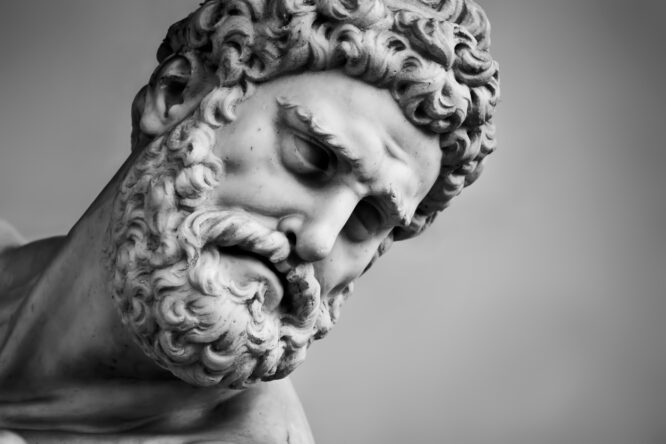
To find the origins of myths before they became legends
So many of the stories we know today—from Hercules to Gilgamesh to ancient flood myths—were still in circulation at this point. Some were being written down for the first time. Others lived entirely in oral tradition. Many time travellers would want to hear them as they were first told, passed between generations at firelight gatherings. It’s a chance to see how mythology begins—not as fantasy, but as reflections of real fear, hope, and wonder.