Walking down your local high street these days can feel a bit like a glitch in the Matrix.
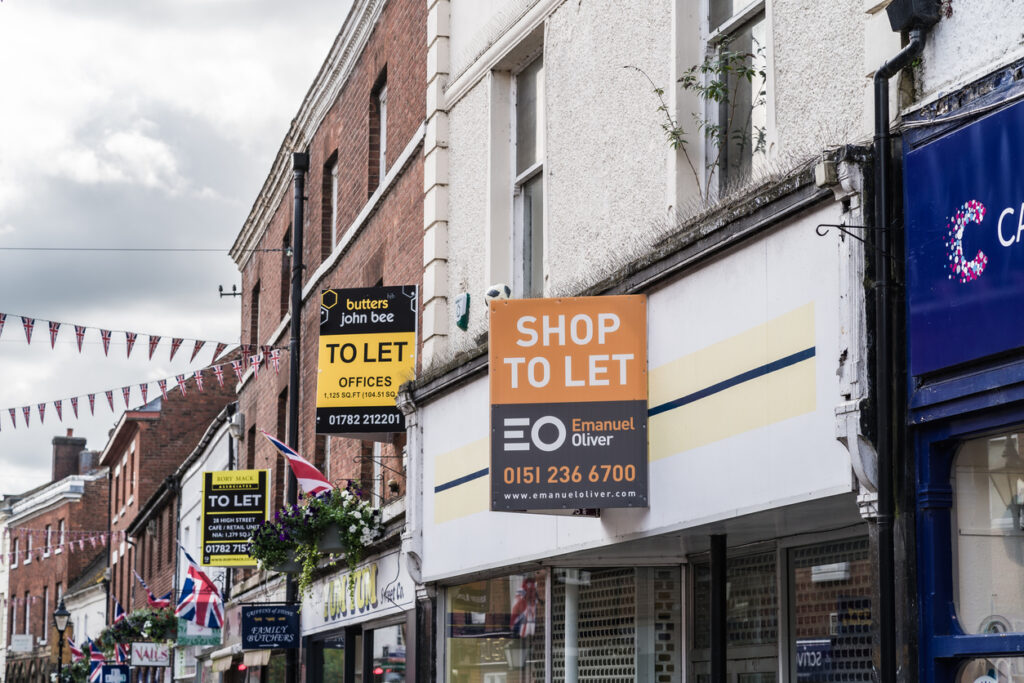
You could be in Middlesbrough, Manchester, or Maidstone, and yet you’re staring at the exact same row of coffee chains, pound shops, and betting offices. It’s a far cry from the days when every town had a bit of its own character and a butcher or baker who actually knew your name. Now, it seems like someone has just hit copy and paste across the entire country, leaving us with a landscape that’s as predictable as it is grey.
It’s easy to blame the internet for killing off the local shops, but the reality of why our town centres have become so bland is a bit more tangled than just everyone shopping on their phones. Between eye-watering business rates, landlords who’d rather leave a unit empty than drop the rent, and the relentless march of big corporations, the independent shops haven’t stood a chance. We’ve reached a point where only the massive chains can afford to keep the lights on, resulting in a “clone town” effect that’s drained the soul out of our communities. Understanding how we got here is the first step in figuring out if there’s any way to bring a bit of life back to the pavement.
Chain stores pushed out the independents decades ago.

Back in the 20th century, Boots, Woolworths, Burton, and Marks & Spencer took over every high street in Britain. They had the money to snap up the best locations and could undercut local shops on price. Independent butchers, bakers, and drapers couldn’t compete with stores that bought stock in massive quantities and had recognizable branding. By the 1990s, most high streets had become identical rows of the same national chains. People complained about “clone towns” even then, but at least the shops were open and bustling.
Now, even the big chains are collapsing.

Woolworths died in 2009, and since then, we’ve lost BHS, Debenhams, Arcadia (which owned Burton, Dorothy Perkins, Wallis and Topshop), Wilko, Laura Ashley, and countless others. In 2021 alone, 17,219 chain stores closed while only 7,160 opened. That’s 47 shops shutting every single day. The giants that created identical high streets are now vanishing, leaving massive empty units that nobody wants to fill. Walking past boarded-up Debenhams buildings in town after town just reminds you how similar the decline looks everywhere.
Business rates are absolutely killing high street shops.
Business rates are property taxes that retailers pay to local councils, and they’re crippling. Shops can face rates bills that are ten times higher than their rent, which is completely unsustainable when profit margins average just 7%. A shop that previously paid £8,000 annually now pays closer to £11,000 after recent relief cuts. Meanwhile, Amazon paid £63.4 million in rates across their entire UK operation in 2019, which was less than 1% of their £8.77 billion in sales. Physical retailers are subsidizing online giants while struggling to keep their doors open.
Retail parks nicked all the customers and paid less for the privilege.

Out-of-town retail parks offer free parking, easy access, and lower rents than high streets. They’re not pretty, but they’re convenient, so shoppers migrated there in droves. The first one opened in Hendon in 1976, and by 2020 the UK had 42 massive shopping complexes, mostly in city suburbs. High street shops couldn’t match the convenience or the costs. Retail parks now consistently outperform high streets and shopping centres for footfall, despite the shift to online shopping hitting them too.
Nobody can afford high street rents anymore.
Commercial rents on high streets have climbed so high that only chains with deep pockets can afford them, but even they’re struggling now. Mid-sized towns face inflated costs while high-end streets charge up to £250 per square foot. Independent retailers get priced out immediately, so landlords end up with the same chain stores or nobody at all. When chains collapse, the empty units sit vacant because independent shops can’t afford the rent and other chains don’t want the space.
Online shopping gutted the reason to visit town centres.

Why trek into town when you can buy everything online cheaper and faster? E-commerce now accounts for over a quarter of UK retail sales, and that number keeps growing. Small independents can’t compete with Amazon’s prices or selection, and they often lack the money or technical skills to build their own online presence. Even big chains struggled to adapt quickly enough. The pandemic accelerated this shift massively, with people getting used to shopping from their sofas.
Charity shops are the only things filling the gaps.
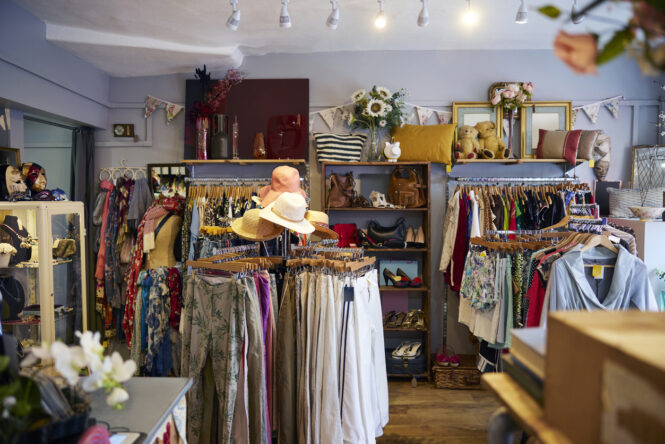
When commercial retailers can’t afford the rent, charity shops move in because they get rate relief. Walk down struggling high streets, and you’ll see British Heart Foundation, Oxfam, Cancer Research UK, and Sue Ryder all in a row. They serve a purpose and many people rely on them, but when half your high street is charity shops, it’s a sign of economic decline. They all look similar too, with the same layout and the same smell, adding to that clone town feeling.
The same coffee chains replaced everything interesting.
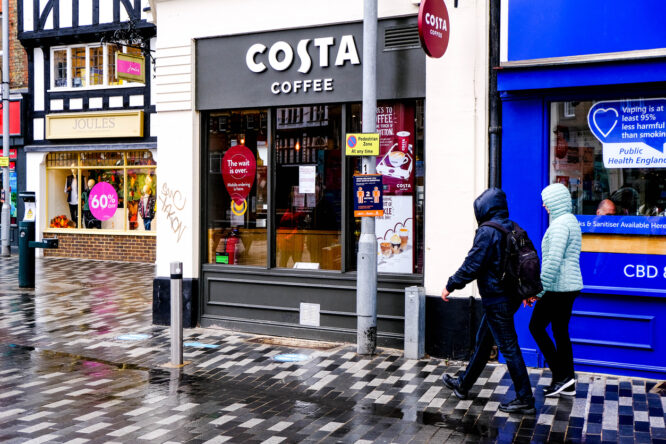
Costa, Starbucks, Caffè Nero, Pret. Every high street has the same coffee shops in slightly different configurations. They’re reliable and people like them, but when they replace independent cafes, vintage shops, and local businesses, everywhere starts looking identical. You can walk through Reading, Bath, or York and see basically the same stretch of chain coffee shops. At least they’re still open, unlike half the other units.
Banks disappeared and left more empty buildings.

High street banks have been closing at an alarming rate, with 998 branches shutting in 2021 alone. Barclays, HSBC, Lloyds, they’ve all pulled out of town centres as people switched to online banking. These were anchor businesses that brought footfall, and when they left they took customers with them. Their large premises sit empty or get split into smaller units, often becoming letting agencies or phone shops. Every town has lost multiple bank branches, making high streets look even more desolate and identical in their emptiness.
Vape shops and betting shops filled the vacuum.

When proper retailers left, vape shops and bookmakers moved in because they could afford the rents. Now every high street has multiple branches of William Hill, Ladbrokes, Coral, and Paddy Power clustered together, plus a growing number of vaping shops. They’re not illegal and people use them, but when they dominate your town centre it’s depressing. They all look the same too, with bright signage and blacked-out windows, contributing to that cloned appearance.
Property developers prefer dealing with chains over independents.
Landlords and developers find it easier to rent to chains because they’re seen as reliable tenants with established credit. Independent shops are viewed as risky, even though they’d bring character and diversity to high streets. When developments get planned, spaces are designed with chain stores in mind, with standard unit sizes that suit multiples rather than smaller businesses. This systematically favours homogeneity over uniqueness.
Planning policies accidentally encouraged sameness.
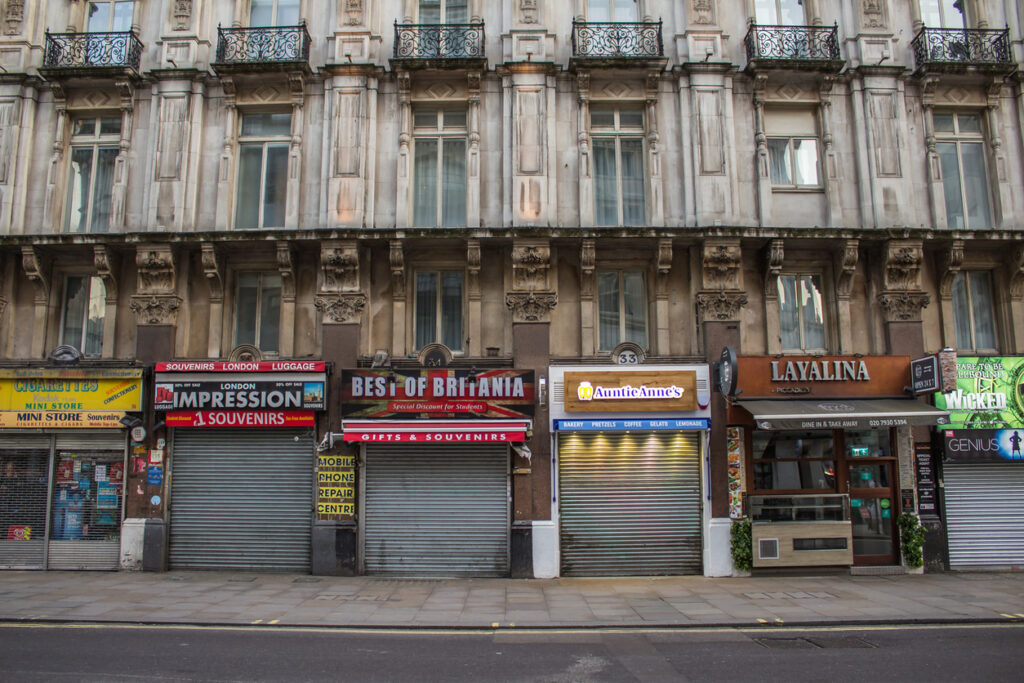
Local councils often gave planning permission for out-of-town developments that killed high streets, then struggled to revive town centres afterwards. The focus on retail-only zones in some areas prevented mixed-use developments that might have kept high streets vibrant. Westminster Council’s “retail only” policy for Oxford Street means empty shops can only become restaurants or offices, not housing, limiting how spaces can adapt. These rigid policies created environments where only certain types of businesses could survive.
Nobody wants to spend all day in town when it’s just shops anyway.
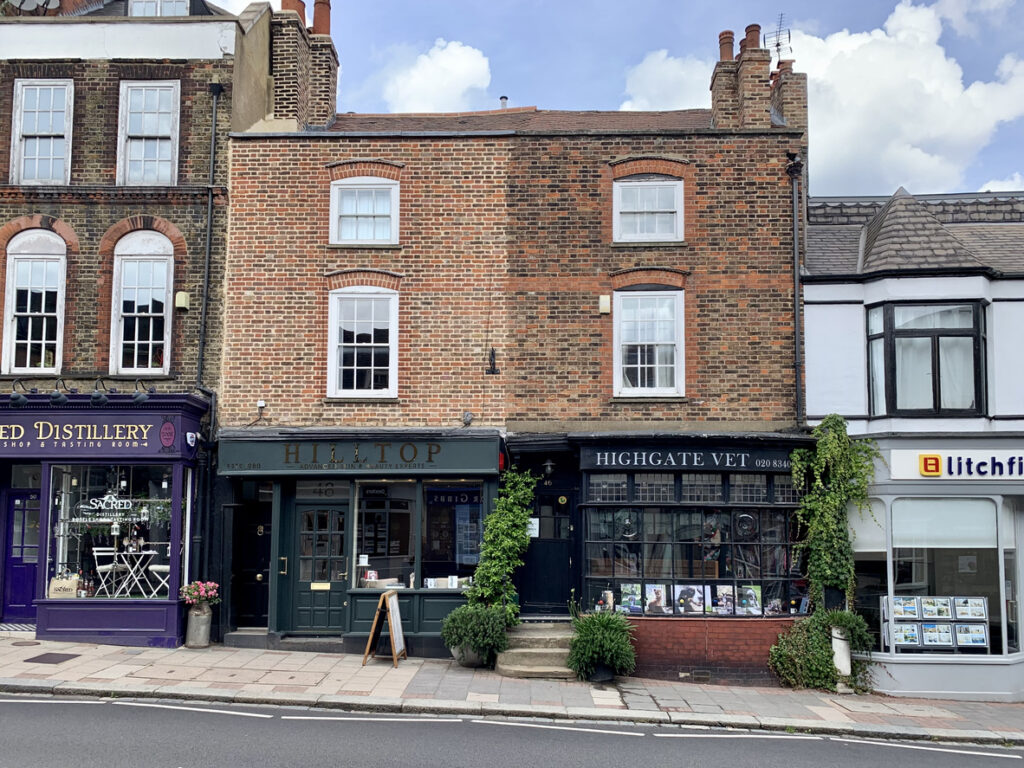
High streets that thrived were never just about shopping, they were social spaces where people worked, ate, drank, and met friends. The 1980s and 1990s focus on retail-first planning stripped away that variety. Now that online shopping has replaced the need to browse shops, high streets don’t have enough else to offer. The ones that are surviving have pivoted to being destinations for experiences rather than just transactions, but most haven’t adapted quickly enough and they all end up looking like watered-down versions of each other.