British culture has always been a bit of a moving target, but the last couple of years have seen some of the most visible changes in decades.
It’s not just that the high street looks different or that we’re carrying less cash; the actual “rhythm” of how we live, work, and socialise is being rewritten. From the way we handle a Friday night out to the quiet disappearance of habits that used to be part of the national furniture, the version of Britain we’re living in today would probably look quite foreign to us even ten years ago.
It’s not necessarily a case of things getting worse, but the old rules about what makes us British are definitely being traded in for something more digital, more cautious, and a lot more flexible.
1. The pub is turning into a restaurant you have to book.
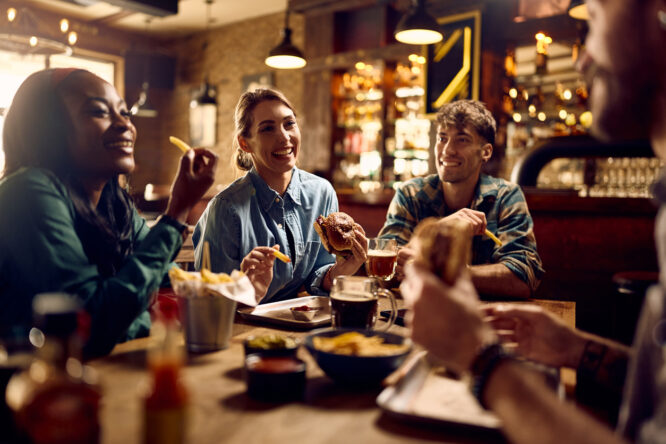
There are still proper pubs out there, but loads have changed their whole personality. You go in expecting a sticky table and a bag of crisps, and suddenly, there’s a host stand, a chalkboard menu written like a poem, and someone asking if you’ve got a reservation for 7:15. The whole vibe is less of popping in for one and more sitting down for a planned event.
It’s partly survival because food pays the bills, but it also changes how people use the place. A pub used to be a default third place for all sorts of ages, budgets, and moods. Now it can feel like you need a reason to be there, and you definitely need to be willing to spend more than a tenner without thinking about it.
2. Nights out are getting swapped for daytime socialising.

More people are doing brunch, walks, and coffee, instead of the old routine of pre-drinks, taxis, and trying to find your mates in a packed bar. It’s not just age either, it’s cost, hangovers, and the fact people can’t be bothered with the chaos as much. A lot of social lives are basically becoming daylight-friendly.
You can see it in how towns and cities feel on a weekend now. There’s more movement earlier, more queues for cafés, more people in trainers and puffer jackets doing a lap of somewhere scenic. The big messy night out is still a thing, but it’s starting to feel more like an occasional blowout than a weekly tradition.
3. Tea is still sacred, but the way we drink it is shifting.

Tea hasn’t stopped being tea, but it’s not always the default anymore. In a lot of offices and homes, coffee has taken over as the everyday drink, especially for younger people who grew up with flat whites being normal. Tea is still the comfort drink, but it’s not always the automatic first choice.
Even the tea habits are changing around the edges. Some people are fussier about brands, some are into fancy loose-leaf stuff, and some are doing herbal blends because they don’t want caffeine. It’s still British as anything, but the old universal agreement of tea solving everything is getting a few more exceptions.
4. Queueing is turning into a polite free-for-all.

We still tell ourselves we’re the world champions of queueing, but you can feel the rules getting looser. Some places now have half-queues, half-clusters, where everyone stands near the general area and pretends they know who’s next. Then someone steps forward, and you have that tiny internal crisis of whether or not they were actually before you.
It’s worst in places like coffee shops, stations, busy takeaways, anywhere with multiple screens and no clear line. The British instinct is still to avoid confrontation at all costs, so people just simmer silently and do that little polite cough. The queue still exists, it’s just… less official than it used to be.
5. Saying hello to strangers is becoming less automatic.

There are still places where people nod, smile, and do the quick “alright?” as they pass. However, in loads of areas, especially in cities, people are more sealed off than they used to be. Headphones, phones, rushing, and a general sense of not wanting to interact unless we have to has become the norm.
It changes how friendly a place feels, even if everyone’s still basically decent. You can go through a whole day without having a tiny chat with anyone outside your bubble. The old low-level community feeling, where you’d recognise faces and exchange little bits of life, is thinner in a lot of places now.
6. British humour is getting less suggestive and more careful.

The classic style of banter, teasing, and saying the harsh thing as a joke is still around, but people are more aware it doesn’t land the same with everyone. A joke that used to be harmless among mates can look completely different in a group chat, at work, or online where context disappears. More people are thinking twice, not because they’ve lost their sense of humour, but because they’ve learned the hard way how stuff gets taken.
You can see the split between generations and even between friend groups. Some people still live for savage humour and feel it’s part of being close. Others want jokes that don’t feel like being lightly punched in the ribs. The result is that banter culture isn’t as universal as it used to be, and people are negotiating it more.
7. The weekly big shop is turning into constant small shops.

Loads of people still do the big weekly supermarket run, but more and more are having to grab a few bits all the time. Partly because life is more chaotic, partly because deliveries make planning less necessary, and partly because money feels tighter, so people don’t want to drop a big amount in one go. The corner shop and the quick supermarket trip have become a regular rhythm.
It changes what food culture looks like, too. People cook differently when they’re buying in smaller amounts, and it’s easier to end up with random meals and bits of whatever. Even the idea of having a well-stocked kitchen is shifting for a lot of households because space, cost, and time are all working against it.
8. Work culture is splitting into two completely different lives.

Hybrid and remote work has created two versions of Britain living side by side. One version is commuting, office clothes, packed trains, and the lunchtime Pret routine. The other version is kitchen-table laptops, midday laundry, and meeting your mate for a coffee at 11 because your schedule allows it. It’s not just about convenience, it’s shaping people’s identity and social life.
The weird part is how this affects everything else, from city centres to friendships. Some people have become more local, more tied to their neighbourhood and daytime routines. Others are still living the old rhythm of the working week. It’s like we all used to share the same timetable, and now we really don’t.
9. British politeness is getting more direct in some places.

We’re still polite, but you can feel people getting a bit less patient in everyday life. Customer service has changed, queues are longer, staffing is tighter, and everyone’s slightly more on edge. That old British habit of swallowing annoyance and smiling through it is still there, but it’s competing with preferring honesty and getting things sorted.
You see it in little moments. People are more likely to challenge someone cutting in, more likely to complain about bad service, more likely to say things aren’t okay instead of grumbling later. It’s not that everyone’s become rude, it’s more like people are tired, and tired people stop doing the extra performance of politeness.
10. The idea of British identity is becoming more mixed and more debated.

What it means to be British used to get treated like a fixed thing, even if it never really was. Now, it’s more openly discussed, argued about, and shaped by different communities, backgrounds, and generations. For a lot of people, Britishness is food, music, slang, and mixed influences, not just tradition and history.
At the same time, there’s a louder argument happening about what should be preserved, what’s changing too fast, and who gets to define the culture. You see it in politics, online debates, even in what people get nostalgic about. The country feels like it’s deciding what it wants to be, and not everyone agrees on the answer.
11. Parenting and childhood are getting more supervised and more anxious.

Childhood looks different now in a way you can actually see on the street. There are fewer kids roaming around in little packs, fewer back by tea arrangements, and more structured clubs, lifts, and planned playdates. A lot of parents feel they can’t do the hands-off approach because the world feels less safe, or at least it feels more watched and judged.
It changes the whole feel of neighbourhood life. If kids aren’t outside, adults don’t bump into each other as much, either. Childhood becomes something that happens indoors, in organised places, or under a close eye. Even when parents want to loosen the reins, they’re often fighting against fear, social pressure, and the sense that one mistake will get them judged.
12. Traditional TV is fading, but shared moments are still happening elsewhere.

Fewer people sit down and watch the same thing at the same time now because streaming lets everyone live in their own little media world. The old ritual of a Saturday night show, a big series finale, or everyone talking about last night’s telly at school has thinned out. You still get big moments, but they’re less automatic.
The replacement is stuff that spreads online and pulls people together that way. A clip goes viral, a reality show becomes meme fuel, a documentary sparks arguments, a sports moment takes over the group chat. It’s still shared culture, it’s just not happening through the same box in the corner of the living room anymore.
13. Nostalgia is turning into a proper industry.

Britain has always loved a bit of nostalgia, but it’s on another level now. Whole brands, TV shows, and events are built around memory, and it sells because people are stressed and want something familiar. Even fashion, music, and home decor keep circling back to the same eras, like we’re all living in a massive throwback loop.
The reason it feels so noticeable is that it’s not just older people doing it. Young people are buying into nostalgia for times they didn’t even experience because the aesthetic is everywhere, and the mood feels comforting. When the present feels messy, the past becomes a product you can buy, wear, watch, and post about, and British culture is leaning into that hard.