Most people assume the dodgy dishes are the ones that look questionable, but anyone who’s worked in a restaurant will tell you the real troublemakers are often hiding in plain sight.

Staff see what comes in, what gets prepped in a rush, and what hangs around longer than it ever should. So when they tell their friends to steer clear of certain items, they’re not being picky. In fact, they’re speaking from grim experience.
Some dishes are more hassle than they’re worth, others are barely fresh, and some rely on shortcuts you’d rather not think about. Once you know which items raise eyebrows behind the scenes, you’ll probably think twice before ordering them again.
1. Specials that sound too complicated

Daily specials can be amazing when chefs are using fresh ingredients creatively. But if a special has too many sauces, ingredients, or long descriptions, it might be a sign that the kitchen is hiding something. These dishes often use leftovers that need to be cleared before they expire. Restaurant staff know that simple specials made with seasonal ingredients are usually the safest bet. If it sounds overly fancy or unclear, it’s better to order something from the main menu instead.
2. Fish on a Monday

Fish should be eaten fresh, but many restaurants get their seafood deliveries toward the end of the week. By Monday, it could be several days old, especially if the restaurant isn’t near the coast. Staff who know this usually wait until later in the week to order anything from the sea. Unless you’re at a specialist seafood place that gets daily deliveries, Monday fish dishes are often not as fresh as they sound on paper.
3. Ice in soft drinks

It might look harmless, but ice machines can be breeding grounds for bacteria if not cleaned properly. Because they’re rarely emptied and scrubbed, old water and mould can build up inside. Restaurant staff who have cleaned one before often avoid ice entirely when eating out. If you’re in a busy bar or chain restaurant, the ice might be fine, but in smaller places, it’s often safer to skip it. A cold drink without ice is a small price to pay for peace of mind.
4. Buffet items that sit for hours
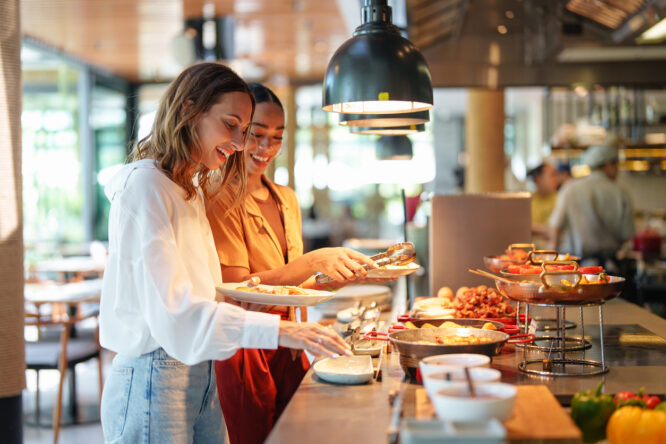
Buffets look tempting, but once you’ve worked behind the counter, you know how often food sits in warmers for too long. Dishes that stay out for hours lose freshness and can easily fall into unsafe temperature zones where bacteria grow. Restaurant staff often suggest arriving right when the buffet opens. That’s when everything is freshly cooked and hasn’t been sitting out too long.
5. Lemon slices in drinks

Lemon wedges often go from the cutting board straight into glasses without being washed. They might even be handled by several people before reaching your table. Because of that, staff who’ve seen it happen usually skip lemons in their drinks altogether. It seems like a tiny detail, but it’s one of the most common sources of cross-contamination in food service. If you want lemon flavour, it’s safer to squeeze your own at home.
6. House salads in busy chain restaurants

At first glance, a salad seems like a healthy choice, but the greens in large restaurants are often prepped in bulk and stored in bags for days. Once they’re cut, they lose freshness quickly, and many are sprayed with preservatives to stay crisp. Staff say it’s better to order cooked vegetables or side dishes made to order. They’re fresher and have less chance of being handled by multiple people.
7. Anything listed as “market price”

When an item doesn’t have a fixed price, it can be a warning sign. The phrase “market price” might sound elegant, but it also lets restaurants charge far more than the dish is worth. Even insiders are often shocked at what shows up on the bill later. Unless you ask the price first, you could end up paying double what you expected. Restaurant staff rarely order these items without checking in advance.
8. Chicken dishes in cheap pubs
Chicken can be tricky to cook safely, and in cheaper venues, it’s often frozen, reheated, or left under hot lamps for too long. Staff who’ve worked in those kitchens know it’s one of the riskiest proteins when corners are cut. It’s not that all pub chicken is bad, just that some places rush during busy times. Workers who know the process often stick to beef or veggie dishes in those settings.
9. Well-done steak

Asking for a steak well done might feel safer, but many restaurant staff quietly avoid it. When meat is cooked that long, it can hide quality issues. Lower-grade cuts are often used because the extra cooking time masks the texture and flavour. If you like your steak cooked through, go for medium-well instead. It’s less likely to be dry and still gives the kitchen less reason to use poorer cuts.
10. Dishes with fancy truffle oil

Real truffles are rare and expensive, but “truffle oil” in restaurants is often a chemical flavouring, not the real thing. Staff know it’s used to make ordinary dishes sound luxurious, even though it comes from synthetic ingredients. If a menu adds truffle oil to everything from chips to pasta, it’s usually more about marketing than taste. Restaurant workers who know the trick will often skip it and order something simpler and more genuine.