Alcohol misuse doesn’t play out the same for everyone, and gender often makes a big difference in how it’s experienced, judged, and handled.

While both men and women struggle with the effects of drinking, women often face an extra layer of shame, secrecy, and societal pressure that makes recovery harder to talk about. These aren’t just stereotypes; they reflect real patterns reported by women navigating drinking problems in a world that still holds them to a different standard. Women with drinking problems tend to experience these things much more commonly than men.
1. They’re judged more harshly for it.

There’s still a strong double standard around alcohol use. A man who drinks too much might be seen as reckless or “one of the lads,” while a woman is more likely to be labelled irresponsible, unstable, or even unfit as a parent or partner. That judgement can cause women to hide their drinking or downplay it, especially if they’re mothers, professionals, or carers. It often leads to more secrecy and guilt, which makes it even harder to reach out for help.
2. They often hide it better, but feel worse.

Many women report becoming extremely skilled at keeping their drinking private, sneaking it in between school runs, during cooking, or after everyone else is asleep. On the surface, everything might look fine. However, that secrecy builds shame. Emotionally, it hits hard. Even when functioning day-to-day, many women feel a growing sense of disconnect, isolation, and inner conflict that slowly destroys their self-worth.
3. People assume they’re being “emotional,” not struggling.

When a woman starts showing signs of distress—snapping at people, withdrawing, crying more easily—it’s often chalked up to hormones, stress, or “being dramatic.” The idea that it could be linked to alcohol often doesn’t even enter the conversation. This means warning signs are more likely to be dismissed or misread. And when someone’s pain isn’t taken seriously, it delays support and increases the chance they’ll spiral further in silence.
4. Drinking is often tied to perfectionism.

Many women who struggle with alcohol also carry an overwhelming sense of pressure to “do it all”: be a good mum, keep the house running, perform at work, look put together. When that internal pressure builds, drinking can become a release valve. It’s less about partying and more about numbing. The drinking often starts behind closed doors, quietly, as a way to escape the impossible expectations they feel too ashamed to admit they can’t meet.
5. Their drinking is more likely to be linked to trauma.
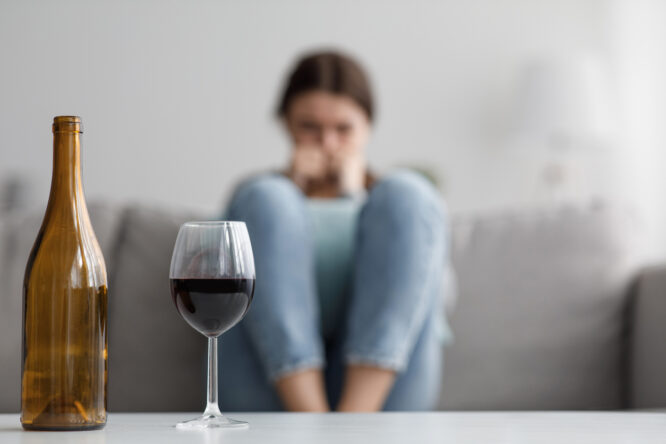
While men might drink to blow off steam or socialise, many women’s drinking is rooted in past trauma, especially emotional abuse, neglect, or sexual violence. Alcohol becomes a way to push those memories down or create a sense of control over overwhelming feelings. That layer of complexity means treatment and support often need to address deeper emotional wounds, not just the drinking itself. Without that, recovery can feel superficial or even retraumatising.
6. They’re more likely to feel guilt about parenting.

For mothers, drinking problems often come with an added layer of deep guilt, whether it’s missing moments with their kids, parenting through hangovers, or hiding bottles around the house. That guilt can be crushing, and it’s one of the biggest emotional barriers to getting help. Instead of reaching out, many women spiral further into shame and self-blame, convinced they’re the only ones failing at holding it all together.
7. Medical professionals sometimes miss it.

Because many women present as high-functioning and often don’t fit the stereotypical image of someone with a drinking problem, GPs and therapists can overlook the signs. The drinking is hidden behind anxiety, stress, or sleep issues. As a result, women can bounce between appointments for physical or emotional symptoms without anyone addressing the real root of the issue. This delay in recognition can mean years of unnecessary suffering.
8. Social drinking expectations are more confusing.

Women often feel trapped in a weird double bind: expected to drink to fit in, but shamed if they drink “too much.” The line between fun and “too far” is thinner and more judgemental for women, especially in social or work settings. That pressure leads to confusion about what’s normal, or what’s too much. For many women, alcohol becomes both a social expectation and a private burden, and the mixed messaging can make self-awareness harder to grasp.
9. They feel more isolated in their recovery.

Many recovery spaces, especially traditional ones, have been historically male-dominated. Some women struggle to relate to the stories shared or feel uncomfortable opening up in those environments. That lack of representation can make recovery feel even lonelier. Finding female-specific groups or support spaces often becomes a game changer, but not everyone knows where to look or feels brave enough to ask.
10. Hormones make it hit harder.

Biologically, alcohol affects women more quickly and more intensely than men. Hormonal fluctuations, body composition, and metabolism all play a role, meaning the same amount of alcohol often has a bigger impact. This can lead to stronger hangovers, more emotional fallout, and quicker dependency. However, because many women don’t realise this, they can end up feeling weak or ashamed without understanding the science behind it.
11. They’re more likely to be stigmatised for relapse.

While relapse is a common part of recovery for many people, women are often judged more harshly for it—especially if they’re in caregiving roles. A slip-up is seen as proof they’re unfit or unstable, rather than just a part of the process. This intense pressure to “get it perfect” the first time can make women hide relapses, lie about progress, or drop out of support systems altogether. The shame of not getting it right becomes its own obstacle.
12. They’re often the emotional caretakers of other people.

Even while struggling themselves, many women are still expected to carry the emotional load in families or relationships. They’re the ones checking in, holding space, calming arguments, even when they’re barely holding on themselves. This makes recovery more complicated. It’s hard to focus on your own healing when you’re still trying to hold everything else together. And when emotional labour goes unrecognised, so does their pain.
13. They often get help later, but turn things around faster.

Because of shame, social judgement, or family pressure, many women delay getting support until things are really serious. But once they do reach out, they often engage deeply in the process and respond well to treatment that meets them where they are. This late-but-strong recovery pattern is common. Women who finally give themselves permission to heal often go all in—and their progress is a quiet but powerful reminder that it’s never too late to reclaim your story.