Most people don’t want a lecture about alcohol, and that’s fair—it’s everywhere, it’s social, and for a lot of people, it’s no big deal. The problem is that alcohol has a sneaky way of creeping into the cracks of your life without making a dramatic entrance. You might not realise it’s causing problems because it doesn’t always look like a problem. That’s what makes it so tricky to talk about. Nevertheless, here’s why alcohol can definitely mess with things, and why nobody really wants to admit it.
It blurs what actually bothers you.
One of the biggest things alcohol does is smooth things over until nothing ever gets properly dealt with. That post-work glass of wine or casual pint might seem harmless, but it’s easy for it to become a buffer. Instead of dealing with stress, conflict, or boredom head-on, alcohol just… distracts.
The problem is, once you’ve got used to that blur, facing real feelings without it starts to feel uncomfortable. So they pile up. It doesn’t mean someone’s avoiding life on purpose, but as time goes on, you realise you haven’t really felt your feelings in a while. You’ve just been numbing them.
It sneaks into routines without raising alarm bells.
Few people wake up one day and decide to drink too much. It usually just slides into your day-to-day in small, easy ways. A drink to unwind. A drink to socialise. A drink just because it’s the weekend again. Nothing dramatic—until suddenly, it’s weird not to have one.
Because it becomes so normal, it’s hard to see where the line is. You’re not blacking out, you’re still going to work, you’re fine… right? But even low-level, routine drinking can change our energy, your focus, and even your sleep, without you clocking how much it’s affecting your baseline.
It makes socialising feel harder without it.
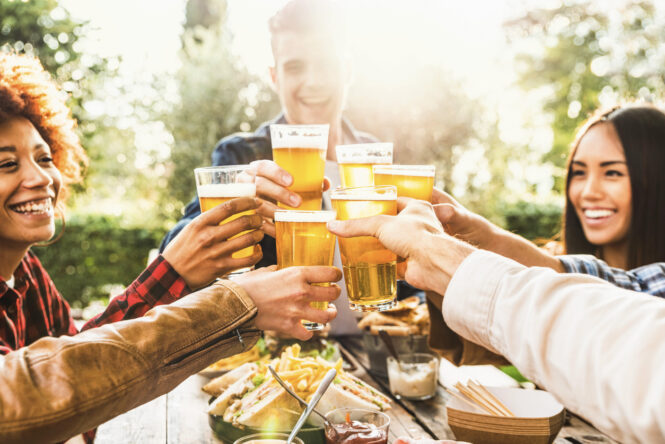
For a lot of people, drinking isn’t just about the drink, it’s about confidence. A few drinks can make conversations flow, take the edge off nerves, or help you feel more relaxed in a crowd. And that’s totally understandable… until you start avoiding sober socialising altogether.
When alcohol becomes the crutch that helps you “show up,” it can make you feel like the real you isn’t enough. That slowly chips away at self-trust. It becomes less about enjoyment and more about needing a boost just to be in the room.
It messes with sleep way more than people realise.
Lots of people think alcohol helps them sleep because it makes them drowsy, but what it actually does is mess with the quality of your rest. You might fall asleep faster, but your body doesn’t get the deep, restorative stages it needs.
That’s why you can wake up groggy even after a full eight hours, or find yourself wide awake at 3 a.m. more often than usual. The sneaky part is that you don’t always trace the tiredness back to drinking, especially if it didn’t feel like “too much” at the time.
It adds drama to relationships in subtle, repetitive ways.
It’s not always about big fights or slurred arguments. Sometimes, it’s just the subtle stuff: mood swings, forgetting things, saying something you didn’t mean, or being less emotionally present. Over time, those small disruptions build up friction. And if both people are drinking, the issues can cancel each other out until something snaps. Alcohol doesn’t cause every problem in a relationship, but it can make honest communication harder and emotional connection blurrier.

It blunts creativity and motivation.
Even if you don’t drink heavily, regular alcohol can create this low-level fog that makes you feel a bit flat. Things that once excited you might feel like more effort than they should. You’re functioning, but the spark feels dimmer. It’s not that alcohol kills creativity. But it can definitely dull it over time, especially if it becomes your main way to unwind. That “meh” feeling? Sometimes it’s not laziness or burnout; it’s just your brain trying to operate at half power.
It encourages “meh, I’ll deal with it tomorrow” energy.
After a couple of drinks, it’s easy to let go of the to-do list. Which is great, in theory, until the next morning, when all those undone things feel even heavier. Alcohol doesn’t just delay your plans; it trains your brain to rely on short-term comfort instead of long-term follow-through.
That’s where the cycle starts: drink to relax, feel behind, drink again to escape that feeling. It doesn’t feel dramatic, but it does start to wear you down over time. And you don’t even notice the pattern until you’re knee-deep in it.
It keeps you in environments that aren’t good for you.
Bars, parties, nights out—they’re fun, sure. But sometimes we stick around in places that don’t actually feed us, just because they’re built around drinking. You might spend time with people you don’t really connect with, just to keep the drinks flowing. Without alcohol, a lot of those situations might feel kind of awkward or even empty. That realisation can be uncomfortable, but also freeing. It helps you figure out what you actually enjoy, and who you genuinely feel good around.

It becomes a reward system you rely on.
Rough day? Drink. Celebration? Drink. Bored? Drink. Alcohol often becomes a go-to reward for everything, and when it does, other things can start to feel a bit… dull. The brain starts craving that specific kind of relief or boost, even when it doesn’t really make things better. It’s not that rewarding yourself is bad. But if alcohol is the main source of comfort or celebration in your week, it can shrink your range of joy without you realising it. A drink becomes the default instead of a choice.
It makes it harder to pinpoint your actual mood.
When alcohol is part of your regular routine, your baseline mood gets harder to track. Are you tired or just dehydrated? Down or just hungover? Calm or just numbed out? It starts getting blurry fast. This can make it tricky to figure out what you really need because your emotional dashboard’s got a drink filter over it. That’s not always a crisis, but it can make it easier to miss signs that something deeper needs attention.
It changes how people see you, even if they don’t say it.
Most people won’t call you out on your drinking unless it gets extreme, but they notice. The slightly slurred words, the repeated stories, the tired face, the dropped balls… it adds up in little ways that change how people relate to you.
You might still be fun or dependable or lovely, but something starts to feel “off” to the people who know you best. And if they don’t mention it, it’s not because they don’t care. It’s often because they don’t know how to bring it up without it turning awkward or tense.

It keeps certain conversations permanently on hold.
Alcohol makes it easy to avoid things. Deep talks get postponed, hard topics brushed aside. Even when you plan to have the conversation, drinks can derail it, or soften the edge just enough that you both forget it needed to happen in the first place. This is part of why it’s so hard to talk about alcohol. It interrupts the conversations that might bring change. It delays the real stuff with just enough comfort that nothing ever feels urgent until one day, it finally does.
It gives off the vibe that you’re fine, even when you’re not.
Alcohol often becomes part of the “I’m doing fine!” performance. A social drink, a laugh, a cheers—it makes everything look okay, even if you’re silently struggling underneath. You don’t even have to fake it; the alcohol does that part for you. That’s why so many people miss the signs in themselves. If things still look fine and feel temporarily easier, it’s hard to connect the dots. But eventually, the pressure builds, and “fine” stops cutting it.
It makes honest reflection harder than it needs to be.
Sitting quietly with yourself takes a certain amount of mental clarity and emotional space. Alcohol chips away at both. Even a little bit can dull your self-awareness just enough that you stop asking the deeper questions, like what you really want, or how things are really going.
You don’t have to be stone-cold sober forever to live honestly. But checking in with how alcohol fits into your life, and how you feel about it, can be the start of something genuinely freeing. Not dramatic. Just real.